
Best Pour Over Coffee Maker: Buying Guide
Disclosure: We may earn a commission when you buy through links on this page, at no extra cost to you. As an Amazon Associate I earn from qualifying purchases. Learn more

The best pour over coffee maker for your mornings: Chemex, Hario V60, a guided starter kit or a one-touch electric pour-over brewer.
The best pour over coffee maker for you depends on how much of the process you want to do by hand. A glass brewer like the Chemex rewards a careful pour, a guided kit with a scale and kettle helps beginners get it right, and an automatic pour-over style machine handles the bloom and the pour for you. This guide compares manual brewers, starter kits and electric pour-over style machines sold new on Amazon US, with clear notes on capacity, filters and the extra gear each one needs.
If you already know whether you want manual or automatic, jump to the quick picks. If you are new to pour-over, the buying section explains the kettle, grinder and filter costs before you start.



Quick Picks for Pour Over Coffee Maker
Each pick brews coffee by pouring hot water through a bed of grounds, which is the rule for this list. Read them as matches for different routines.
- Chemex Classic 6-Cup: the best fit for most people, a single-piece glass brewer for one to three mugs with a clean, filtered cup.
- Bodum 34 oz Pour Over: the value pick, with a reusable stainless steel filter that removes the need for paper.
- Mr. Coffee All-in-One Pour Over (BVMC-PO19B): the simplest workflow for beginners, with a built-in scale, a heated gooseneck kettle and an on-screen guide.
- Hario V60 Pour Over Kit: the alternative routine for single cups or a small server, with a ceramic dripper and 100 filters included.
- Bonavita 5-Cup One-Touch Pour Over (BV1500TS): the convenience pick, an SCA certified electric brewer with a bloom mode and a thermal carafe.
The principal trade-off is control against effort. Manual brewers cost little but need a kettle and attention, while electric brewers cost more and do the work for you. Details are in the recommended options below.
Compare the Qualifying Options
Prices are rounded and change often, so confirm the live price in the product table above.
| Model | Role | Type | Capacity | Filter | Main limitation | Price |
|---|---|---|---|---|---|---|
| Chemex Classic 6-Cup | Main pick | Manual, glass | 6 cups of 5 oz (30 oz) | Chemex bonded paper, sold separately | Needs a kettle and special filters | Around $50 |
| Bodum 34 oz Pour Over | Value | Manual, glass | 8 cups of 4 oz (34 oz) | Reusable stainless steel mesh | Single-wall glass loses heat | Around $20 |
| Mr. Coffee BVMC-PO19B | Simpler workflow | Guided kit | 2, 4 or 6 cups | No. 2 cone filters, sold separately | No warming plate | Around $60 |
| Hario V60 Kit | Alternate routine | Manual, ceramic | Up to 4 cups in the server | 100 V60 filters included | Technique sensitive | Around $55 |
| Bonavita BV1500TS | Added convenience | Electric, one touch | 5 cups, 1 L thermal carafe | Flat-bottom basket | Small batch only | Around $150 |
Pour-over makers use small "cups": Chemex counts 5 oz as a cup and Bodum 4 oz, so a 6-cup Chemex fills about three 10 oz mugs.
How We Selected the Shortlist
Every pick had to brew by pour-over, either manually or with an electric brewer designed to imitate it, and be sold new on Amazon US. We left out commercial pour-over urns with multiple warmers, novelty sets with unclear contents and brewers with consistently weak buyer feedback.
We then compared listings, manufacturer descriptions and package contents, and read buyer feedback in aggregate for recurring praise and complaints about filters, breakage and ease of use. Three questions shaped each role: how much preparation and pouring skill it needs, which serving size it suits, and what the complete setup costs once you add a kettle, grinder and filters. To choose the best pour over coffee maker for each routine, we relied on specifications, listings and owner feedback rather than brewing trials of our own, so we do not quote taste scores or brew times beyond the makers' own figures.
Recommended Options
Chemex Classic 6-Cup: Best fit for the main use case
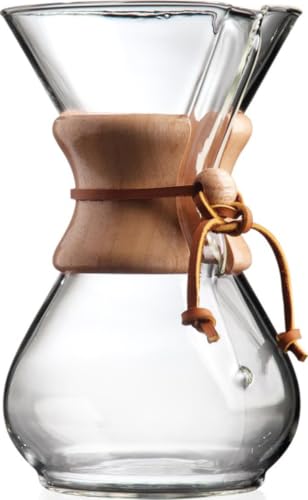
The Chemex Classic 6-Cup is the pour-over brewer most people picture, and it suits the most common routine: one to three mugs of clean, filtered coffee in the morning. It is a single piece of non-porous borosilicate glass that will not absorb odors or chemical residues, so there is no separate dripper and carafe to match.
Two capabilities matter in daily use. Chemex measures 5 oz as one cup, so the 6-cup size holds about 30 oz, roughly three 10 oz mugs. The design also lets you cover and refrigerate leftover coffee for reheating, according to Chemex, which helps if you brew more than you drink at once.
The limitation is filters and gear. Chemex calls for its own bonded filters (FP-1, FC-100, FS-100 or FSU-100), which are not included and cost more than standard cone filters. You also need a kettle, ideally a gooseneck, and ground coffee at a medium-coarse grind.
Skip it if you want coffee without standing at the counter. At around $50, it is an affordable brewer that should last for years with careful handling.

Bodum 34 oz Pour Over: Best value within the stated scope
The Bodum Pour Over is the least expensive way into pour-over that also removes the ongoing cost of paper filters. It pairs a borosilicate glass carafe with a permanent stainless steel mesh filter, which lets the coffee's oils through instead of trapping them in paper.
The workflow and cleanup are straightforward. Bodum's instructions are simple: add coarse ground coffee to the filter, pour a little water in a circular motion until the grounds are soaked, then add the rest and let it drip. The carafe makes 8 cups of 4 oz each, or 34 oz in total, and it is dishwasher safe. A cork band gives you a grip on the glass.
The limitation is that the mesh filter lets more fine particles and oils into the cup, so the coffee tastes heavier than paper-filtered Chemex or V60 coffee. The glass is single wall, so coffee cools faster. Skip it if you want a very clean, bright cup. At around $20, it is an easy, low-risk way to try pour-over.

Mr. Coffee All-in-One Pour Over: Best for a simpler workflow
The Mr. Coffee BVMC-PO19B is a pour-over set for people who want guidance instead of guesswork. It includes a dripper, a temperature-controlled gooseneck kettle and a scale, so you do not have to buy the pieces separately, and it brews 2, 4 or 6 cups.
Two features make the routine easy to learn. An integrated scale calculates the right amount of coffee and water automatically, and an on-screen guide walks you through each step, including when to pause for the bloom. The gooseneck kettle heats to a coffee brewing temperature, according to Mr. Coffee, and gives you a controlled pour.
The limitation is that there is no warming plate, which Mr. Coffee says is deliberate since extra heating can make pour-over taste bitter, so drink it fresh or pour it into a thermos. It uses No. 2 cone filters, sold separately.
Skip it if you already own a gooseneck kettle and scale. At around $60, it is a complete starter setup in one box.

Hario V60 Pour Over Kit: Best for an alternative serving routine
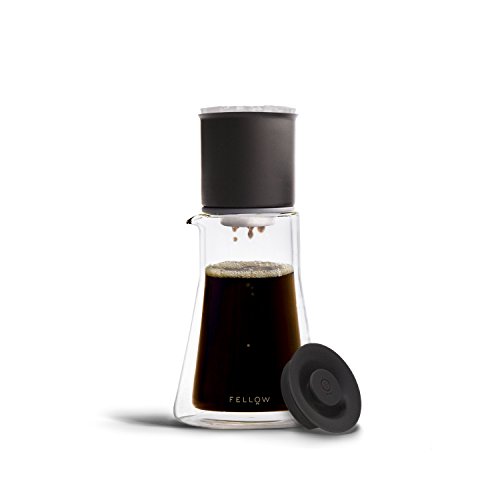
The Hario V60 kit suits people who want to brew a single cup one day and a small pot the next. The box includes the V60 02 ceramic dripper, an XGS-02 glass range server that holds up to four cups, a silicone and glass lid that doubles as a stand for the dripper, and 100 V60 02W paper filters.
The serving routine is flexible. You can set the dripper directly on a mug for one cup, or brew into the server for two people. The ceramic dripper is dishwasher safe, and the glass server has a glass handle rather than plastic, which Hario points out in the listing.
The limitation is technique: the V60's cone shape and large single opening make the pour speed matter, so results vary until you get the hang of it. A gooseneck kettle, such as the Hario V60 Buono, makes that easier. Skip it if you want a forgiving, set-and-forget brew. At around $55 with filters included, it is a complete small-batch setup.

Bonavita 5-Cup One-Touch Pour Over: Best for added control or convenience
The Bonavita BV1500TS gives you a pour-over style brew without the kettle or the technique. It is an SCA certified electric brewer that brews a full 5-cup carafe in about 5 minutes with one touch, holding water between 194 and 205 degrees F with an 1100 watt heater, according to Bonavita.
Two features bring it closer to manual pour-over. An optional pre-infusion mode pre-wets the grounds before brewing, similar to a manual bloom, and a specially designed showerhead spreads water evenly over a hanging flat-bottom filter basket. The 1 L stainless steel thermal carafe keeps coffee hot without a warming plate, and the lid, filter basket and showerhead are dishwasher safe.
The limitation is batch size and control: it brews up to 5 cups only, and you cannot change temperature or flow like you can by hand. Skip it if you enjoy the ritual of pouring. At around $150, it suits people who like the pour-over style but want mornings to run on one button.

What to Look for Before Buying
Manual and Automatic Pour-Over Scope
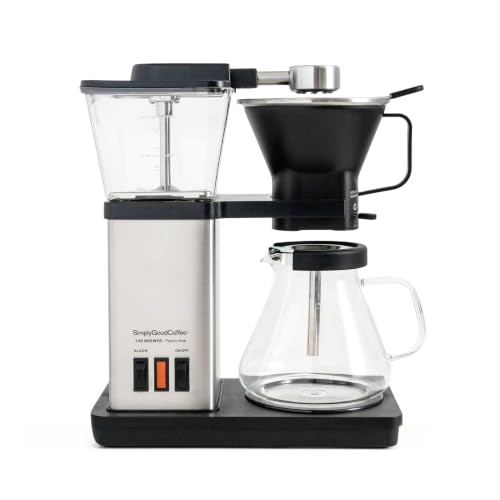
Separate manual equipment from electric brewers first. Manual pour-over (Chemex, Bodum, Hario V60) means you heat water, pour it in stages and watch the drawdown. Electric pour-over style machines (Bonavita, BALMUDA The Brew, SimplyGoodCoffee The Brewer) heat water and control the pour themselves, often with a bloom or pre-infusion mode.
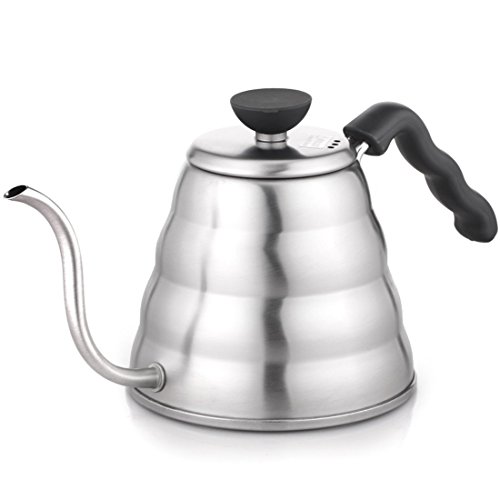
Next, include the extra gear in your budget. Manual brewers need a kettle, and a gooseneck spout makes the pour much easier; the Hario V60 Buono stovetop kettle is a common choice.
A burr grinder makes a bigger difference to pour-over than to most other methods, since grind size controls how fast the water passes through. A scale helps, though the Mr. Coffee kit builds one in.
Finally, compare control against effort. Manual brewing lets you change grind, water temperature and pour speed, which is great if you enjoy experimenting. Electric brewers trade that control for a consistent routine. Guided kits sit in between, teaching technique while keeping you in charge.
Coffee Format and Serving Needs
Every pour-over brewer here uses ground coffee. A medium-coarse grind suits a Chemex, a medium grind suits a V60, and a coarse grind suits a metal mesh filter, so check the instructions for your brewer.
Match capacity to your household. Pour-over cups are small: Chemex uses 5 oz and Bodum 4 oz per cup. A 6-cup Chemex or a 4-cup V60 server fills two or three mugs, while a single-cup dripper fills one large mug.
If you often brew for four or more people, a larger glass brewer or an electric pour-over style machine is easier than repeating small batches. If you drink one cup at a time, a dripper over your mug is the simplest setup.
Daily Workflow and Cleanup
Count the steps for manual pour-over: heat water, rinse the paper filter, add grounds, bloom, then pour in stages for a few minutes. Afterward, toss the filter and rinse the brewer. With a mesh filter, knock out the grounds and rinse the mesh well so oils do not build up.
Electric brewers shorten the morning: add water, grounds and a filter, press the button and walk away. Cleanup is similar to a drip machine, with occasional descaling using a product the manual approves.
Glass brewers need careful handling and a bottle brush for narrow necks. Ceramic drippers are heavier but sturdy, and dishwasher-safe parts save time. Store filters in a dry, sealed spot so they do not pick up odors.
Which Option Fits Your Routine?
Your Must-Have Function
If you want a clean cup for two or three, choose the Chemex. If you want no paper filters, choose the Bodum. If you want automation, the Bonavita is the fit.
Your Preparation and Cleanup Tolerance
Low tolerance points to the Bonavita. Beginners who want to learn should start with the Mr. Coffee kit, and hobbyists will enjoy the V60.
Your Complete Budget
Add a kettle, a grinder and filters to the brewer price. Paper filters are a recurring cost, while mesh filters are not.
Frequently Asked Questions
Which features matter most for this use case?
Filter type and serving size matter most, followed by how much effort you will put in. Paper filters give a cleaner cup and mesh filters a fuller one. Pick a capacity that matches your mugs, then decide whether you want a manual brewer, a guided kit or an electric pour-over style machine.
How do I choose the correct serving capacity?
Convert the maker's cups into fluid ounces. Chemex counts 5 oz per cup and Bodum 4 oz, so a 6-cup Chemex holds about 30 oz and the Bodum 34 oz. One mug needs a single-cup dripper, while two or three mugs suit a 6-cup brewer or a small server.
What extra equipment will I need?
Manual brewers need a kettle, ideally a gooseneck, plus filters unless you choose a mesh filter. A burr grinder helps more with pour-over than most methods.
A scale is useful but optional, and the Mr. Coffee kit includes one. Electric brewers need only filters and coffee.
How much daily cleaning should I expect?
Expect a quick rinse after each brew. Paper filters go straight into the trash or compost, while mesh filters need a thorough rinse. Glass brewers need a bottle brush occasionally, and electric brewers need descaling on the schedule in the manual.
Final Verdict
The best pour over coffee maker for most people is the Chemex Classic 6-Cup, because it brews two or three mugs of clean, filtered coffee from one durable glass piece for around $50. If you want the pour-over style without the technique, the Bonavita 5-Cup One-Touch Pour Over is the better alternative. The deciding trade-off is control against effort. For other brewing styles, see our guides to the best coffee makers and the best coffee maker for home use.

