
Best Espresso Accessories for Better Shots at Home
Disclosure: We may earn a commission when you buy through links on this page, at no extra cost to you. As an Amazon Associate I earn from qualifying purchases. Learn more

The best espresso accessories to upgrade a home setup, from a WDT tool and tamper to a scale and knock box.
The best espresso accessories make home espresso more consistent, cleaner and more enjoyable. Most espresso machines come with only the basics, often a plastic tamper and a small scoop. A few well chosen tools, such as a distribution tool, a proper tamper, a scale with a timer, a frothing pitcher and a knock box, solve the most common problems home baristas face: uneven shots, guessed doses, messy pucks and flat milk.
Below we pick five accessories that deliver the biggest improvement for the money, then cover additional tools, how to build a home espresso station, care tips and answers to common questions.






Best Espresso Accessories: Our Top Picks
We chose accessories that address specific steps in the espresso workflow, compared build quality and compatibility, and considered how widely each is bought and kept. Every product sells new on Amazon. Before buying any accessory that fits inside the portafilter, confirm your basket size: 51 millimeters for many De'Longhi models, 54 millimeters for Breville and 58 millimeters for many semi-commercial machines.
WISSXOER WDT Tool: Best for More Even Shots
A WDT (Weiss Distribution Technique) tool uses thin needles to break up clumps in freshly ground coffee and distribute it evenly in the basket. This simple step reduces channeling, where water rushes through weak spots, and often makes shots sweeter and more consistent.
The WISSXOER tool comes with 10 food safe stainless steel needles, each 0.35 millimeters thick, plus 10 spare needles. You can remove needles to use four to eight if you prefer. The aluminum alloy handle sits in a matching stand to keep your station clean. The needles are sharp, so handle with care.
- Ten 0.35 mm stainless steel needles plus spares
- Adjustable needle count
- Aluminum handle with a stand
The limitation is that it adds a step and works best with a decent grinder. Skip it if you use pressurized baskets that are less sensitive to distribution. Expect to pay around $20.

MATOW 53 mm Distributor and Tamper: Best Tamping Upgrade for Breville
The MATOW combines a coffee distributor and a palm tamper in one dual-headed tool. You level the grounds with the distributor side, then tamp with the other side, both at adjustable depths that lock independently. MATOW says the 53 millimeter base fits Breville 54 millimeter baskets, including the Barista Express, Pro, Touch and Bambino Plus.
Leveling and then tamping to a consistent depth produces a uniform puck every time, a big step up from the plastic tamper that comes with many machines.
- Distributor and tamper in one
- Adjustable, lockable depth on each side
- Fits Breville 54 mm baskets
The limitation is fit: it is sized for 54 millimeter baskets. Skip it if you have a 51 or 58 millimeter machine, and choose a matching tamper from our guide to the best espresso tamper. Expect to pay around $36.

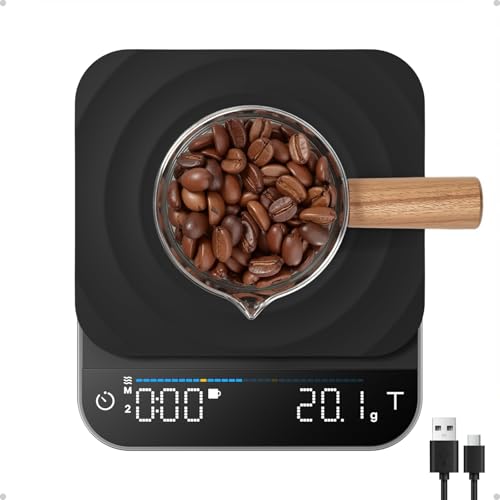
RENPHO Calibarista Espresso Scale: Best Scale for Espresso
Weighing your dose and your shot is the most reliable way to make espresso consistent. The RENPHO Calibarista reads in 0.1 gram steps up to 3 kilograms and includes an espresso mode with an automatic timer. In espresso mode, it remembers your portafilter weight after a one-time calibration and tares it automatically.
A built-in flow rate indicator helps with pour over, and the scale charges by USB-C. At about 5 by 6 inches, measure your drip tray first, as RENPHO recommends.
- 0.1 gram precision with espresso auto timer
- Portafilter memory tare
- USB-C rechargeable
The limitation is size on very small drip trays. Skip it if your machine has a tiny tray and choose a compact scale from our best coffee scale guide. Expect to pay around $25.

De'Longhi 17 oz Milk Frothing Pitcher: Best Pitcher for Milk Drinks
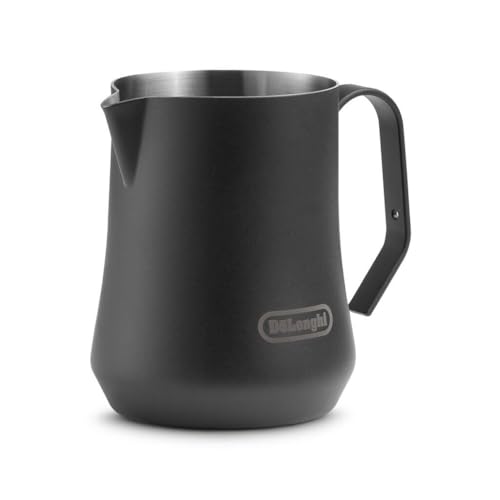
If your machine has a steam wand, a proper stainless steel pitcher makes steaming milk and pouring latte art much easier. The De'Longhi pitcher holds 17 ounces (500 milliliters), a good size for one or two milk drinks, and its V-shaped spout is designed for a smooth pour for cappuccinos, flat whites and macchiatos.
The matte black stainless steel finish looks sharp next to an espresso machine, and De'Longhi says the pitcher is crafted in Italy.
- 17 ounce capacity
- V-shaped spout for latte art
- Matte black stainless steel
The limitation is that it needs a steam wand or frother to be useful. Skip it if you drink straight espresso. Expect to pay around $30.
HOMEE Knock Box: Best Budget Cleanup Tool
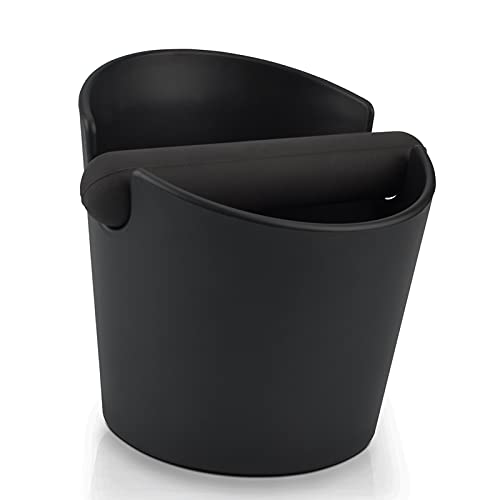
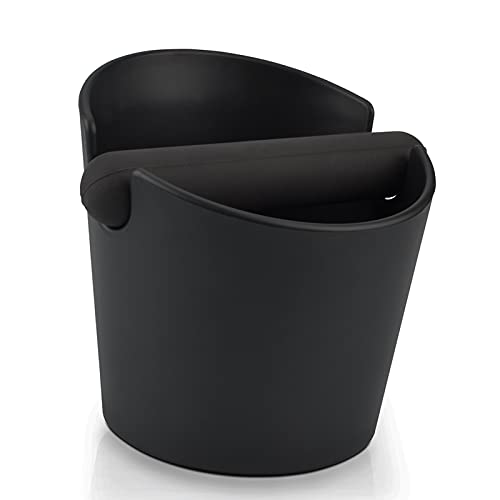
A knock box gives used pucks a home next to your machine. The HOMEE knock box is only 4.8 inches tall, so it fits under most machines, and its rubberized bar protects your portafilter while you knock out pucks. The bar removes for cleaning, and a non-slip rubber base keeps the box steady and quiet.
- Fits under most machines
- Removable rubber knock bar
- Non-slip, noise reducing base
The limitation is a plastic body that is less durable than stainless steel. Skip it if you want a heavy duty bin; see our guide to the best espresso knock box for more options. Expect to pay around $13.
More Espresso Accessories Worth Considering
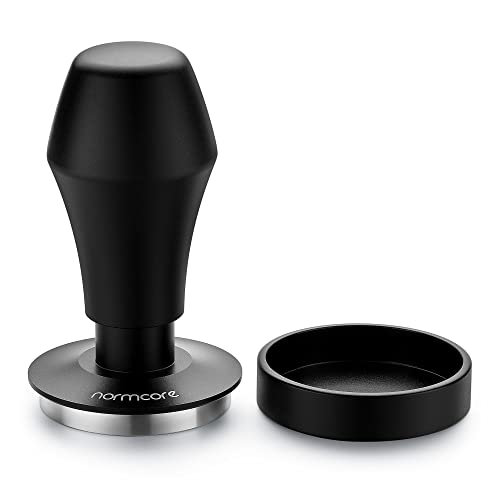
A puck screen sits on top of the coffee to spread water evenly and keep the shower screen cleaner. A tamping mat protects counters and spouts. Espresso cups, especially double wall glasses, keep shots warm and look great. A spring-loaded tamper, like the Normcore V4, delivers consistent pressure. Grinder cleaning tablets and espresso machine cleaning tablets keep equipment fresh, and a microfiber cloth for the steam wand is essential.
Building a Home Espresso Station
Arrange your tools in workflow order: grinder, scale, WDT tool and distributor, tamper and mat, machine, knock box, then pitcher and milk. Keep a towel for wiping the portafilter and steam wand within reach. A tray or mat under the station catches stray grounds. Store beans in an airtight container away from light and heat, and only grind what you need.
If you are still choosing a machine, our guide to the best espresso machine compares options for every budget, and our guide to the best coffee grinder for espresso covers the most important accessory of all: a capable grinder.
Which Accessories to Buy First
If you are on a budget, prioritize in this order: a scale with a timer, a properly sized tamper, a WDT tool, a knock box and a milk pitcher. A scale has the biggest impact on consistency, while a good tamper and distribution tool fix the most common shot problems. Add a pitcher once you start making milk drinks regularly.
Care and Cleaning
Wipe tampers and distributors after use and keep them dry. Rinse WDT needles and let them dry in the stand. Empty and wash the knock box every day or two. Wash the milk pitcher right after use. Clean your machine regularly by backflushing, purging and wiping the steam wand, and descaling on schedule; our guide to coffee maker maintenance explains how. Browse more tools in our coffee accessories section.
Accessories by Machine Type
Semi-Automatic Machines
Owners of machines like the Breville Barista Express or De'Longhi Dedica get the most from accessories. A properly sized tamper, WDT tool, puck screen, scale and knock box all directly improve shots, and a pitcher upgrades milk drinks.
Super-Automatic Machines
Super-automatics grind, tamp and brew internally, so tampers and distribution tools are not needed. Focus on good beans, nice cups, cleaning tablets, descaling solution and a milk frothing pitcher if the machine has a manual steam wand.
Pod Espresso Machines
For capsule machines, the most useful accessories are a milk frother, espresso cups, a capsule storage drawer and descaling solution. Distribution tools and tampers do not apply.
Gift Ideas for Espresso Lovers
Espresso accessories make thoughtful gifts because many home baristas never buy them for themselves. A scale, a spring-loaded tamper, a WDT tool or a stylish pitcher are all well received. Confirm the recipient's machine and basket size before buying anything that fits the portafilter. Our guide to the best gifts for espresso lovers has more ideas, from beans to knock boxes.
Common Mistakes When Buying Accessories
The most common mistake is buying the wrong size. A 58 millimeter tamper will not fit a 54 millimeter basket, and a 51 millimeter puck screen is useless in a 58 millimeter portafilter. Another mistake is buying many gadgets before a capable grinder; if your grinder cannot produce a fine, consistent grind, no accessory will fully fix your shots. Start with a scale and a good grinder, then add tools one at a time so you can tell which ones actually improve your shots and which ones you can live without.
How We Chose
This guide is based on research rather than in-person trials. We selected accessories that each improve a specific step of the espresso workflow, compared build quality and compatibility, and considered how widely each is bought and how home baristas describe using it.
FAQs About Espresso Accessories
How much should I spend on espresso accessories?
A useful starter set of a scale, tamper, WDT tool and knock box often costs well under the price of a mid-range grinder. Add a pitcher and puck screen later as your skills grow.
Are cheap espresso accessories worth it?
Many affordable tools, such as WDT tools, knock boxes and pitchers, work very well. Spend more on items where precision matters, like a scale and a properly sized tamper.
Can accessories fix bad espresso?
They help with consistency, but fresh beans and a capable grinder matter most. Accessories work best once those basics are in place.
What is the most important espresso accessory?
After a good grinder, a scale with a timer makes the biggest difference by letting you measure dose, yield and time.
Do I need a WDT tool?
It is not essential, but it often improves shot consistency by breaking up clumps and distributing coffee evenly.
What size accessories fit my machine?
Check your basket size: 51 mm for many De'Longhi models, 54 mm for Breville and 58 mm for many semi-commercial machines.
Is a knock box worth it?
Yes for daily espresso. It keeps pucks contained, protects your portafilter and keeps grounds out of the sink.
Do I need a milk pitcher if my machine has a steam wand?
A properly sized stainless pitcher makes steaming and pouring much easier than a mug.
What is a puck screen?
A thin metal screen placed on top of the coffee bed that helps distribute water evenly and keeps the group head cleaner.
Final Verdict
The best espresso accessories for most home baristas are a WDT tool for even distribution, a properly sized tamper like the MATOW for Breville machines, a RENPHO scale for consistent doses, a De'Longhi frothing pitcher for milk drinks and a HOMEE knock box for tidy cleanup. Start with a scale and tamper, add the rest as you go, and your espresso will become more consistent with every shot.


