Coffee Maker Maintenance: Practical Guide
Disclosure: We may earn a commission when you buy through links on this page, at no extra cost to you. As an Amazon Associate I earn from qualifying purchases. Learn more

A coffee maker maintenance routine you can follow: daily rinsing, weekly washing, milk care, descaling and filters, with a simple care log.
Coffee maker maintenance comes down to four different jobs that often get lumped together: washing the parts you remove, cleaning the coffee path, caring for any milk system, and removing mineral scale. Each has its own trigger, and the right schedule depends on your machine, how often you brew, your water and whether you make milk drinks.
This guide covers drip brewers, pod machines and espresso machines, both manual and automatic. It gives you a simple way to build a schedule from your own manual, explains each care task, and shows how to adjust the routine as your habits change.



The Short Answer
Rinse removable parts after every use, wash them more thoroughly every few days to once a week, clean milk parts after every milk drink, and descale or change water filters when your machine prompts you or on the schedule your manual gives for your water hardness. There is no single interval that suits every machine: a pod brewer used once a day in a soft water area needs far less attention than an espresso machine making lattes in a hard water area.
Think of it as a routine with three layers: quick daily rinsing, a weekly wash of removable parts, and periodic tasks set by prompts or your water. Once those are in place, most machines need only a few minutes of attention a week.
What This Routine Covers
Keep four types of care separate. Washing removable parts covers the carafe, filter basket, pod holder, drip tray, grounds container and water tank.
Coffee path cleaning removes coffee oils and residue from inside the machine, usually with a cleaning cycle or tablets on espresso and automatic machines. Milk care covers steam wands, frothers and milk systems. Descaling removes mineral scale from the water path with an approved descaler.
This guide is about user care: the tasks the manual expects owners to do. Service work, such as replacing internal seals, valves or heating parts, belongs to the manufacturer or an authorized service center. If a task requires opening the housing, it is not part of routine maintenance.
Most important of all, use your exact model's manual. A descaling program on one machine can be a different button sequence on another, even within one brand, and some machines need dedicated cleaning tablets or filters that others do not use at all.
Coffee Maker Maintenance: Build a Model-Specific Schedule
After Use and Daily
For drip brewers, discard the filter and grounds, rinse the basket and carafe, and wipe the warming plate once cool. For pod machines, remove the pod, empty the drip tray when needed and wipe around the pod holder. For espresso machines, knock out the puck, rinse the basket, purge and wipe the steam wand after every use, and empty the drip tray and grounds container when the machine asks or they look full.
When the Machine Prompts You
Many machines tell you when a task is due: a clean or descale light on drip brewers, a descale message on pod machines, and cleaning, descaling, filter or milk system prompts on automatic espresso machines. Treat each prompt as specific to that task, follow the manual's procedure with the product it names, and complete any reset step so the prompt clears correctly.
Periodic Checks and Replacement
Every few weeks, check parts that wear with use: carafe and tank seals, the brew basket's drip-stop valve, filter baskets, steam wand tips and any gaskets the manual lets you inspect. Replace them when they are cracked, warped or no longer seal, using the maker's parts. There is no universal replacement interval, so let condition and the manual guide you.
A slow change is often the first sign that something needs attention: brewing that takes longer than it used to, coffee that tastes flat or bitter despite fresh beans, or a carafe that drips when you pour. Those clues point you toward descaling, a deeper wash or a worn part before a bigger problem develops. Good coffee maker maintenance is mostly about noticing these changes early.
Recordkeeping
A simple log saves guesswork. Note each task, what triggers it, the date you last did it, and where the instruction came from, for example: "Descale; prompt or every 3 months; done 10/2; manual page 18." Keep it inside a cabinet door or in your phone. It is a convenience tool, not a replacement for the machine's own prompts.
The log is especially useful for tasks without a prompt, such as replacing charcoal filters in a basic drip brewer or deep cleaning a milk frother. Keeping it short makes it more likely you will keep it up.
| Task | Trigger | Last done | Source |
|---|---|---|---|
| Wash carafe, basket, tray | Every few days to weekly | Date | Manual care section |
| Coffee path cleaning cycle | Machine prompt or manual interval | Date | Manual cleaning program |
| Milk system cleaning | After milk drinks; deeper clean on prompt | Date | Manual milk section |
| Descale | Prompt or manual schedule for your water | Date | Manual descaling section |
| Replace water filter | Prompt or filter interval | Date | Filter instructions |
The Main Care Tasks
Removable Parts and Residue
Wash removable parts with warm, soapy water unless the manual says otherwise, rinse well and let them dry before reassembling. Check whether parts are dishwasher-safe before putting them in a dishwasher; some carafes, thermal jugs and plastic parts are hand-wash only. Coffee oils build up on baskets, carafes and permanent filters and can make fresh coffee taste stale, so a weekly soapy wash matters even if you rinse daily.
Pay attention to the water tank as well. Water left standing for days tastes flat and can leave film, so empty, rinse and refill the tank regularly, and let it air dry if the machine will sit unused.
Keep this separate from the other tasks. Washing parts does nothing for scale inside the machine, and a descaling cycle does not remove coffee oil from a carafe.
Coffee Path or Mineral Scale
Coffee path cleaning and descaling are different jobs. Many automatic espresso machines have a dedicated cleaning program that uses cleaning tablets to remove coffee oils from the brew unit and lines, and some portafilter machines are cleaned with tablets in a blind basket. Descaling uses an acid-based descaler to remove mineral deposits from the water path.
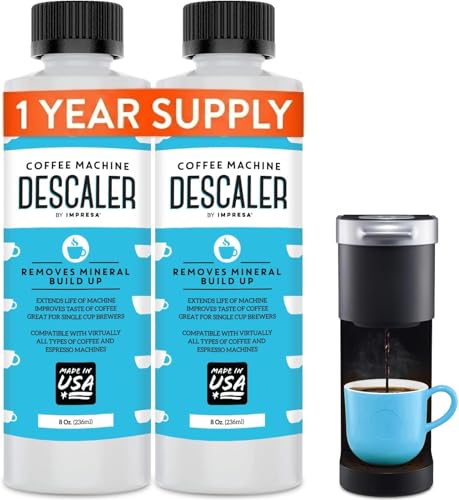
Use only the supplies your manual approves. Descalers made for coffee machines, such as De'Longhi EcoDecalk or Impresa, are common choices, but your manual may require a specific product to protect seals or keep the warranty valid. Vinegar is acceptable only if your manual approves it.
Never mix products or invent a stronger solution, and run the rinse cycles the manual calls for afterward. Our guide on how to descale a coffee maker covers the general process, and how to clean a coffee maker explains washing and cleaning cycles.
Milk Path or Water Cartridge
If your machine has a steam wand, purge it and wipe it right after every use so milk does not dry inside the tip. Automatic milk systems usually have a rinse or cleaning function after each milk drink and a deeper clean with a specific milk system cleaner on prompt. Follow the manual for which parts come apart and how to clean them; do not substitute a homemade chemical mix.
Water filters are another model-specific item. Many drip brewers use charcoal water filters, and many espresso machines use a branded filter cartridge. Use the filter type the manual names, change it on the interval given, and remember that a filter can reduce how often you descale but does not remove the need entirely. If your machine has no filter, skip this step.
Compatible Supplies and Accessories
Separate four kinds of supplies, since they do different jobs. Water filters reduce minerals and odors in brewing water; examples include charcoal filters for Cuisinart brewers and branded cartridges for many espresso machines.
Coffee cleaning tablets remove coffee oils from espresso machine brew paths, such as Breville's BEC250 tablets for Breville espresso machines. Milk system cleaners remove milk residue from frothers and milk lines. Descalers remove mineral scale.
Check compatibility before buying. A filter that fits one brand will not fit another, cleaning tablets are not descaler, and some machines require their own maker's products. The product table above lists a few common supplies; confirm against your manual and model number before ordering.
No supply removes all maintenance. A good filter reduces scale, and automatic cleaning programs reduce effort, but you will still empty trays, wash parts and respond to prompts.
Adjusting the Routine to Actual Use
Drink Frequency
The more you brew, the more often residue builds and trays fill. A household making several drinks a day should wash removable parts more often and may see cleaning or descaling prompts sooner than a single occasional drinker. Light users can stretch washing intervals a little, but should still rinse after each use so residue does not harden.
Water and Filter Setup
Water hardness has the biggest effect on descaling frequency. Many machines let you set hardness during setup, often with test strips in the box, and then time their descaling prompts accordingly. If yours does not, your local water report gives the hardness, and your manual's table turns it into a schedule. Using the approved filter may lengthen the interval.
Shared or Seasonal Use
For offices, vacation homes or seasonal use, empty the water tank, drip tray and grounds container before storing the machine, dry the parts and leave lids open so moisture can escape. Before returning it to use, rinse everything, refill with fresh water and run the rinse or cleaning cycle the manual suggests. In shared spaces, post the care log near the machine so everyone knows what was done last.
Frequently Asked Questions
Does automatic cleaning remove every manual task?
No. Automatic rinse and cleaning programs reduce effort but do not remove it. You still empty the drip tray and grounds container, refill water and beans, wash removable parts, add cleaning tablets or descaler when prompted, and change water filters. Automatic milk cleaning still needs the milk parts washed and occasionally deep cleaned with the approved cleaner.
How does a water filter affect the routine?
A water filter reduces minerals reaching the machine, which can mean fewer descaling prompts, and it can improve taste. It adds a task of its own: replacing the filter on schedule. Some machines change their descaling timer when a filter is registered, so follow the manual's setup steps rather than simply dropping a filter in.
What changes when I make milk drinks?
Milk adds the most time-sensitive task. Steam wands should be purged and wiped right after each use, and automatic milk systems should run their rinse after every milk drink. A deeper milk system clean with the approved cleaner follows the machine's prompt. Skipping these steps leads to residue, odors and poor foam.
When should I contact support instead of cleaning again?
Contact support when a problem continues after the approved cleaning or descaling cycle, when an error returns right after you fix it, or when you see safety signs such as smoke, a burning smell, a damaged cord or water near electrical parts. Repeating cleaning cycles will not fix a mechanical or electrical fault. Our coffee maker troubleshooting guide and the guide to a coffee maker leaking water cover common symptoms.
Your Practical Maintenance Plan
Good coffee maker maintenance is model-specific: read your manual, set the water hardness, and follow the prompts. The most important daily task is rinsing whatever touches coffee or milk right after use. Add a weekly soapy wash, descale and change filters on schedule, and keep a simple log. For step-by-step help, see how to descale a coffee maker and our coffee maker troubleshooting guide.