
Best Milk Frothing Pitcher for Steaming and Latte Art
Disclosure: We may earn a commission when you buy through links on this page, at no extra cost to you. As an Amazon Associate I earn from qualifying purchases. Learn more

Our picks for the best milk frothing pitcher, plus sizing advice, steaming steps and simple latte art tips.
The best milk frothing pitcher makes steaming milk easier to control and pouring latte art far more achievable. A good pitcher is made of food grade stainless steel, sized for the drinks you make, and has a spout shaped for a clean, steady pour. It is one of the cheapest upgrades you can make to a home espresso setup, and it is also useful with handheld frothers.
We compared five pitchers, from De'Longhi's popular 17 ounce jug to a small 12 ounce model, a 20 ounce pitcher with a latte art pen, a budget pitcher with etched measurements and a complete frother kit. After the picks, you will find sizing advice, how to steam milk, latte art tips and cleaning guidance.




Best Milk Frothing Pitcher: Our Top Picks
We compared capacity, spout design, material and finish, measurement markings, handle comfort and how widely each pitcher is bought and kept. Every pitcher sells new on Amazon, and the product table lists more sizes, including a large 32 ounce jug.
De'Longhi 17 oz Frothing Pitcher: Best Overall
The De'Longhi 17 ounce pitcher is one of the most widely bought frothing jugs on Amazon. Its V-shaped spout is designed for a smooth pour, which helps when you are pouring a cappuccino, flat white or macchiato. The 17 ounce (500 milliliter) capacity and 90 millimeter diameter suit one or two milk drinks, and the matte black stainless steel finish looks sharp next to an espresso machine.
De'Longhi says the pitcher is crafted in Italy. The size is a sweet spot for home baristas: large enough for a 12 ounce latte, small enough to swirl and control easily.
- V-shaped spout for smooth, controlled pours
- 17 ounce capacity with a 90 mm diameter
- Matte black stainless steel, made in Italy
The limitation is markings: the listing does not mention measurement lines inside, so you fill by eye. Skip it if you want etched measurements. Expect to pay around $30.

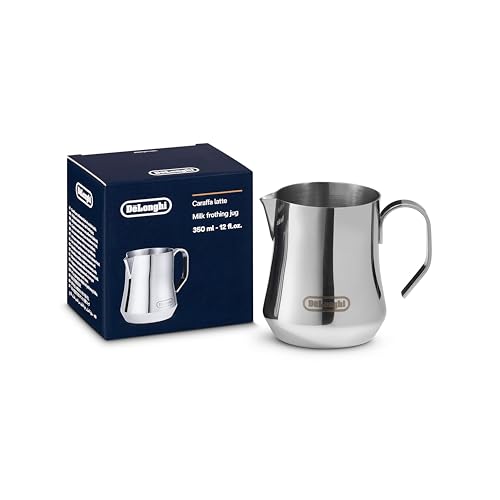
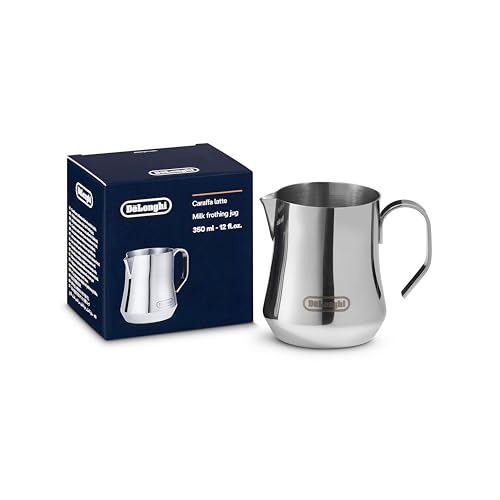
De'Longhi DLSC060 12 oz Frothing Jug: Best Small Pitcher
For single cappuccinos and macchiatos, a smaller pitcher gives better control. The De'Longhi DLSC060 holds 350 milliliters (12 ounces), and De'Longhi notes it is compatible with all its pump espresso makers. The stainless steel body and convenient pour spout make it a simple, reliable choice.
Smaller pitchers heat milk faster and make it easier to create a whirlpool with a steam wand, which helps produce smooth microfoam. It is also a good match for compact espresso machines with less steam power.
- 12 ounce capacity for single drinks
- Works with De'Longhi pump espresso machines
- Simple stainless steel design
The limitation is capacity: it is too small for a large latte or two drinks at once. Skip it if you usually make milk for two. Expect to pay around $20.
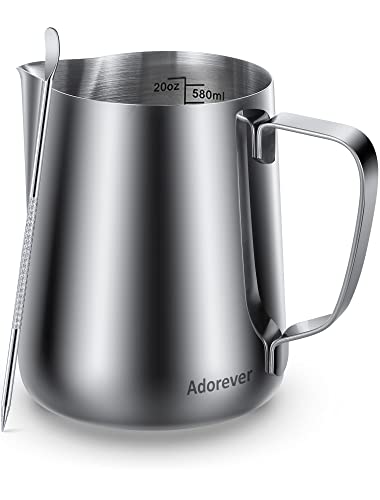
Adorever 20 oz Pitcher With Latte Art Pen: Best for Learning Latte Art
The Adorever pitcher comes with a latte art pen, a pointed tool for drawing designs in foam, which makes it a fun pick for beginners. The pitcher and pen are made of chrome finished 304 stainless steel that is rust-proof, stain-proof and heat-proof, and the pointed mouth helps control the flow and shape patterns.
It is available in several sizes from 12 to 66 ounces; the 20 ounce version suits two drinks. The pitcher also works for measuring liquids or serving milk and cream to guests.
- Includes a latte art pen
- 304 stainless steel with a pointed spout
- 20 ounce size for one or two drinks
The limitation is size choice: a 20 ounce pitcher is a little large for a single small cappuccino. Skip it if you only make one small drink at a time. Expect to pay around $29.

ZOWIE KING 20 oz Pitcher: Best Budget Pick With Measurements
The ZOWIE KING pitcher offers useful details at a low price. It is made from 304 stainless steel with liquid measurements engraved on both sides, so you can pour the right amount of milk every time. The listing says the 20 ounce size is ideal for two or three cappuccinos.
A narrow mouth helps control pouring speed and volume for latte art, and the pitcher doubles as a measuring jug or creamer for guests. It is easy to clean and resists rust and corrosion.
- Engraved measurements on both sides
- Narrow mouth for controlled pours
- 304 stainless steel at a low price
The limitation is finish: it is a basic pitcher without the premium feel of the De'Longhi. Skip it if looks matter most. Expect to pay around $13.

Zulay Premium Milk Frother Set: Best Kit Without an Espresso Machine
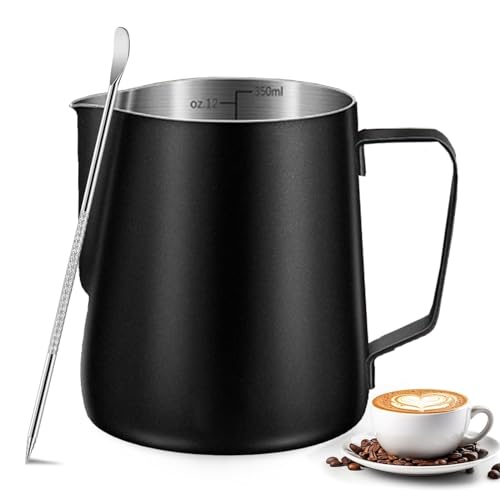
If you do not own a steam wand, the Zulay set gives you everything for café style drinks. It includes a handheld frother with a 13,000 RPM motor and stand, a 12 ounce (350 milliliter) 304 stainless steel pitcher with laser etched ounce and milliliter marks, and four reusable latte art stencils.
The narrow spout helps with clean pours, and the pitcher, stand and stencils are dishwasher safe. Zulay backs the set with a lifetime warranty according to the listing. Use the frother in the pitcher with warmed milk, then pour over coffee and dust cocoa through a stencil for a decorated drink.
- Handheld frother, pitcher and stencils in one kit
- Etched measurements and narrow spout
- Dishwasher safe pitcher, stand and stencils
The limitation is that a handheld frother does not heat milk; warm it first. Skip it if you already own a frother or espresso machine. Expect to pay around $20.

How to Choose a Frothing Pitcher
Size
Choose a pitcher about twice the volume of the milk you use, because milk expands as it froths. A 12 ounce pitcher suits a single cappuccino or small latte, 17 to 20 ounces suit one large latte or two drinks, and 32 ounces suit several drinks at once. Smaller pitchers are easier to control for latte art.
Spout Shape
A sharp, narrow spout gives precise control for detailed latte art like rosettas and tulips. A wider, rounder spout pours more milk quickly and suits simple hearts and everyday drinks.
Material and Markings
Stainless steel conducts heat, so you can feel the milk warming through the side of the pitcher, a simple way to avoid overheating. Etched or engraved measurement lines help you pour the same amount each time.
Handle and Balance
A comfortable handle and balanced weight make swirling and pouring easier. Some pitchers allow a double grip for extra control.
Browse more tools in our coffee accessories section.
How to Steam Milk With a Pitcher
- Fill with cold milk. Pour cold milk to just below the base of the spout, about one third full.
- Purge the steam wand. Briefly run steam into a cloth to clear water.
- Position the tip. Place the wand just below the milk surface, slightly off center.
- Stretch. Turn on steam and listen for a gentle hiss as air enters the milk. Lower the pitcher slowly as the milk rises.
- Texture. Once the milk has grown about 20 to 50 percent, submerge the tip slightly to create a whirlpool.
- Stop at the right temperature. When the pitcher feels too hot to hold comfortably, around 140 to 150°F, turn off the steam.
- Polish. Wipe and purge the wand, tap the pitcher on the counter and swirl until the milk looks glossy.
For more methods, including handheld and electric frothers, read our guide on how to froth milk at home.
Milk Choices for Steaming
Whole milk is the easiest to steam and pour because its fat and protein create glossy, stable microfoam. Two percent milk works well with a slightly lighter texture, while skim milk makes stiff, airy foam that is harder to pour into patterns. Among plant milks, barista versions of oat milk steam best, followed by barista soy and almond milks. Regular plant milks can separate or produce large bubbles.
Always start with cold milk straight from the refrigerator. Cold milk gives you more time to stretch and texture it before it reaches serving temperature, and cold pitchers help too. Some baristas keep their pitcher in the refrigerator for this reason.
Latte Art Tips for Beginners
Start with a heart. Pour steamed milk into the espresso from a few inches above to let it sink, then lower the pitcher close to the surface and pour faster so white foam appears. When the cup is nearly full, lift the pitcher and pull it through the design. Glossy, paint-like microfoam with no large bubbles is the key, so focus on texture before patterns.
Practice with water and a drop of dish soap if you want to save milk while learning the pour. A smaller pitcher and whole milk make it easier to get good results early on.
Cleaning and Care
Rinse the pitcher right after use, before milk dries. Wash it with warm soapy water or in the dishwasher if the manufacturer allows. Dry it fully to avoid water spots. Keep your steam wand clean too by wiping and purging it after every use. For full machine care routines, see our guide to coffee maker maintenance.
How We Chose
This guide is based on research rather than in-person trials. We compared sizes, spouts, materials, markings and included extras, and considered how widely each pitcher is bought and how owners describe it over time. We picked one pitcher for each common need.
FAQs About Milk Frothing Pitchers
What size frothing pitcher should I get?
A 12 ounce pitcher suits single small drinks, while a 17 to 20 ounce pitcher suits a large latte or two drinks. Choose about twice the volume of milk you use.
Can I use a frothing pitcher with a handheld frother?
Yes. Warm milk in the pitcher or pour warm milk in, then froth with the wand. The spout makes pouring foam easier.
Is a stainless steel pitcher better than glass?
For steaming, yes. Stainless steel is durable and lets you feel the milk temperature through the side.
Do I need a special pitcher for latte art?
A pitcher with a narrow, defined spout makes latte art easier, but practice and milk texture matter most.
How full should I fill a frothing pitcher?
Fill to just below the bottom of the spout, roughly one third full. That leaves room for the milk to expand as it froths without spilling over the rim.
Are frothing pitchers dishwasher safe?
Many are. Check the listing or manual; hand washing helps keep finishes looking new.
Final Verdict
The best milk frothing pitcher for most home baristas is the De'Longhi 17 ounce pitcher, with a smooth pouring V-spout and an ideal size. The De'Longhi 12 ounce jug is best for single drinks, the Adorever pitcher includes a latte art pen, the ZOWIE KING offers measurements on a budget, and the Zulay set is a complete kit for anyone without a steam wand. Pick the size you need and practice your pour.


