
JURA E8 vs Philips: Which Should You Choose?
Disclosure: We may earn a commission when you buy through links on this page, at no extra cost to you. As an Amazon Associate I earn from qualifying purchases. Learn more

JURA E8 vs Philips: a premium one-touch JURA against the Philips 4400 LatteGo on menu, milk care, iced drinks and price.
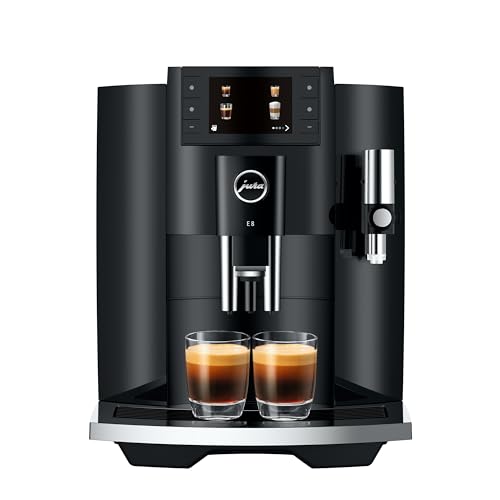
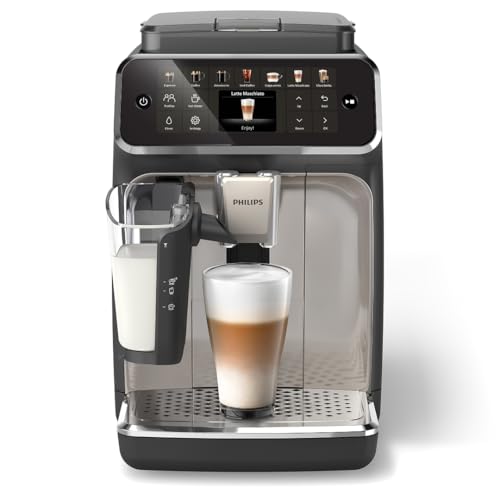
JURA E8 vs Philips is really a question about how much you want to pay for the same basic idea: a bean-to-cup machine that grinds, brews and froths milk at the press of a button. Because Philips is a brand rather than a model, this comparison pairs the JURA E8 sold on Amazon US as Piano Black 15648 with the Philips 4400 Series LatteGo (EP4447/90), the most capable Philips fully automatic machine currently sold new on Amazon US.
The two sit at very different prices, so the useful answer is not "which is better" but which workflow, drink menu and ownership cost fits your kitchen. Start with the quick verdict, then use the table and sections below to check the details that matter to you.


Quick Verdict
Choose JURA E8 If…
Choose the JURA E8 if you want a premium, compact one-touch machine with a wide menu of up to 17 coffee and milk options, a P.A.G.2 grinder with an easy selector switch, and automatic milk system cleaning at the touch of a button. The compromise is price: at around $2,499 it costs more than three times the Philips, and its supplies are JURA-specific.
Choose Philips If…
Choose the Philips 4400 if you want one-touch espresso, milk drinks and iced recipes for much less money, with a two-part LatteGo milk system that Philips says rinses in under 10 seconds. The compromise is a shorter menu of 12 recipes and a less premium build, so it suits buyers who care more about drinks per dollar than about materials.
JURA E8 vs Philips: Scope and Side-by-Side Table
This comparison covers the JURA E8 Piano Black 15648 listing, whose features are documented on Amazon US. JURA also lists a newer NAD generation (Piano Black 15777) with very few published details, so we do not copy the 15648 specs onto it; check the code on any listing before you buy. On the Philips side, we use the 4400 Series EP4447/90, which matches the E8's one-touch workflow but not its price.
| Category | JURA E8 (15648) | Philips 4400 LatteGo (EP4447/90) |
|---|---|---|
| Machine type | Fully automatic, whole beans | Fully automatic, whole beans |
| Drink menu | Up to 17 coffee classics and specialties | 12 hot and iced coffees |
| Iced drinks | Not documented on the 15648 listing | Iced coffee, iced americano, iced espresso |
| Grinder | P.A.G.2 with selector switch | Ceramic grinder |
| Milk system | One-touch milk system, automatic cleaning | LatteGo, two parts, no tubes |
| Controls | 3.5 inch color display, six buttons | Touch display (see listing) |
| Water care | JURA water filter system | AquaClean filter, up to 5,000 cups without descaling |
| Noise | Not stated | SilentBrew, stated 40% quieter than earlier models |
| Price | Around $2,499 | Around $750 |
Both machines need whole beans, water filters and cleaning supplies. Neither needs a separate grinder.
A quick way to read the table: the rows where the machines match (bean-to-cup, one-touch milk, no extra grinder) describe the daily experience, while the rows where they differ (menu size, iced recipes, water care, price) describe what you pay extra for. If none of the differing rows matters to you, the cheaper machine is the sensible pick.
How We Compared These Options
We compared the Amazon US listings for each exact model, the features and package contents they document, and the care supplies each brand specifies. We also read buyer feedback in aggregate for recurring themes such as milk system cleaning, grinder noise and how often filters need changing.
We did not run side-by-side brewing trials, so this JURA E8 vs Philips comparison makes no claims about which machine produces better-tasting espresso or milk foam. Where a feature appears only in one listing, we say so rather than assuming the other machine lacks or has it. Judgments about value and routine fit are our own, based on the documented features and prices on the same date.
Coffee Preparation and Adjustment
What Each Option Supports
Both machines grind whole beans for every drink. The JURA E8 uses JURA's P.A.G.2 grinder, adjusted with an ergonomic selector switch, and JURA says the grinder rests between preparations. The Philips 4400 uses a ceramic grinder. JURA lists up to 17 options on the E8, each customizable to your preference; Philips lists 12 recipes from espresso and ristretto to caffè crema and americano.
What Changes in Everyday Use
Day to day, both work the same way: fill beans and water, place a cup, choose a drink. You still empty the grounds container and drip tray, refill water and keep beans topped up. The E8's wider menu means more specialty presets; the Philips covers the drinks most households actually make, including an americano and a long coffee.
Who Benefits from the Difference
One practical tip applies to both: grind settings matter more than brand. Start at the factory setting, change one step at a time over several drinks, and use fresh, medium-roast beans while you learn the machine. Very oily dark roasts can clog the grinder chute on many fully automatic machines, so check each manual before choosing your beans.
Proprietary names like P.A.G.2 describe design choices, not measured superiority, so do not buy on the name alone. If you like to fine-tune strength and volume across many specialty drinks, the E8's menu gives you more starting points. If you drink three or four regular drinks, the Philips covers them for far less money.
Milk and Drink Options
What Each Option Supports
The E8 15648 listing describes a one-touch milk system for coffee and milk specialties, with an automatic milk system cleaning process started by a button. The Philips 4400 uses LatteGo, which froths dairy and plant-based milk at the touch of a button and comes apart into two parts for rinsing.
What Changes in Everyday Use
The routines differ after the drink. On the E8, you run the automatic milk cleaning and look after the milk line and container as the manual describes. On the Philips, you pull the LatteGo apart and rinse it, which Philips says takes under 10 seconds. Both approaches still require daily attention to milk parts.
Milk handling is the same on both: keep milk cold, pour only what you need into the container or LatteGo jug, and return the rest to the fridge. Milk left at room temperature between drinks is the most common source of off flavors and clogged milk parts on any automatic machine, whatever the brand.
Who Benefits from the Difference
If you drink iced coffee, the Philips lists iced coffee, iced americano and iced espresso recipes, while the E8 15648 listing does not document an iced or cold extraction mode. Iced recipes here are coffee served over ice, not cold brew. If you mostly make hot cappuccinos and lattes, both machines cover you, and the choice comes down to cleaning style and price.
Daily Use and Maintenance
What Each Option Supports
The E8 has a 3.5 inch color display with six buttons and a Cockpit view of relevant information, and JURA notes a drip tray designed to avoid spills that removes with one hand. The Philips 4400 adds QuickStart and SilentBrew, which Philips says makes 40% less noise than its earlier models, plus the AquaClean filter.
What Changes in Everyday Use
A typical week looks similar on both machines: empty the grounds container and drip tray every day or two, rinse milk parts after each milk drink, and wipe the coffee spout. Once the machine prompts, run the cleaning or descaling program with the supplies the manual names. The brew unit on many Philips machines is removable for rinsing, while JURA keeps its brew unit inside and relies on cleaning cycles; follow each manual rather than mixing routines.
Both need water filters, cleaning tablets or cycles, and milk system care. Philips says that changing the AquaClean filter when prompted lets you go up to 5,000 cups without descaling. JURA machines use JURA's own filter cartridges and cleaning tablets on the schedule the machine prompts. Keep a supply on hand so the machine does not sit waiting for a part.
Who Benefits from the Difference
We do not have evidence to say which machine lasts longer, so treat any reliability claims with caution. If quiet operation matters, the Philips is the only one with a stated noise reduction. If you value a premium display and a one-button milk cleaning cycle, the E8 suits you better.
Complete Price and Value
What Each Option Supports
On the same date, the E8 15648 was listed at around $2,499 and the Philips 4400 at around $750, both new. That gap of roughly $1,750 is the core of this comparison: the Philips gets you a similar one-touch workflow and an iced menu for less than a third of the price.
What Changes in Everyday Use
Neither machine needs a separate grinder or frother. Both need water filters (JURA CLARIS Smart or Philips AquaClean), cleaning supplies and beans. Budget for a year of filters and tablets for whichever brand you choose, because those costs repeat for as long as you own the machine.
To estimate a year of ownership, list what each machine asks for: water filter cartridges on the prompted schedule, cleaning tablets, a milk system cleaner and, where needed, descaler. Price those supplies on the same day you compare machines, then add your bean budget, which will be the largest recurring cost either way.
Who Benefits from the Difference
Assess support and workflow fit, not prestige. JURA has a dedicated US dealer and service network; Philips machines are widely sold and supported through Philips. If the E8's extra menu depth and build are worth the premium to you, it is a reasonable buy; if not, the Philips leaves budget for good beans.
Representative Products and Pairing Limits
A Verified Pair at a Relevant Price Level
The JURA E8 15648 brings up to 17 one-touch options, a P.A.G.2 grinder and automatic milk cleaning; its limitation is price and the lack of a documented iced mode on this listing. The Philips 4400 brings 12 hot and iced recipes, LatteGo and AquaClean; its limitation is a shorter menu and a less premium finish.
Check Price on Amazon for the JURA E8 15648, and check the Philips 4400 on Amazon.
What the Pair Does Not Prove
This pair compares a premium JURA with a mid-priced Philips, so the budgets are not equal. It does not show how JURA compares with every Philips model, or how the E8's newer NAD generation compares, since that listing publishes few details.
A fairer within-budget comparison would set the E8 against other premium machines, or the Philips 4400 against other machines around $750. If your budget is closer to the Philips, the question becomes Philips against De'Longhi or KitchenAid; if it is closer to the E8, compare it with other JURA models and premium rivals instead.
It also does not prove that one brand makes better coffee. Taste depends heavily on beans, grind setting and water, which you control on both machines. For a wider look at alternatives, see our guide to the best super automatic espresso machine.
Which Should You Choose?
For Convenience-First Buyers
Start with the daily routine you want to live with for years. Both are one-touch machines, so convenience is close. The E8's automatic milk cleaning button suits people who prefer running a cycle; the Philips LatteGo suits people who would rather rinse two parts. If quiet mornings matter, the Philips SilentBrew is the deciding feature.
For Buyers Seeking Control or Different Drinks
If you want the widest menu of specialties and fine control over each, the E8 offers more presets. If you want iced drinks, the Philips 4400 lists them and the E8 15648 does not. Neither replaces a semi-automatic espresso machine for manual shot control.
A useful check is to list the five drinks you made most often last month. If all five appear on the Philips 4400 menu, the extra JURA presets are a luxury rather than a need. If two or three of your favorites are specialty drinks that only the E8 lists as presets, the higher price buys real convenience.
For Budget and Space Constraints
On budget, the Philips wins clearly, with roughly $1,750 left over for beans and supplies. On space, check the dimensions on each listing and leave room above for the bean hopper and in front for the water tank. Both need counter depth for the drip tray and grounds container to slide out.
Frequently Asked Questions
Are these options the same type of machine?
Yes, both are fully automatic bean-to-cup machines that grind, brew and froth milk at the touch of a button. The differences are in menu size, milk system design, iced drinks and price. Neither uses capsules, and both need whole beans, water filters and cleaning supplies to run properly.
Which is easier to use and maintain?
They are similarly easy to use, with different cleaning styles. The E8 runs an automatic milk cleaning cycle at a button press, while the Philips LatteGo comes apart into two parts for a quick rinse. Both still need grounds and drip tray emptying, filters and periodic cleaning as their manuals direct.
What accessories or coffee formats do they require?
Both require whole coffee beans, a compatible water filter and the brand's cleaning or descaling supplies. The E8 uses JURA filter cartridges and tablets; the Philips uses AquaClean filters and Philips care products. No separate grinder or frother is needed for either machine.
Which offers better value for my routine?
For most households, the Philips 4400 offers more value per dollar, with iced recipes and quick milk cleanup at around $750. The E8 offers more value if you will use its wider specialty menu daily and want JURA's build and support, and if the price fits comfortably.
Final Verdict
In the JURA E8 vs Philips choice, the E8 15648 suits buyers who want a premium one-touch machine with a deep specialty menu and automatic milk cleaning, while the Philips 4400 suits buyers who want similar convenience, iced drinks and quick milk rinsing for far less money.
The deciding factors are budget and menu depth. Read our full JURA E8 review for generation details, or compare more models in our guides to the best JURA coffee machine and the best espresso machine.


