
Keurig K-Mini Review: Features, Trade-Offs, and Value
Disclosure: We may earn a commission when you buy through links on this page, at no extra cost to you. As an Amazon Associate I earn from qualifying purchases. Learn more

Keurig K-Mini review: Keurig's smallest, simplest pod brewer, what it does well for solo drinkers, and where the one-cup reservoir falls short.
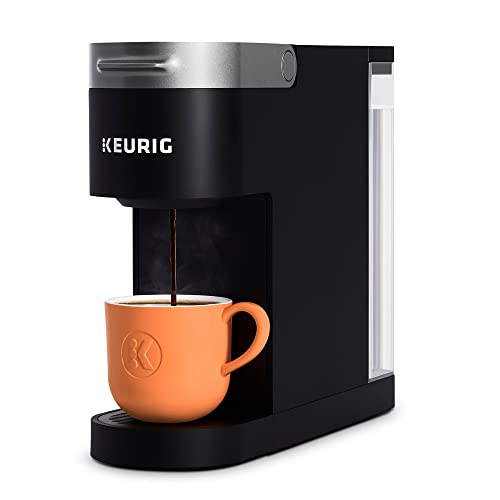
Our Keurig K-Mini review looks at Keurig's simplest pod brewer: a single-serve K-Cup machine under 5 inches wide with a one-cup reservoir, cup sizes from 6 to 12 oz and cord storage. It is built for one cup at a time in tight spaces, from apartment kitchens and dorm rooms to office break corners.
Below you will find the exact US model covered, what is in the box, how setup and daily use work, what cleaning involves and the real cost of running it. We finish with clear alternatives, including the K-Mini Plus and K-Slim, for routines the K-Mini does not handle well.




Quick Verdict: Who Is Keurig K-Mini For?
Who Should Consider It?
The K-Mini is for solo coffee drinkers who want a pod brewer that takes almost no space and almost no thought. If your routine is one mug in the morning, maybe another in the afternoon, and you are happy choosing flavor through pods, it does the job at a low price. It also works with a universal reusable filter if you want to brew your own grounds.
Who Should Choose Another Format?
Choose something else if you want stronger coffee options, brew several cups back to back or share coffee with a household. The K-Mini has no Strong Brew button and a reservoir that holds only one cup. A larger-reservoir brewer like the K-Slim, or a compact drip maker, fits those routines better.
Version, Specifications, and What Is Included
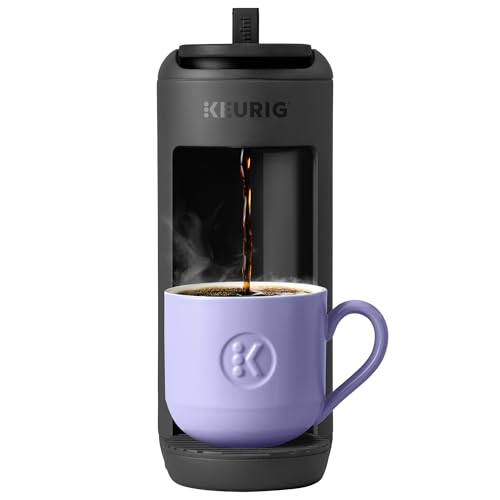
This review covers the US Keurig K-Mini single-serve K-Cup pod coffee maker, here in the Dusty Rose listing (model K-Mini, part 5000350706); the same machine is sold in several colors. It is not the K-Mini Plus, which adds Strong Brew and pod storage, or the K-Mini Mate, which is a newer, different design.
For this Keurig K-Mini review, color does not change the specifications: every K-Mini listing we checked describes the same 6 to 12 oz range, one-cup reservoir, cord storage and 90-second auto off. Some colors sell for less than others, so it is worth comparing a few finishes before you buy.
| Specification | Keurig K-Mini |
|---|---|
| Coffee format | K-Cup pods; ground coffee with a reusable filter (sold separately) |
| Brew sizes | Any size from 6 to 12 oz |
| Strength option | None |
| Reservoir | One-cup reservoir, filled for each brew |
| Width | Less than 5 inches |
| Travel mug clearance | Up to 7.0 inches with drip tray removed |
| Storage | Cord storage |
| Auto off | 90 seconds after the last brew |
| Grinder, milk frother, carafe | None |
| In the box | K-Mini brewer |
The box contains only the brewer. Pods, a reusable filter and descaling solution are separate purchases, and the listing specifically names the My K-Cup universal reusable filter as compatible.

Setup and Kitchen Fit
Initial Setup
Unbox the brewer, wipe it down and run a water-only cleansing brew as the Keurig manual instructs, so the first cup does not pick up any taste from manufacturing. Then decide where the cord will go and wind the excess into the cord storage. That is the whole setup: no clock, no programming and no water filter to install.
Because water goes in one cup at a time, think about your water source. A spot near the sink is ideal, and a filled pitcher beside the brewer works well on a desk or dorm shelf where the tap is down the hall.
Controls and Access
The routine uses one main control. You pour water for the size you want into the reservoir, lift the handle, place a K-Cup, close the handle and press to brew. The reservoir and drip tray are reachable from the front, and you lift out the used pod by hand once brewing ends.
Working Clearance
At less than 5 inches wide, the K-Mini fits where most coffee makers cannot. Allow headroom for the handle to swing up, and space in front so a mug or travel mug up to 7.0 inches tall can slide in once the removable drip tray is out. On a crowded desk, leave a small gap around it so you can wipe up drips easily.
Its low weight and cord storage also make it easy to move between rooms or pack for a temporary stay, which is part of why it is popular with students and people in short-term housing.
Power needs are modest in the sense that it heats only one cup at a time, but it still draws a lot of current while brewing, like any coffee maker. On a shared dorm circuit, avoid running it at the same moment as a microwave or space heater.
Coffee Format and Serving Results
Verified Capabilities
The K-Mini brews K-Cup pods at any size from 6 to 12 oz, with the size set by how much water you add. The listing also confirms compatibility with the My K-Cup universal reusable filter, sold separately, so you can brew your own ground coffee instead of pods.
Results or Research-Based Assessment
This assessment is based on Keurig's documentation and listing details, not on brewing trials. Those sources establish the format, size range and reusable filter compatibility, but they cannot predict how a given pod will taste in your cup. The drink itself is brewed coffee, the same style as a small drip cup, rather than espresso, so plan on coffee with milk rather than café-style espresso drinks if you add milk.
Practical Limitations
Without a Strong Brew button, the only way to get a bolder cup is to choose a stronger pod or brew a smaller size. At 10 or 12 oz, lighter pods can taste thin. There is no iced or temperature setting, so iced coffee means brewing a small, strong cup over ice yourself.
If you mostly drink a standard 8 oz cup of medium or dark roast, none of this is a problem. If you like experimenting with strength or want a large tumbler of coffee, a machine with more settings will suit you better.
A simple trick helps at larger sizes: brew 8 oz instead of 12 and top up with hot water only if the cup tastes too strong. That keeps the extraction from one pod focused on a smaller volume, which many people find more satisfying than a full 12 oz pass through the same pod.
Preparation and Convenience
Verified Capabilities
Making a cup takes four steps: pour water, insert a pod, brew and remove the pod. Keurig describes coffee as made in minutes. There is no pod storage on the K-Mini, so keep pods in a drawer or a small holder nearby, and cord storage keeps the counter neat.
Results or Research-Based Assessment
The K-Mini has no milk frother and does not hold heated water between brews. Auto off turns it off 90 seconds after the last brew, which is useful in shared spaces such as dorms and offices, where a forgotten appliance is a common worry.
Because nothing stays hot, the first cup of the day starts from cold water each time. Keurig describes brewing as taking minutes, which is fine for most mornings, but it is worth knowing if you are used to a machine that keeps a heated tank ready.
Practical Limitations
Every cup requires adding water again, so making two cups in a row is slower than on a brewer with a tank. You also need somewhere to put used pods right away. Keurig does not publish a noise figure, so we make no claim either way, beyond noting that any pod brewer makes some sound while pumping water.
Disposal is worth planning. If you want less pod waste, the reusable filter route cuts it to coffee grounds, which can go in compost or the trash, at the cost of rinsing the filter after each cup.
Controls and Everyday Use
Customization
The only adjustable setting is cup size, from 6 to 12 oz, which you control by the amount of water. There is no strength, temperature or iced option and no programmable memory. The trade-off is that there is nothing to learn: anyone in the house can use it on the first try.
A Complete Daily Routine
A normal morning means filling the reservoir, taking a pod from wherever you store them, brewing, removing the pod and wiping any drips. With a reusable filter, add filling the filter with grounds and rinsing it afterward. Either way, the routine takes a few minutes and leaves little to clean.
If you go the reusable filter route, use a medium grind similar to what you would use for drip coffee, and do not pack the grounds down. Overfilling or using a very fine grind can slow the flow or push grounds into the cup. Start with the amount the filter maker suggests and adjust to taste over a few mornings.
Multiple Servings
Two people can share a K-Mini, but each cup needs its own fill and pod. For a household where everyone drinks coffee at the same time, that queue becomes a nuisance. If that sounds like your home, a pot-based brewer or a pod machine with a large tank is a better choice.
Guests are the other case to think about. For an occasional visitor, brewing two cups one after the other is fine. For regular weekend visitors or a family brunch, many K-Mini owners keep a small drip maker or a French press in the cupboard for those days rather than replacing the K-Mini.
Cleaning and Maintenance
After-Use Tasks
After brewing, lift out and discard the used K-Cup, or empty and rinse the reusable filter if you use one. The removable drip tray holds a full accidental brew, so empty it if a cup overflowed or you forgot the mug. Beyond that, daily cleaning is a quick wipe of the exterior.
Periodic Cleaning and Descaling
Rinse the reservoir area and drip tray every few days and let them dry. Mineral buildup inside the brewer is removed by descaling, which you should do on the schedule and with the method in the Keurig manual, using a descaler the manual approves. Hard water means more frequent descaling.
Reusable filters need their own care. Rinse the mesh right after use so oils do not dry on it, and wash it with warm soapy water now and then. A clogged mesh is a common cause of slow or overflowing brews with ground coffee.
Watch for signs such as slower brewing or cups that come out smaller than the water you added. Those usually point to scale or a clogged needle, so follow the cleaning and descaling steps in your manual.
Access and Service
The drip tray is the main removable part, and the reservoir area is open for filling and wiping. For anything beyond routine cleaning, contact Keurig support and keep your proof of purchase. Do not open the housing yourself, and unplug the brewer and stop using it if the cord is damaged or water leaks near the base.
Purchase Price and Ownership Cost
The Complete Setup
The K-Mini sells for around $79 from Amazon in several colors, with some third-party listings a little lower. The only essential extra is K-Cup pods. A universal reusable filter that names the K-Mini, at around $30, and a descaling kit at around $20 complete the setup.
Recurring Supplies
Pods drive the running cost. Using a 60-count variety pack at around $66 as an example, each cup costs roughly $1.10, or about $400 a year at one cup a day. Brewing your own grounds through a reusable filter can cut that sharply. Budget for descaling a few times a year; we do not estimate repair costs because Keurig does not publish failure data.
Compared with a K-Mini Plus, the K-Mini usually costs less up front, and the running cost is identical because both use the same pods. The extra money for the Plus buys Strong Brew and pod storage, not lower ownership costs, so pick based on features rather than long-term savings.
Pros, Cons, and Alternatives
Strengths and Limitations Established Above
Strengths: it is less than 5 inches wide, brews any cup from 6 to 12 oz, works with a universal reusable filter and turns itself off 90 seconds after brewing. The removable drip tray fits travel mugs up to 7.0 inches and catches a full spill. Limitations: the one-cup reservoir means refilling before every cup, and there is no Strong Brew or iced option.
When an Alternative Fits Better
If you want a bolder cup and built-in pod storage, the Keurig K-Mini Plus review covers the step-up model. For fewer refills in a slim body, the K-Slim's 46 oz reservoir is the better match. See our guide to the best Keurig coffee maker for the full lineup, or the best coffee makers guide if a carafe brewer suits your home.
If you like the K-Mini's size but want a refreshed design, the K-Mini Mate is Keurig's newer compact model with a one-cup reservoir, about 4 inches wide, and support for travel mugs up to 7.25 inches. It solves the same problem rather than the refill issue, so choose it for style or clearance, not capacity.
Frequently Asked Questions
Which exact version does this review cover?
This review covers the US Keurig K-Mini single-serve brewer (model K-Mini), shown in the Dusty Rose listing and sold in several colors with the same features. It has a one-cup reservoir, 6 to 12 oz sizes and cord storage, but no Strong Brew or pod storage, which are K-Mini Plus features.
What extra equipment is required?
Only K-Cup pods are required, since the box contains just the brewer. A universal reusable filter that lists the K-Mini lets you use your own grounds, and a descaler the manual approves keeps it running well. Milk drinks need a separate frother.
What cleaning does daily use require?
Daily cleaning is quick: remove the used pod or rinse the reusable filter and empty the drip tray if needed. Every few days, rinse and dry the drip tray and wipe the reservoir area. Descale on the schedule in your Keurig manual.
Is this model worth it for my routine?
It is worth it if you drink one cup at a time, want the lowest-cost Keurig and are short on space. It is not worth it if you want stronger coffee, often brew two or more cups in a row, or share coffee with a household.
Final Verdict
Our Keurig K-Mini review verdict: it is a good buy for solo drinkers in small spaces who want a low-cost, no-learning pod brewer, especially with a reusable filter to cut pod costs. The compromise is the one-cup reservoir and the lack of strength control, so step up to the K-Mini Plus or K-Slim if either matters. For other everyday options, see our guide to the best coffee maker for home, and check the current price of the K-Mini in the table above.


