
Best Dual Coffee Maker: Buying Guide
Disclosure: We may earn a commission when you buy through links on this page, at no extra cost to you. As an Amazon Associate I earn from qualifying purchases. Learn more

The best dual coffee maker brews a carafe and a single cup: compare pods or grounds, shared or separate tanks and running costs.
The best dual coffee maker solves a common household problem: one person wants a full pot on weekday mornings, while someone else wants a single cup at a different time. A dual brewer combines a carafe side with a single-serve side, but the details differ a lot, from pods versus grounds to one shared reservoir versus two. This guide compares combination brewers sold new on Amazon US, with clear notes on what each side brews, what it costs to feed and how much cleanup it adds.
If you already know whether you use pods, grounds or both, go straight to the quick picks. If not, the buying section explains how each design changes your routine before you choose.




Quick Picks for Dual Coffee Maker
Every pick here brews both a carafe and a single serving, which is the rule for this list. Read them as conditional matches for different routines.
- Ninja CFP301 DualBrew Pro: the best fit for most households, with pods or grounds for single cups, a 12-cup carafe, four brew styles and a separate hot water system.
- Hamilton Beach FlexBrew Trio 2-Way: the value pick, brewing a 12-cup pot or a single cup from a pod or grounds for around $100.
- Keurig K-Duo Hot and Iced (Gen 2): the simplest workflow for K-Cup households, with one large shared reservoir and a front control panel.
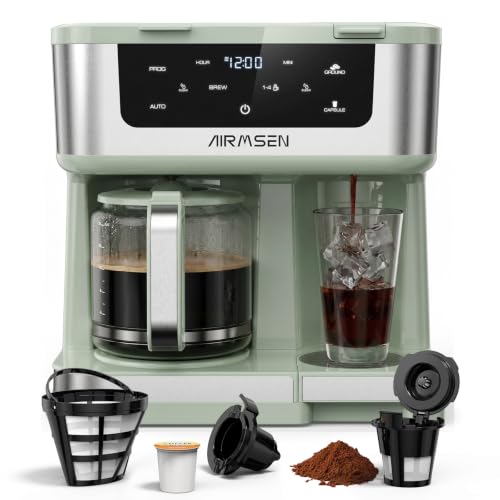
- Hamilton Beach 2-Way Programmable: the pod-free routine, brewing a single cup from grounds with a mesh scoop next to a programmable 12-cup carafe.
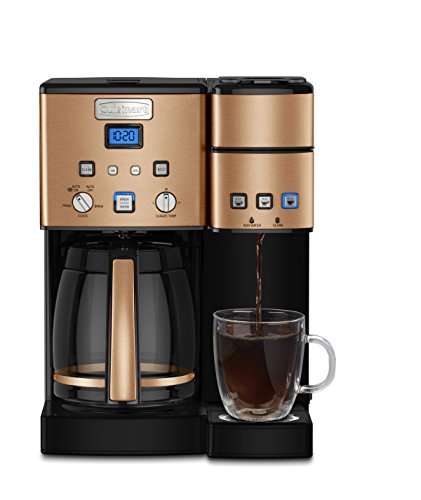
- Cuisinart Coffee Center Barista Bar 4-in-1: the convenience pick, adding Nespresso Original style capsules for espresso on top of a carafe and K-Cup brewer.
The principal trade-off runs between flexibility and simplicity. More formats and brew styles mean more buttons and parts, while simpler two-way brewers do fewer things but are cheaper and easier to learn. Details are in the recommended options below.
Compare the Qualifying Options
Prices are rounded and change often, so confirm the live price in the product table above.
| Model | Role | Single side | Carafe | Reservoir | Main limitation | Price |
|---|---|---|---|---|---|---|
| Ninja CFP301 | Main pick | K-Cup pods or grounds, 6 to 12 oz pods | Glass, up to 12 cups, 4 sizes | See listing | Many settings to learn | Around $230 |
| Hamilton Beach FlexBrew Trio | Value | Pod (up to 10 oz) or grounds (14 oz mug) | 12 cups, programmable | Two, with water windows | Two tanks to fill | Around $100 |
| Keurig K-Duo Gen 2 | Simpler workflow | K-Cup pods, 6 to 12 oz | Glass, 6 to 12 cups | One shared 72 oz | Grounds need a reusable filter for single cups | Around $130 |
| Hamilton Beach 2-Way | Pod-free routine | Grounds only, up to 14 oz | 12 cups, 24 hour timer | Two, with water windows | Not compatible with K-Cup pods | Around $90 |
| Cuisinart Barista Bar 4-in-1 | Added convenience | K-Cup pods (6, 8, 10 oz) and Nespresso Original style capsules | Up to 12 cups, keep warm up to 4 hours | See listing | Large and pricier | Around $250 |
Manufacturer "cups" are about 5 oz each on these carafes, so a 12-cup pot fills roughly six 10 oz mugs. Check footprints on each listing, since dual brewers are wider than standard drip machines.
How We Selected the Shortlist
Each machine had to brew both a full carafe and a single serving from one appliance, sold new on Amazon US. We left out renewed and refurbished listings, separate machines sold as a bundle, and commercial double-pot brewers that make two carafes but no single cup.
We then compared current listings, manufacturer feature lists and package contents, and read buyer feedback in aggregate for recurring praise and complaints. Three questions shaped each role: what the single side brews (pods, grounds or both) and in which sizes, how many steps a normal morning takes on each side, and what the complete setup costs once you count pods, filters and adapters. To pick the best dual coffee maker for each routine, we relied on specifications, listings and owner feedback rather than brewing trials of our own, so you will not find invented taste scores or brew times here.
Recommended Options
Ninja CFP301 DualBrew Pro: Best fit for the main use case
The Ninja CFP301 is the most flexible pick for households that switch between a pot and single cups. Its single-serve side brews K-Cup compatible pods or your own grounds, and the carafe side handles a quarter, half, three quarters or full 12-cup glass carafe. Ninja counts 13 sizes in total, including small cup, XL cup, travel mug and XL travel mug for grounds, plus four pod sizes from 6 to 12 oz.
Two capabilities make it useful day to day. Four brew styles (Classic, Rich, Over Ice and Specialty) cover hot coffee, iced coffee and a rich concentrate for lattes, and the CFP301 listing names a frother for the milk side of those drinks. An independent hot water system, kept separate from the coffee path, has hot and boil settings for tea, oatmeal or instant soup.
The limitation is complexity. With pods, grounds, sizes, styles and a hot water spout, there is more to learn than on a basic two-way brewer, and more parts to rinse. Skip it if you only want a simple pot plus the occasional pod. At around $230, it costs more than the Hamilton Beach options but replaces a kettle and a pod machine.
Hamilton Beach FlexBrew Trio 2-Way: Best value within the stated scope
The FlexBrew Trio gives you three ways to brew for about the price of a basic pod machine. The carafe side makes up to 12 cups from ground coffee, and the single side brews a pod (K-Cup or another brand) up to 10 oz, or grounds to fill a 14 oz travel mug. The included pod holder and single-serve grounds basket handle both, and the cup rest lifts out for tall mugs.
Two features keep the daily workflow simple. Easy-Touch programming has the pot ready when you wake up, and AutoPause and Pour lets you grab a cup mid brew. The carafe stays warm for 2 hours before automatic shut off, and Select-a-Brew offers regular or bold strength. Each side has its own reservoir with a water window, so you always know how much to add.
The limitation is that two reservoirs mean two places to fill, and the single side is less versatile than Ninja's. Skip it if you want iced or concentrated brew styles. For most homes it is the best value, with a reusable filter on the carafe side that cuts paper costs.
Keurig K-Duo Hot and Iced (Gen 2): Best for a simpler workflow
The Keurig K-Duo suits households that already use K-Cup pods and want a carafe for weekends or guests. Its single side brews 6, 8, 10 or 12 oz cups from pods, and the carafe side brews 6, 8, 10 or 12 cups of ground coffee into a glass carafe designed to limit dripping.
The setup cost and daily routine are both easy to understand. One 72 oz removable reservoir is shared by both sides, so there is only one tank to fill and fewer refills overall. A front-facing control panel puts every choice in one place, and MultiStream technology spreads water evenly across the grounds. Brew Over Ice adjusts temperature for iced single cups, while Strong and Extra Hot settings let you adjust the cup.
The limitation is that the single side is built around pods, so using your own grounds for a single cup needs a reusable K-Cup filter. Skip it if you dislike pod costs or waste. At around $130, it is a sensible middle ground between the value Hamilton Beach and the feature-rich Ninja.
Hamilton Beach 2-Way Programmable: Best for an alternative serving routine
The Hamilton Beach 2-Way is for people who want single cups without pods. The single side brews up to 14 oz into a cup or travel mug using the included mesh scoop: scoop ground coffee, place it and brew. The carafe side makes up to 12 cups with ground coffee, so the whole machine runs on one bag of coffee.
Two features fit this routine well. You can program the carafe up to 24 hours in advance for wake-up ready coffee, and choose bold or regular strength. AutoPause and Pour lets you take a cup before the pot finishes, and each side has its own reservoir with a water window.
The limitation is clear in the listing: it is not compatible with K-Cup pods, so anyone in the house who prefers pods will be out of luck. Skip it if you want iced settings or a hot water spout. For around $90, it is the cheapest way to run a dual setup, and skipping pods means less to buy and throw away.
Cuisinart Coffee Center Barista Bar 4-in-1: Best for added control or convenience
The Barista Bar goes further than other dual brewers by adding espresso-style capsules. Its carafe side brews up to 12 cups, and the single side takes Keurig K-Cup or other single serve pods in 6, 8 and 10 oz sizes. It is also compatible with Nespresso OriginalLine-style capsules for single and double espresso, which the listing pairs with cappuccinos and lattes.
Convenience features focus on the carafe. Fully automatic brewing with 24 hour programmability, adjustable keep warm for up to 4 hours and Brew Pause make it easy to plan mornings. A brew strength control, a gold-tone permanent filter and a charcoal water filter are included, so you need no paper filters.
The limitation is size and price: at around $250 it is the most expensive pick here, and buyer feedback is a little more mixed than for the Hamilton Beach models. Skip it if you never drink espresso-style coffee, since a simpler brewer covers pots and pods for less. It suits households with three coffee habits under one roof.
What to Look for Before Buying
Single Servings Plus Carafe Brewing
A true dual coffee maker brews both a carafe and a single serving, so start by checking what the single side accepts. Some take only pods (Keurig K-Duo), some take only grounds (Hamilton Beach 2-Way), and some take both (Ninja CFP301 and FlexBrew Trio). If anyone in your house uses pods while others prefer grounds, a pods-or-grounds machine avoids arguments.
Next, check the adapters and baskets in the box. The FlexBrew Trio includes a pod holder and a single-serve grounds basket. The K-Duo needs a separately sold reusable filter for single-cup grounds, and the Barista Bar adds a capsule brewer for Nespresso Original style capsules.
Scheduling usually applies to the carafe side only, so the single side is brewed on demand. Do not assume both sides can brew at the same time; none of these listings promise simultaneous brewing, so plan on one brew at a time. Finally, look at the warming plate: a glass carafe on a hot plate is fine for an hour or two, but long holds can taste flat.
Coffee Format and Serving Needs
Count how much coffee you brew at once. Manufacturer cups on these machines are about 5 oz, so a 12-cup carafe gives roughly six 10 oz mugs, enough for two or three coffee drinkers in the morning. If you rarely brew more than a few mugs, look for small batch sizes like the Ninja's quarter and half carafe settings.
For single servings, match the size to your mug. Pod sides usually top out at 10 to 12 oz, while grounds sides often reach a 14 oz travel mug or more. Removable cup rests or adjustable trays matter if you use tall travel mugs.
Think about cost per cup, too. Pods cost more per serving than grounds, so a household that drinks several single cups a day may save money with a grounds-only single side. Brew styles like Over Ice or Specialty concentrate add variety, but they are not espresso, so do not expect café espresso from a drip brewer.
Daily Workflow and Cleanup
List the steps for each side. For the carafe: fill the reservoir, add a filter and grounds, program or press brew, then wash the carafe and empty the filter. For a single cup: add water if the side has its own tank, insert a pod or grounds basket, choose a size and brew.
A shared reservoir, like the K-Duo's 72 oz tank, saves one step every morning. Two reservoirs let each side run separately but mean two tanks to watch. Water windows help you avoid overfilling.
Separate daily cleaning from maintenance. Daily, rinse the carafe, filter basket and pod holder, and empty the drip tray. Periodically, descale with a product your manual approves and replace charcoal water filters if the machine uses them. Finally, measure your counter, since dual brewers are wide, and make sure controls and reservoirs are easy to reach under your cabinets.
Which Option Fits Your Routine?
Your Must-Have Function
If pods and grounds for single cups are both essential, pick the Ninja CFP301 or the FlexBrew Trio. If you want no pods at all, choose the Hamilton Beach 2-Way. For espresso-style capsules, only the Barista Bar qualifies.
Your Preparation and Cleanup Tolerance
One reservoir and pods make the K-Duo the least fiddly. Grounds on both sides mean more scooping and rinsing but lower running costs. The Ninja adds styles and a hot water spout, so expect a few more parts to clean.
Your Complete Budget
Add pods, filters and descaler to the price. Pod-heavy households pay more every month, while grounds-only machines cost least over time.
Frequently Asked Questions
Which features matter most for this use case?
What the single side accepts matters most, followed by carafe size and reservoir design. A pods-or-grounds single side suits mixed households, while a grounds-only side saves money. After that, look for carafe programming, small batch settings and a removable cup rest if you use travel mugs.
How do I choose the correct serving capacity?
Choose a carafe by how many full mugs you pour at once, remembering that manufacturer cups are about 5 oz. A 12-cup carafe fills roughly six 10 oz mugs. For the single side, match the largest size to your usual mug or travel mug, since pod sides often stop at 10 to 12 oz.
What extra equipment will I need?
Most dual brewers need only coffee and filters, but check the box contents. Pod machines may need a reusable filter for single-cup grounds, and machines without a permanent filter need paper filters for the carafe. A descaler approved by your manual is the main regular care item.
How much daily cleaning should I expect?
Expect a few minutes a day across both sides. Rinse the carafe and filter basket after each pot, empty the pod holder or grounds basket after single cups, and wipe the drip tray. Descale on the schedule in your manual, more often if your water is hard.
Final Verdict
The best dual coffee maker for most households is the Ninja CFP301 DualBrew Pro, because it brews pods or grounds for single cups, a full 12-cup carafe and hot water from one machine. If you want to spend less and keep things simple, the Hamilton Beach FlexBrew Trio is the better alternative. The deciding trade-off is versatility against simplicity and price. To compare other formats, see our guides to the best coffee makers and the best coffee maker for home use, then check the live price in the table above.


