Best Espresso Machine For Large Families: Buying Guide
Disclosure: We may earn a commission when you buy through links on this page, at no extra cost to you. As an Amazon Associate I earn from qualifying purchases. Learn more

The best espresso machine for large families keeps up with the morning rush through dual boilers, two-drink functions or profiles.
The best espresso machine for large families keeps up when four, five or six people want coffee in the same half hour, so it needs to brew and steam without long waits, hold plenty of water and make each person's drink without constant resetting. This guide covers dual boiler machines and fully automatic models with two-drink functions, user profiles and even drip coffee, all sold new on Amazon US.
If you already know whether your household wants to make drinks by hand or press a button, the quick picks below will narrow things down. If the morning rush is the real problem, the buying section explains peak demand, batch brewing and milk workflow in plain terms.





Quick Picks for Espresso Machine For Large Families
Every pick here can handle several drinks in a row better than a basic single boiler machine, through simultaneous brewing and steaming, two-cup functions, large tanks or a carafe option. Compact single-shot machines are left out, because the wait between drinks adds up fast in a busy kitchen.
- Breville Dual Boiler (BES920XL): the best fit for families with a confident home barista, since it brews and steams at the same time.
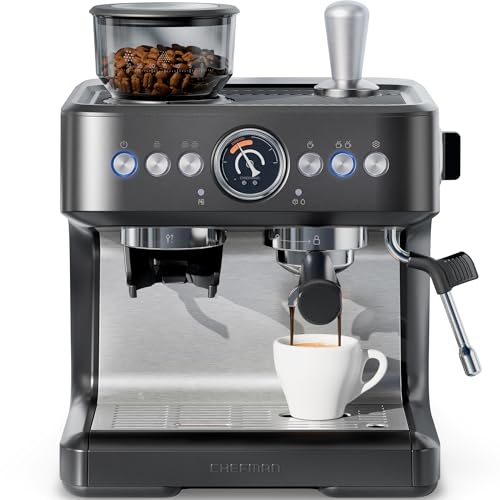
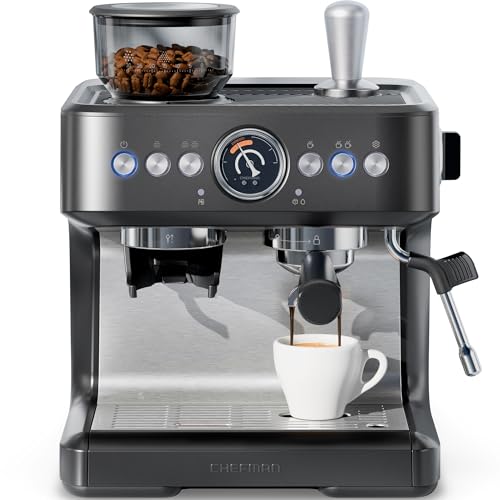
- Chefman Crema Deluxe: the value pick, a double boiler machine with a 30-setting grinder and a 3 liter tank for around $270.
- Miele CM 6160 MilkPerfection: the simplest workflow, with one touch for two specialty drinks and up to four personal profiles.
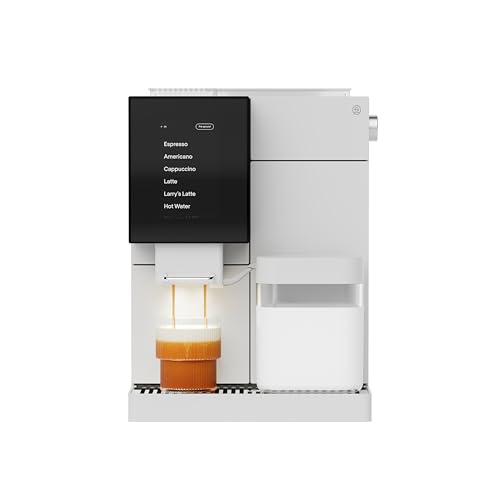
- Terra Kaffe TK-02: the alternative routine pick for homes that want both espresso and real drip coffee from whole beans.
- Jura J8 twin: the choice for added convenience, with two bean containers and grinders so two coffees are always ready to go.
The core trade-off is skill versus automation. Manual dual boiler machines are faster per drink once you know them, while fully automatic machines let anyone in the family make a drink, at a much higher price.
Compare the Qualifying Options
Prices are rounded; the product table above shows the live price. Water capacity is listed where the maker states it.
| Model | Role | Coffee format | Family-friendly feature | Milk system | Main limitation | Price |
|---|---|---|---|---|---|---|
| Breville BES920XL Dual Boiler | Main pick | Ground espresso (grinder needed) | Simultaneous extraction and steaming, PID, shot clock | Manual steam wand | Requires skill and a separate grinder | Around $1,600 |
| Chefman Crema Deluxe | Value | Whole beans (built-in grinder) | Double boiler, 3 L removable tank | Manual steam wand | Still one drink at a time by hand | Around $270 |
| Miele CM 6160 | Simple workflow | Whole beans | OneTouch for Two, 4 profiles, coffee pot function | Automatic | Coffee pot sold separately; premium price | Around $2,250 |
| Terra Kaffe TK-02 | Alternate routine | Whole beans or pre-ground (no pods) | Espresso and drip coffee, app saves drinks | Automatic, froths all milk types | App-centric setup | Around $2,000 |
| Jura J8 twin | Added convenience | Whole beans, two hoppers | Two grinders, 31 options, 6.7 inch touchscreen | Automatic, Sweet Foam function | Highest price here | Around $3,600 |
The Breville needs a capable espresso grinder, a tamper upgrade is optional, and every machine benefits from a water filter and the maker's cleaning products. The Miele's coffee pot is an optional accessory.
How We Selected the Shortlist
We started from the problem large households actually have: too many drinks requested at once. That made the eligibility rule clear. A machine qualified only if it reduces waiting during peak demand, through dual boilers that brew and steam together, two-drink functions, a large water tank, user profiles or a batch coffee option.
Next we confirmed each model is sold new on Amazon US, checked model codes and what is in the box, and compared manufacturer specifications. We read buyer feedback in aggregate for recurring comments on speed, reliability and cleaning effort when a machine is used many times a day. No brewing trials were run for this guide, so judgments come from published specifications, listing details and owner feedback. Three questions shaped each role: how the machine handles espresso extraction and milk, how it copes with peak demand, and whether it offers any form of large-batch brewing.
Recommended Options
Breville Dual Boiler: Best fit for the main use case
The Breville BES920XL suits large families with at least one person who enjoys making espresso and wants to serve everyone quickly. Its two stainless steel boilers and a heated group head let it extract espresso and steam milk at the same time, so a cappuccino does not mean waiting for the machine to switch modes.
Two features help when you are making drink after drink. PID digital temperature control holds brewing water within about 2°F, according to Breville, which keeps the fifth shot consistent with the first. Low-pressure pre-infusion and an over-pressure valve help even extraction, and the LCD shows a shot clock that guides timing for anyone learning.
The limitation is skill and setup. It uses a 58mm portafilter with a 19 to 22 gram dose, so you need a good espresso grinder and some practice; there is no built-in grinder or automatic milk. Skip it if several family members want to make their own drinks without learning espresso basics. For a household with a dedicated home barista, though, it is the fastest way to serve many milk drinks.

Chefman Crema Deluxe: Best value within the stated scope
The Chefman Crema Deluxe brings a double boiler to a much lower price. You can froth milk and brew espresso at the same time, which is exactly the bottleneck that slows family mornings on single boiler machines.
Two features make it practical for a big household. The 3 liter water reservoir is large and fully removable, so you are not refilling it between every few drinks. A built-in conical burr grinder with 30 settings dispenses coffee straight into the 58mm portafilter, and you can customize shot temperature and volume, according to Chefman.
The limitation is that it is still a semi-automatic machine: someone has to grind, tamp, brew and steam for each drink, so throughput depends on the person making them. Build quality and long-term consistency are less proven than on premium machines. Skip it if you want one-touch drinks for every family member. For a budget-conscious household with one willing barista, it removes the main waiting time.
Miele CM 6160 MilkPerfection: Best for a simpler workflow
The Miele CM 6160 suits families where everyone wants to make their own drink at the touch of a button. OneTouch for Two prepares two specialty drinks at once, and you can save up to four personal profiles so each person's favorite settings are ready.
Two features are especially useful for large households. The coffee pot function prepares up to 8 cups at a time, although the pot itself is sold separately, which covers weekend brunch or guests. The DoubleShot function makes a larger drink in one go, and the expert mode lets you adjust grind and water quantity. WiFiConnect adds app control.
The limitation is price: at around $2,250 it is a major purchase, and you will pay extra for the coffee pot accessory. Owner feedback is more mixed than for some rivals, so register the warranty and keep up with the cleaning program. Skip it if most of your household drinks straight espresso, where a manual machine is cheaper. The box includes descaling and cleaning tablets.

Terra Kaffe TK-02: Best for an alternative serving routine
The Terra Kaffe TK-02 is for large families split between espresso drinkers and people who just want a mug of coffee. Its hybrid brew unit prepares authentic drip coffee as well as espresso from whole beans or pre-ground coffee, according to Terra Kaffe, so one machine covers both camps.
Two features suit a busy household. Every drink you create is saved to your personal Terra Kaffe account, so each family member's preferences stay ready. The app can also set auto-wake and sleep times, so the machine is warmed up before the morning rush, and it froths all milk types, including plant-based options.
The limitation is that much of the personalization lives in the app, which not every family member will want to use, and it does not work with pod-based pre-ground coffee. Buyer feedback is more varied than for the leading brands. Skip it if nobody in your home drinks drip coffee, because a dedicated espresso machine will be simpler. Over 100,000 drink combinations are possible, according to the listing.

Jura J8 twin: Best for added control or convenience
The Jura J8 twin is the premium option for big families with different coffee tastes. It has two 6.3 ounce bean containers, each with its own conical grinder and Aroma Control, so you can keep a regular roast and a decaf or a lighter bean loaded at the same time.
Two features add convenience. A large 6.7 inch touchscreen makes the 31 drink options easy to browse, and you can program grind consistency, strength, volume and the amount of milk or milk foam for each. The exclusive Sweet Foam function and One-Touch Americano round out the menu, and the eighth-generation brew unit with Pulse Extraction Process handles espresso specialties.
The limitation is cost: at around $3,600, it is the most expensive machine here by a wide margin. Two hoppers also means two sets of beans to manage. Skip it if your family drinks one kind of coffee. For households that genuinely need regular and decaf on demand, the twin grinders solve a daily problem.

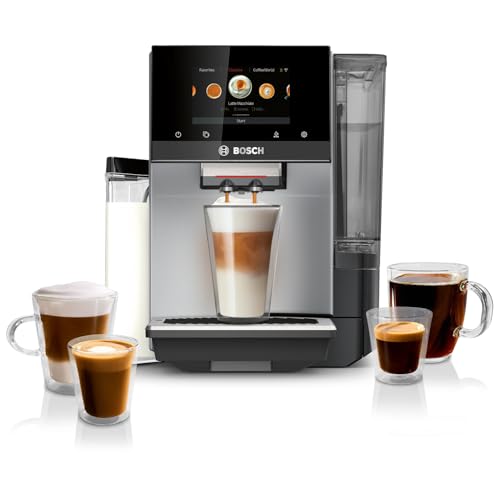
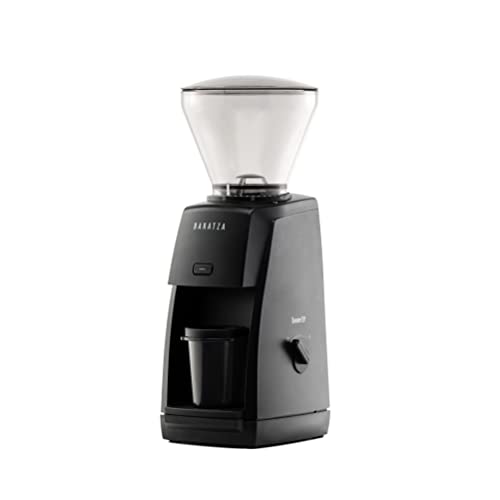
The product table adds more options, including the Breville Oracle Jet with automatic milk texturing, the Jura ENA 8 with a Two Cup function, the Bosch 800 Series, the KitchenAid KF6 with a 2.2 liter tank and the Baratza Encore ESP grinder for the Breville Dual Boiler. For a full roundup across every budget, see our guide to the best espresso machine.
What to Look for Before Buying
Espresso Extraction and Milk Workflow
For a large family, the milk step is usually the bottleneck. Single boiler machines must heat up for steam after brewing, then cool down before the next shot. Dual boiler or double boiler machines keep brew water and steam ready at the same time, which can cut the wait per cappuccino noticeably.
Fully automatic machines handle milk differently: they froth and pour automatically, and some make two drinks at once. That reduces skill, not necessarily time, so check whether a machine can prepare two milk drinks together or must make them one after another.
Extraction consistency matters when you are pulling many shots in a row. Temperature control, such as the Breville's PID, helps keep later shots consistent with the first. Whatever you buy, clean the milk path between batches so the last drink of the morning is as good as the first.
Peak Demand and Batch Brewing
The best espresso machine for large families is sized for your busiest 30 minutes, not an average day. Count how many drinks are needed in that window and how many are milk-based. Six cappuccinos in 20 minutes is a very different load from two espressos and four mugs of drip coffee.
Look at water tank size and bean capacity next. A 3 liter tank like the Chefman's, or the KitchenAid KF6's 2.2 liters, means fewer refills mid-rush. Larger bean hoppers or twin hoppers help too. Drip trays and grounds containers fill faster with heavy use, so easy front access matters.
Finally, think about who makes the drinks. If one person serves everyone, a fast manual machine works. If each person makes their own, profiles and one-touch drinks prevent mistakes and arguments over settings.
Large-Batch Brewing
Espresso machines make drinks one or two at a time, so true batch brewing needs a different approach. Some fully automatic machines, like the Miele CM 6160, offer a coffee pot function that brews several cups into a carafe, and hybrids like the Terra Kaffe TK-02 make real drip coffee.
If your family drinks a lot of black coffee, a separate drip coffee maker beside the espresso machine can be cheaper and faster than asking one machine to do everything. Keep espresso for milk drinks and let the drip brewer handle the big mugs.
Do not compare espresso output with drip output as if they were the same. A double espresso is about 2 oz; a mug of drip coffee is 10 to 12 oz. Plan for the drinks your family actually makes, and consider the super automatic options in our best super automatic espresso machine guide if one-touch convenience matters most.
Which Option Fits Your Routine?
Your Must-Have Function
If speed with skill is the goal, choose the Breville Dual Boiler. If everyone must make their own drink, the Miele or Jura J8 twin. If drip coffee is essential, the Terra Kaffe.
Your Preparation and Cleanup Tolerance
Manual machines need a knock box, tamping and steam wand care. Fully automatic machines need daily emptying and regular cleaning cycles. Heavy use makes either routine more frequent.
Your Complete Budget
Add a grinder for the Breville, water filters, cleaning tablets, descaler and milk system cleaner to the machine price. Heavy family use means these consumables run out faster.
Frequently Asked Questions
Which features matter most for this use case?
Simultaneous brewing and steaming, a large water tank and either two-cup functions or user profiles matter most for large families. These features reduce waiting and resetting during the morning rush. After that, easy access to the drip tray and grounds container helps, since they fill quickly with heavy use.
How do I choose the correct serving capacity?
Count the drinks your household needs in its busiest half hour and note how many include milk. If that number is above four or five, favor dual boilers, two-drink functions or a carafe option. Check water tank capacity against your daily total so you are not refilling mid-rush.
What extra equipment will I need?
Semi-automatic machines without grinders need a burr grinder suited to espresso, plus a tamper, milk pitchers and a knock box. Fully automatic machines need the maker's water filters, cleaning tablets, descaler and milk system cleaner. A spare milk pitcher helps when several people want drinks at once.
How much daily cleaning should I expect?
Expect five to ten minutes a day with heavy family use: empty the drip tray and grounds, rinse milk parts, wipe the steam wand and refill water and beans. Automatic machines run rinse cycles but still need emptying. Follow the manual for descaling and brew unit cleaning, which come around faster with high volume.
Final Verdict
For a family with a willing home barista, the Breville Dual Boiler is the best espresso machine for large families because it brews and steams at the same time with consistent temperature. If everyone wants to press a button and walk away, the Miele CM 6160 with OneTouch for Two and four profiles is the alternative, at a higher price. Decide who will make the drinks, check today's prices in the table, and choose the exact model that fits your busiest morning.