
Breville Barista Express vs Pro: Which Should You Choose?
Disclosure: We may earn a commission when you buy through links on this page, at no extra cost to you. As an Amazon Associate I earn from qualifying purchases. Learn more

Breville Barista Express vs Pro compared: heating, controls, milk workflow, warranty and the real price gap.
The Breville Barista Express vs Pro question matters because the two machines look alike and share the same basic recipe: an integrated conical burr grinder, a 54mm portafilter, digital temperature control and a manual steam wand. The differences sit in heating, controls and warranty, and those decide whether the Pro is worth paying more for.
This comparison covers the current US models, the Barista Express BES870XL and the Barista Pro BES878, using their listed specifications and included accessories. The quick verdict gives the short answer, and the later sections walk through preparation, milk, cleaning and value in turn.
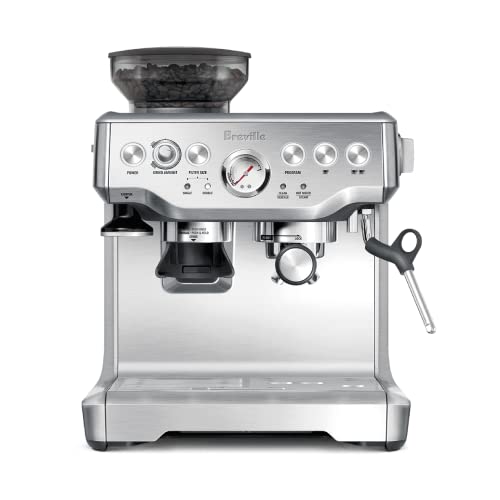
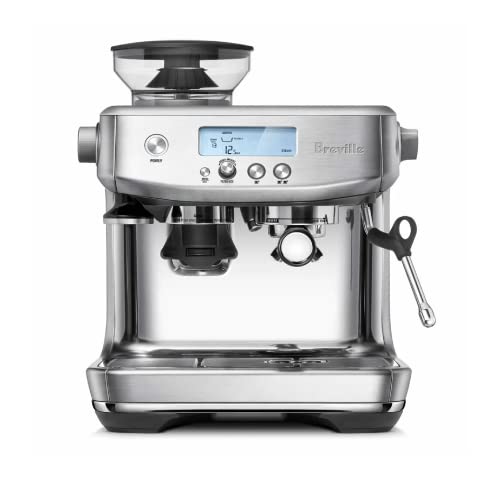


Quick Verdict
Choose Barista Express If…
Choose the Barista Express if you want an all-in-one machine with a built-in grinder and manual steam wand at the lower price, and a possible short wait between brewing and steaming does not bother you. Its grind size dial, adjustable grind amount and manual override cover the adjustments most home baristas need. The compromise is a shorter warranty and no LCD display.
Choose Barista Pro If…
Choose the Barista Pro if you make several milk drinks in a row and want less waiting. Its ThermoJet system reaches extraction temperature in about three seconds and moves from espresso to steam right away, and an LCD shows grinding and extraction progress. The compromise is a higher price for a machine that brews the same style of espresso.
Scope and Side-by-Side Table
Both are current US versions sold new on Amazon US: the Barista Express BES870XL is rated at 1600 watts and the Barista Pro BES878 at 1680 watts, both on 120 volts. The pairing is fair: same format, same portafilter size, both with built-in grinders and manual wands, at prices a little over $100 apart.
Most people weighing the Breville Barista Express vs Pro have already decided they want a semi-automatic machine with a grinder built in. The question is whether the Pro's upgrades change daily life enough to justify the gap, so the sections below focus on routine rather than spec sheets alone.
| Feature | Barista Express (BES870XL) | Barista Pro (BES878) |
|---|---|---|
| Coffee output | Single or double espresso | 1 or 2 cup volumetric shots |
| Grinder | Integrated conical burr, grind size dial, adjustable grind amount, manual override | Integrated conical burr, single-touch dosing, adjustable grinding |
| Heating | PID temperature control | ThermoJet, about 3 seconds to extraction temperature, PID within +/- 2°C |
| Pre-infusion | Low pressure | Low pressure |
| Milk | Manual steam wand | Manual steam wand, instant espresso-to-steam transition |
| Display | Dials and buttons | LCD with grind and extraction progress |
| Capacity | 1/2 lb hopper, 67 oz tank | 1/2 lb hopper, 67 oz tank |
| Clearance | See listing | See listing |
| Care included | Cleaning disc, tablets, brush, Allen key, water filter | Cleaning kit, water filter |
| Warranty | 1 year limited | 2 year limited |
| Full setup cost | Around $500 | Around $630 |
How We Compared These Options
We compared the two machines from their manufacturer listings, included accessories and stated warranties, and read buyer feedback in aggregate for recurring patterns. Because both include grinders, milk jugs and cleaning supplies, the complete setups are directly comparable without extra purchases.
We did not pull matched shots with recorded beans, so we do not claim one makes better-tasting espresso or lasts longer. Specifications below come from the listings; judgments about routine and value are ours, and terms such as ThermoJet are treated as descriptions of features, not measured superiority.
Where a listing is silent on a detail, such as exact dimensions, we say so rather than guess, and we point you to the listing or manual to confirm before buying.
Coffee Preparation and Adjustment
What Each Option Supports
Both machines grind beans on demand into the portafilter with an integrated conical burr grinder, use a 54mm portafilter with single and dual wall baskets, and include the Razor dose trimming tool. The Barista Express uses a grind size dial, adjustable grind amount and manual override. The Barista Pro delivers its dose with a single touch, offers adjustable grinding and 1 or 2 cup volumetric shots, and its listing specifies PID control within +/- 2°C.
What Changes in Everyday Use
Both still need you to dose, tamp and judge the shot. On the Express, you work from dials and buttons and learn its behavior by watching the shot. On the Pro, the LCD shows grinding and extraction progress, which makes it easier to see what the machine is doing and repeat a setting. Either way, expect a few practice shots after changing beans, and keep a note of the grind setting that works for each coffee you buy.
Volumetric shots on the Pro mean the machine stops the shot at a programmed volume for a 1 or 2 cup setting, which helps when several people use it and want the same result. The Express offers single or double shot buttons plus a manual override on the grinder, which some owners like because it lets them add a little more coffee by feel without changing a setting.
Who Benefits from the Difference
The screen and heating system make the Pro more informative and quicker, not automatically better at extraction. If you like seeing progress and dialing in by numbers, the Pro's interface helps. If you are comfortable with dials and want the same core grinding and extraction features for less money, the Express does the job.
Milk and Drink Options
What Each Option Supports
Both machines have a manual steam wand designed for hand-textured microfoam and include a stainless steel milk jug; the Pro's jug is listed at 480 ml. The Pro adds an instant transition from espresso to steam thanks to ThermoJet heating. Neither has automatic milk texturing, a milk carafe or a cold brew mode, so both make the same classic menu of espresso, Americano, cappuccino, latte and flat white.
What Changes in Everyday Use
The practical difference shows when you make a latte right after pulling a shot. The Pro is designed to switch to steam immediately, while the Express listing makes no such claim, so plan for a short wait between brewing and steaming. For one drink a day this is a minor point; for several milk drinks in a row, the time adds up.
Who Benefits from the Difference
Neither machine has cold extraction; iced lattes on both are made by pulling a shot over ice and adding cold milk. If you make milk drinks for two or more people most mornings, the Pro's quicker switch to steam makes the routine smoother. If you drink one latte a day or mostly straight espresso, the Express covers the same drinks for less.
Milk technique is the same on both, since both wands are manual. The skills you learn on one, such as positioning the tip and judging texture by sound, transfer directly to the other, so neither machine is easier to learn milk on.
Daily Use and Maintenance
What Each Option Supports
Both have a 1/2 lb bean hopper on top and a 67 oz water tank. The Express is controlled with dials and buttons and includes a cleaning disc, tablets, brush tool, Allen key and water filter. The Pro uses an LCD interface and includes a cleaning kit and water filter. Both have a removable drip tray, portafilter, baskets and steam wand tip as user-accessible parts.
What Changes in Everyday Use
Daily tasks are identical: knock out the puck, rinse the portafilter, wipe and purge the steam wand, and empty the drip tray. Periodically, run cleaning cycles with tablets, replace the water filter, descale with an approved solution and brush out the grinder, as each manual directs. Cleaning tablets sold as compatible with the Barista Express are widely available, and a knock box is a useful extra for either.
Who Benefits from the Difference
We make no claim that either machine lasts longer, since the listings give no reliability data. What the listings do show is that the Pro carries a 2 year limited warranty against the Express's 1 year, which matters if you want longer coverage. Maintenance effort itself is about the same for both.
First setup also follows the same pattern for both machines: wash the removable parts, prepare and fit the water filter as the manual describes, fill the tank and run water through the group head and steam wand before the first shot. Start at the manual's recommended grind setting and adjust from there.
Complete Price and Value
What Each Option Supports
On the same day, for new units, the Barista Express BES870XL listed at around $500 and the Barista Pro BES878 at around $630, a difference of roughly $130. Both prices include the grinder, milk jug, trimming tool, filter baskets and starter cleaning supplies, so no extra equipment is required to start. Prices vary by finish and change often, so check the product table above.
What Changes in Everyday Use
Running costs are essentially the same: whole beans, milk, cleaning tablets, replacement water filters and an approved descaler. Neither needs a separate grinder or pitcher, since both include a built-in grinder and a stainless milk jug. Optional extras such as a knock box or scale cost the same for either machine, so the purchase price difference is the main cost gap.
Who Benefits from the Difference
Both are Breville machines sold and supported in the US, so value comes down to whether the Pro's extras fit your routine. For roughly $130 more, you get faster heat-up, instant steam, an LCD and a longer warranty. If those save you time every morning, the Pro earns its price; if not, the Express is the better value.
It helps to think about the gap per year of ownership. Spread over a few years of daily drinks, around $130 is a small amount per cup, so if you will use the faster steaming every day, the Pro's premium is easy to justify. If you would rarely notice it, that money is better spent on good beans or a scale.
Representative Products and Pairing Limits
A Verified Pair at a Relevant Price Level
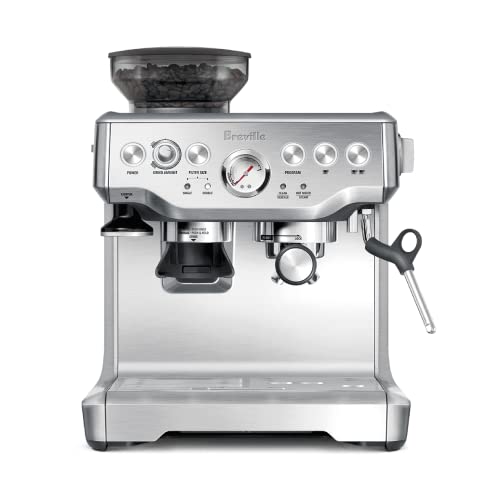
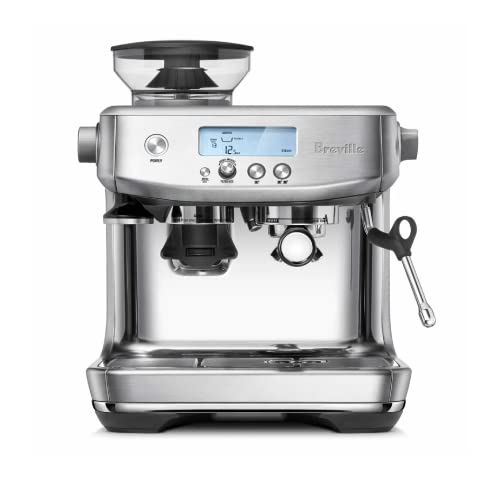
The Barista Express BES870XL and the Barista Pro BES878 are the exact pair compared here. The Express's consequential differences are its lower price and its dial-based grind controls with manual override; its limitation is the slower move from brewing to steaming and a 1 year warranty. The Pro's differences are ThermoJet heating with instant steam and an LCD interface; its limitation is the higher price for the same style of drinks.
What the Pair Does Not Prove
This pair does not show that faster heating makes better espresso, only that it changes the routine. The two machines share the same portafilter size, hopper and tank capacity, so their differences are workflow and support rather than drink type.
It also does not cover other Barista Series models. The Barista Express Impress adds assisted tamping and intelligent dosing, and the Barista Touch adds a touchscreen and automatic milk texturing; their features should not be read into either machine here. For the full lineup, see our guide to the best Breville espresso machine.
Breville Barista Express vs Pro: Which Should You Choose?
For Convenience-First Buyers
If convenience means less waiting, the Pro's three-second heat-up and instant steam make mornings quicker, especially for milk drinks. If convenience means fewer decisions at checkout and a lower price, the Express is simpler. For push-button drinks with no tamping at all, look at our guide to the best super automatic espresso machine instead.
For Buyers Seeking Control or Different Drinks
Both make the same drinks, so choose by how you like to work. The Express's manual grind override suits people who like to grind by feel, while the Pro's LCD and volumetric shot settings suit people who like repeatable numbers. Neither offers automatic milk, so if that matters, look beyond this pair.
If you are torn, think about what frustrates you about coffee routines today. People who hate waiting tend to appreciate the Pro every morning, while people who enjoy the ritual rarely miss its speed and prefer keeping the savings.
For Budget and Space Constraints
The Express saves around $130, and both machines carry the same hopper and tank sizes, so you should plan for a similar footprint; check the listing dimensions for your counter. The compromise is clear: save money with the Express, or pay for speed, a screen and a longer warranty with the Pro. Leave room above the machine for refilling the hopper and around it for lifting out the water tank.
Frequently Asked Questions
Are these options the same type of machine?
Yes. Both are semi-automatic espresso machines with integrated conical burr grinders, 54mm portafilters, PID temperature control, low-pressure pre-infusion and manual steam wands. The Pro adds ThermoJet heating, an LCD display and a longer warranty, while the Express keeps a manual grind override and a lower price.
Which is easier to use and maintain?
Maintenance is about the same. The Pro is a little easier to use day to day because of its LCD progress display and quicker switch to steam, while the Express relies on dials and a short wait before steaming.
What accessories or coffee formats do they require?
Both use whole beans ground by the built-in grinder; neither uses pods. Both include a tamper, milk jug, trimming tool and starter cleaning supplies. Over time you will buy cleaning tablets, water filters and descaler, and a knock box is a helpful extra. A small scale is useful too if you want to weigh doses and shots as you dial in.
Which offers better value for my routine?
The Express offers better value for one or two drinks a day. The Pro offers better value if you make several milk drinks in a row and want a longer warranty, since its faster heating saves time daily.
Final Verdict
In the Breville Barista Express vs Pro decision, choose the Barista Express if you want an all-in-one grinder and espresso machine at the lower price and do not mind a short wait before steaming. Choose the Barista Pro if speed, an LCD and a 2 year warranty are worth around $130 more. For a deeper look at the Express, read our Breville Barista Express review, or see our guide to the best espresso machine.


