
Breville Barista Touch vs Barista Express: Which Should You Choose?
Disclosure: We may earn a commission when you buy through links on this page, at no extra cost to you. As an Amazon Associate I earn from qualifying purchases. Learn more

Breville Barista Touch vs Barista Express compared: automatic milk and saved drinks versus manual steaming for less.
Breville Barista Touch vs Barista Express comes down to one question: do you want the machine to texture milk and guide each drink on a touchscreen, or are you happy to steam milk and adjust settings yourself to save around $300? Both are semi-automatic espresso machines with a built-in conical burr grinder and a portafilter, so both still need you to dose and tamp. This comparison covers the current US models, the BES880 Barista Touch and the BES870 Barista Express, and sets their workflows side by side.
The quick verdict below gives the short answer. The sections after it compare preparation, milk, cleaning and the full cost of each setup, so you can match the machine to your mornings rather than to a feature list.



Quick Verdict
Choose Breville Barista Touch If…
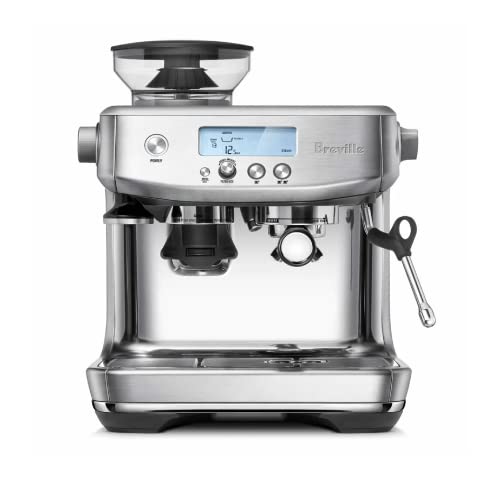
Choose the Barista Touch if milk drinks are your daily routine and you want them with less attention. Its automatic steam wand textures milk to the temperature and texture you set, its touchscreen walks you through Grind, Brew and Milk, and you can save up to 8 personalized drinks. The compromise is price, at around $800, plus more electronics on a machine that lives next to steam and water.
Choose Barista Express If…
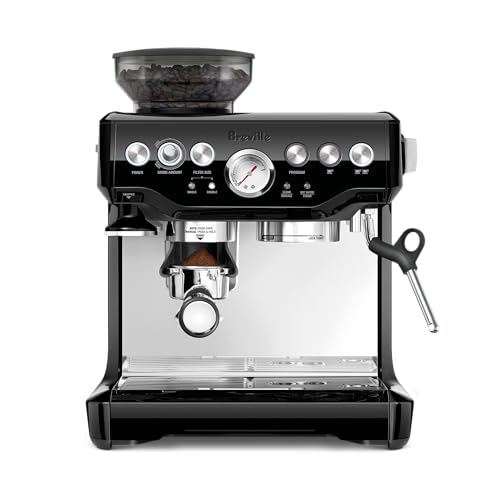
Choose the Barista Express if you want the same core recipe, a built-in grinder, PID temperature control and low pressure pre-infusion, for around $500 and do not mind learning to steam milk by hand. A grind size dial and simple controls keep it approachable. The compromise is effort: milk texturing is manual, and there are no saved drink presets.
Scope and Side-by-Side Table
This page compares the Breville BES880 Barista Touch with the BES870 Barista Express, both US versions sold new on Amazon. They are a fair pairing: same brand, same machine type, same built-in grinder concept and overlapping buyers. The Barista Express Impress (BES876) and Barista Pro (BES878) are different machines and are kept separate here. Prices are rounded and change often; confirm them in the product table above.
| Feature | Barista Touch BES880 | Barista Express BES870 |
|---|---|---|
| Machine type | Semi-automatic, portafilter | Semi-automatic, portafilter |
| Grinder | Integrated conical burr, doses on demand with a single touch | Integrated conical burr, grinds into the portafilter, grind size dial |
| Preparation steps you do | Tamp, lock in portafilter, pour milk into pitcher | Tamp, lock in portafilter, steam milk by hand |
| Heating | ThermoJet, extraction temperature in 3 seconds | PID temperature control (heat up time not stated on listing) |
| Extraction | PID, low pressure pre-infusion | PID, low pressure pre-infusion |
| Milk | Automatic steam wand, adjustable temperature and texture | Manual steam wand |
| Controls | Touchscreen, 8 saved coffees | Buttons and dials |
| Care | Cleaning tablets, descaling, wand purge and wipe | Cleaning tablets, descaling, wand purge and wipe |
| Price | Around $800 | Around $500 |
Neither machine needs a separate grinder, which keeps the full setup cost close to the machine price. Both need a milk pitcher, cleaning tablets and descaler.
Breville sells both machines in several finishes, such as brushed stainless steel, black sesame and black truffle, under model codes that share the same base number (BES880 or BES870). The finish changes the look, not the features, so pick the color you like and check that the model code matches. Remanufactured units carry an RM prefix in their listings; this comparison covers new machines only.
How We Compared These Options
We compared Breville's published specifications and current US listings for both machines, checked what comes in the box, and treated each as a complete home setup: machine, beans, milk pitcher and care supplies. We read owner feedback in aggregate for recurring themes such as the learning curve on manual steaming and how people use saved presets.
We did not run side by side brewing trials, so this comparison does not claim one machine makes better tasting espresso. Where a feature is documented on the listing, we say so; where something is a judgment about routine or value, we label it as such. Proprietary names like ThermoJet describe how a machine heats, not a measured result.
Coffee Preparation and Adjustment
What Each Option Supports
Both machines grind fresh beans with an integrated conical burr grinder and brew with digital temperature control (PID) and low pressure pre-infusion, which ramps pressure up gently at the start of the shot. The Barista Express grinds directly into the portafilter through its grinding cradle and adjusts with a grind size dial. The Barista Touch doses on demand with a single touch and adds ThermoJet heating, which reaches extraction temperature in 3 seconds according to its listing.
What Changes in Everyday Use
On both machines you still tamp the coffee and lock the portafilter in place yourself, so neither is a one touch machine. The practical difference is guidance: on the Touch, a touchscreen steps you through grinding and brewing and remembers your settings, while on the Express you adjust grind and dose by dial and memory. With a new bag of beans, Express owners typically pull a few shots to dial in by feel; Touch owners do the same, but can save the result as a preset.
Who Benefits from the Difference
The Touch helps households where more than one person makes coffee, or where you want the same drink every morning without thinking about settings. The Express suits someone who likes to learn the craft and does not need the screen to remember anything. Do not read ThermoJet or a touchscreen as proof of better espresso; both machines share the extraction basics that matter most, and grind quality and fresh beans count for more.
One practical point applies to both: the built-in grinders are designed for espresso, so they suit a household that drinks espresso based coffee. If you also brew French press or pour over regularly, a separate grinder with coarse settings may still earn a place on your counter, whichever machine you choose.
Milk and Drink Options
What Each Option Supports
The Barista Touch BES880 has an automatic steam wand that lets you adjust milk temperature and texture and then delivers microfoam without you holding the pitcher at the right angle. The Barista Express BES870 has a powerful manual steam wand designed to turn milk into microfoam for latte art, but you control the texture by hand. Both make espresso based drinks; neither listing describes a cold brew or cold extraction mode.
What Changes in Everyday Use
With the Touch, you pour milk into the pitcher, place it under the wand, choose a drink and let the machine texture it while you prepare the next shot. With the Express, you stand with the pitcher, listen and feel for the right texture, and stop at the right moment. The menu size matters less than this: the Touch saves time and attention on every milk drink, while the Express rewards practice with full control.
Who Benefits from the Difference
If you make two or more milk drinks every morning, the Touch's automatic milk is the biggest reason to pay more. If you mostly drink espresso or americanos, the Express gives you the same coffee path for less. Iced drinks are possible on both by pulling a shot over ice, but that is serving over ice, not cold extraction, and neither machine documents a dedicated cold mode.
Think about who makes the drinks, too. A teenager or guest can make a decent latte on the Touch by following the screen, while the Express usually needs someone who has learned the wand. For a household where only one person makes coffee and enjoys it, that matters less.
Daily Use and Maintenance
What Each Option Supports
Day to day, both machines have the same user accessible parts: a water tank you refill, a bean hopper, a portafilter, a drip tray and a steam wand. The Touch's controls are on a touchscreen with saved coffees; the Express uses physical buttons and a grind size dial. Both follow Breville's cleaning cycle and descaling prompts using approved tablets and descaler.
The steam wand deserves special attention on both machines. Milk dries quickly on a hot wand, so purge it and wipe it right after each use, whether the Touch textured the milk for you or you did it by hand on the Express. A damp cloth kept next to the machine makes that habit easy.
What Changes in Everyday Use
A daily routine on either machine means knocking out the puck, rinsing the portafilter, purging and wiping the steam wand after milk, and emptying the drip tray when full. Supplies are the same: Breville cleaning tablets, a descaling product and, if your model uses one, a water filter. A knock box and a small scale are optional accessories that make both routines tidier.
Who Benefits from the Difference
If you prefer buttons and dials you can operate without looking at a screen, the Express is simpler. If you want each person's drink saved and repeatable, the Touch is easier for a shared household. We make no claim about which lasts longer; neither listing provides lifespan data, so follow the manual's care schedule on whichever you choose.
Complete Price and Value
What Each Option Supports
On the same day, the Barista Express BES870 lists at around $500 new and the Barista Touch BES880 at around $800 new, both from Breville's US listings. That gap of roughly $300 buys automatic milk texturing, ThermoJet heating, single touch dosing and a touchscreen with saved drinks. Grinder, portafilter and steam wand are included with both.
What Changes in Everyday Use
Neither machine needs a separate grinder, so the full setup adds only a milk pitcher if not included, cleaning tablets, descaler and fresh beans. Running costs are the same for both because they use the same coffee and similar supplies. The difference is purely the upfront price for convenience features you will or will not use every day.
Who Benefits from the Difference
Value depends on workflow fit, not brand prestige. If automatic milk saves you a few minutes every morning and removes the frustration of learning to steam, the extra cost is easy to justify. If you enjoy doing the milk yourself, the Express is the better value. Both are supported by Breville in the US, so buy from a reputable seller and register the machine.
A simple way to decide is to count milk drinks. If your household makes fewer than one milk drink a day, most of the Touch's extra cost goes to features you will rarely use. If you make three or more a day, the time and attention saved by automatic milk adds up quickly, and the Touch starts to look like the better long term buy.
Representative Products and Pairing Limits
A Verified Pair at a Relevant Price Level
The Breville Barista Touch BES880 stands out for automatic milk and a touchscreen that saves 8 drinks; its limitation is the higher price. The Breville Barista Express BES870 stands out for its built-in grinder at a lower price and its grind size dial; its limitation is manual milk with no presets.
The second consequential difference is heating: the Touch documents a 3 second ThermoJet heat up, while the Express listing does not state a heat up time. If you want a middle ground, the Barista Express Impress BES876 in the product table adds intelligent dosing and assisted tamping to the Express layout.
What the Pair Does Not Prove
This pair compares two machines with the same basic automation level for espresso and different automation for milk. It does not show how Breville compares with other brands, or how a semi-automatic machine compares with a fully automatic one that also tamps for you.
It also does not prove one makes better espresso; both share PID and pre-infusion, and results depend heavily on beans and grind. If you want the machine to grind, dose and tamp, look at the Oracle family or our best super automatic espresso machine guide.
Breville Barista Touch vs Barista Express: Which Should You Choose?
For Convenience-First Buyers
Choose the Barista Touch. Automatic milk texturing, saved drinks and on-screen guidance cut daily effort the most. You still tamp, so if you want zero manual steps, consider a super automatic machine instead. For a household making several lattes a day, the Touch is the more comfortable routine.
For Buyers Seeking Control or Different Drinks
Choose the Barista Express if you want to learn manual milk texturing and latte art, since a manual wand gives you full control over foam. Choose the Touch if different people want different drinks and you value saving each recipe. Neither offers a dedicated cold brew mode.
For Budget and Space Constraints
The Barista Express is the clear budget choice, around $300 less with the same built-in grinder concept. Both include their grinder, so neither needs extra counter space for one. Measure the height under your cabinets and leave room to refill the bean hopper and water tank.
Whichever you choose, place it close to the sink if you can. Both machines need regular water refills, daily rinsing of the portafilter and a spot to knock out used pucks, and a short walk to the sink makes the routine much easier to keep up.
Frequently Asked Questions
Are these options the same type of machine?
Yes, both are semi-automatic espresso machines with a built-in conical burr grinder and a portafilter. You dose, tamp and lock in the portafilter on both. The difference is that the Barista Touch automates milk texturing and adds a touchscreen with saved drinks, while the Barista Express uses a manual steam wand and physical controls.
Which is easier to use and maintain?
The Barista Touch is easier to use for milk drinks because it textures milk automatically and remembers settings. Maintenance is similar on both: knock out pucks, rinse the portafilter, purge and wipe the steam wand, empty the drip tray and run cleaning and descaling cycles as the manual directs.
What accessories or coffee formats do they require?
Both use fresh whole beans ground by the built-in grinder; neither takes pods. You will need a milk pitcher for milk drinks, Breville cleaning tablets and a descaling product. A knock box and small scale are optional but helpful. Check each listing's box contents before buying.
Which offers better value for my routine?
The Barista Express offers better value if you drink mostly espresso or enjoy steaming milk yourself. The Barista Touch offers better value if you make milk drinks daily and want them with less effort, since the extra cost buys automatic milk and saved presets you will use every morning.
Final Verdict
In the Breville Barista Touch vs Barista Express decision, milk is the deciding factor. Pick the Barista Touch if you want automatic microfoam, saved drinks and on-screen guidance; pick the Barista Express if you want the same built-in grinder and extraction basics for less and are happy to steam by hand. For more Breville options, see our best Breville espresso machine guide, or compare brands in the best espresso machine roundup.


