
Cuisinart Grind And Brew Review: Features, Trade-Offs, and Value
Disclosure: We may earn a commission when you buy through links on this page, at no extra cost to you. As an Amazon Associate I earn from qualifying purchases. Learn more

Cuisinart Grind and Brew review of the DGB-400NAS 12-cup: what it automates, how the blade grinder affects coffee, daily care and alternatives.
This Cuisinart Grind And Brew review focuses on the model most US shoppers can buy new today, the Cuisinart Automatic Grind and Brew 12-Cup DGB-400NAS, sold by Amazon for around $120. It is a drip coffee maker with a built-in blade grinder: you load whole beans and water, and it grinds and brews into a glass carafe on a schedule.
"Grind and Brew" is a Cuisinart family name that covers several machines, from burr models with thermal carafes to single-serve versions, so we start by sorting out which one this is. Then we cover setup, daily use, cleaning, running costs and when another machine makes more sense.


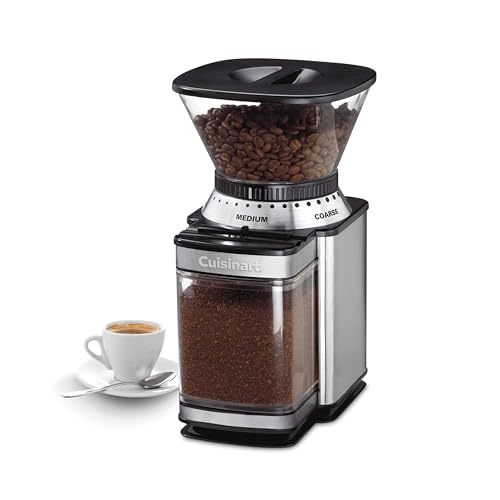


Quick Verdict: Who Is Cuisinart Grind And Brew For?
Who Should Consider It?
The DGB-400NAS suits households that buy whole beans, brew a pot most mornings, and want coffee ready on a timer without running a separate grinder. It handles small batches with a 1 to 4 cup setting and still accepts pre-ground coffee when you run out of beans. You need to be willing to clean the grinder area regularly, which is the ownership cost of any grind and brew design.
Who Should Choose Another Format?
Skip it if you care a lot about grind consistency, since a blade grinder chops beans unevenly compared with a burr grinder, or if you want a thermal carafe. A burr grinder plus a simple drip brewer gives more control, and a single serve machine suits one-cup households better. Our guide to the best Cuisinart coffee maker covers other models.
Version, Specifications, and What Is Included
This review covers the Cuisinart DGB-400NAS in black and stainless steel, the 12-cup glass carafe Grind and Brew with a blade grinder, sold new by Amazon with a limited 3-year warranty listed. Other Grind and Brew models differ in important ways: the DGB-850 and DGB-950BCC use burr grinders and thermal carafes, a separate 10-cup blade version exists, and the single-serve Grind and Brew machines make one cup at a time. Specifications from those models do not apply here.
| Item | Cuisinart DGB-400NAS (per listing) |
|---|---|
| Format | Drip coffee maker with built-in grinder |
| Grinder | Blade grinder that grinds whole beans right before brewing; grind-off option for pre-ground coffee |
| Carafe | 12-cup glass carafe (Cuisinart cups are about 5 oz) |
| Brewing controls | Programmable; 1 to 4 cup setting; Brew Pause |
| Filters included | Permanent gold-tone coffee filter; built-in charcoal water filter |
| Warranty listed | Limited 3-year |
| Dimensions and bean capacity | Not stated in the listing; check the manual |
| Price | Around $120 |
Included in the box, per the listing, are the permanent gold-tone filter and a charcoal water filter, so you do not need paper filters. Replacement charcoal filters are a recurring purchase, and a descaling solution is needed for periodic maintenance.
To make sure you get the model described here, look for "DGB-400NAS" and "Blade Grinder" in the listing title, and check that the seller is Amazon or Cuisinart if you want the listed warranty without complications. Listings with "Renewed" or bundle wording, or with a 10-cup capacity, describe other products.

Setup and Kitchen Fit
Initial Setup
Follow the manual for first use: wash the carafe and removable parts, soak and fit the charcoal water filter as instructed, set the clock, then run a cycle with water only before your first pot. That clears any manufacturing residue and lets you see how the machine fills and brews before beans are involved.
For the first few pots, use the bean amount the manual suggests for your batch size and adjust in small steps. Too few beans make thin coffee and too many can overflow the basket, so change one variable at a time and note what works for your preferred strength.
Controls and Access
The control panel handles the clock, programming, the 1 to 4 cup setting and the grind-off option. Beans go into the grinder area and water into the reservoir; read the manual for how the grinder and filter basket lift out, since you will handle both every day.
Practice the programming once while the machine is empty so you know how to set the clock, the start time and the small batch setting without fumbling on a busy morning. Keep the manual handy for the first week, as the order of button presses differs between Cuisinart models.
Working Clearance
The listing does not give dimensions, so measure from the manual or product page. Grind and brew machines usually open from the top to load beans and water, so leave several inches of clearance under cabinets, plus room in front to remove the carafe and filter basket.
Espresso and Black Coffee
Verified Capabilities
This is a drip coffee maker, so its job is black coffee by the carafe, not espresso. Per the listing, it grinds whole beans with a blade grinder right before brewing, offers a grind-off option for pre-ground coffee, adjusts for small batches with the 1 to 4 cup setting, and lets you pour early with Brew Pause. It is programmable, so you can load beans and water at night and wake up to fresh ground coffee.
Results or Research-Based Assessment
We have not brewed with this machine, so we cannot report taste results from our own trials. The documentation establishes fresh grinding and a familiar drip workflow. What it cannot establish is grind uniformity: blade grinders produce a mix of particle sizes, which most coffee guides link to less even extraction than burr grinding. Buyer feedback, read in aggregate, tends to praise the convenience of beans to carafe more than precision.
Practical Limitations
There is no espresso function, and no machine of this type makes true espresso. The glass carafe sits on a warming plate, so coffee held for a long time will lose flavor. If you want the best possible drip coffee from whole beans, a burr grinder and a good drip brewer give more control than any blade grind and brew machine.
Beans matter too. Medium roasts suit most drip machines, and very oily dark roasts can leave more residue in the grinder area, which makes cleaning more important. Keep the grinder loaded with only as many beans as you will use soon so they stay fresh, and store the rest in a sealed container away from heat and light. Buying smaller bags more often usually tastes better than one large bag that sits open for a month.
Milk Drinks and Special Recipes
Verified Capabilities
The DGB-400NAS has no milk frother and no special recipes in its listing. It makes hot drip coffee, which you can use as the base for café au lait or a milky coffee with milk warmed separately.
Results or Research-Based Assessment
Because there is no milk system, there is nothing milk-related to assess. If lattes or cappuccinos are on your wish list, the documentation makes it clear this machine will not make them alone; you would need a separate frother or an espresso machine.
Practical Limitations
There is no iced or cold brew mode listed. You can pour hot coffee over ice, but it will dilute; a dedicated iced setting on another brewer, or cold brew made in a pitcher, does a better job. Connect this to your routine: if your household mostly drinks hot black coffee or coffee with a splash of milk, the lack of extras will not matter.
If someone in the house wants an occasional latte-style drink, a handheld or electric milk frother paired with strong drip coffee gets close enough for many people, at a fraction of the cost of an espresso machine. Brew a smaller batch at a slightly higher bean ratio for a bolder base, then add frothed milk. It is not espresso, but it covers casual milk drinks without a second large appliance.
Controls and Everyday Use
Customization
The documented controls are the programmable timer, the 1 to 4 cup setting, Brew Pause and the grind-off option. Strength depends mostly on how many beans you load and the carafe size you choose, so keep your bean measure consistent and adjust it a little at a time.
A Complete Daily Routine
Evening: add beans and water, check the filter basket and set the timer. Morning: pour. Later: empty the grounds from the gold-tone filter, rinse the filter and carafe, and brush out the grinder area as the manual directs. Expect a few minutes of cleanup each day, a little more than a basic drip machine.
Multiple Servings
The 12-cup carafe makes about 60 oz, roughly five 12 oz mugs. Brewing a second pot means emptying grounds, rinsing the filter and reloading beans, so plan on a short wait between batches. For one or two people, the 1 to 4 cup setting avoids brewing more than you need.
The timer is where a grind and brew machine earns its place. Because the beans are ground at brew time rather than the night before, coffee made on a schedule starts from fresher grounds than pre-ground coffee left sitting in a basket overnight. If you program the machine, load the beans and water just before bed so everything is ready.
Cleaning and Maintenance
After-Use Tasks
After each pot, discard the grounds, rinse the gold-tone filter and wash the carafe. The grinder area collects coffee dust and oils, so clean it as often as the manual recommends; skipping this step is the most common reason grind and brew machines start brewing slowly or clogging.
Periodic Cleaning and Descaling
Replace the charcoal water filter at the interval in the manual, and descale when the machine signals or on the schedule Cuisinart gives for your water hardness, using a descaler the manual approves (vinegar only if the manual approves it). Keep grinder cleaning, filter changes and descaling as separate jobs on separate schedules.
A simple rhythm works for most homes: rinse daily, give the grinder parts and filter basket a more thorough wash weekly as the manual allows, change the charcoal filter on its interval, and descale every few months or when brewing slows. Writing the filter change date on a piece of tape inside a cabinet door makes it easy to remember.
Access and Service
Clean only the parts the manual tells you to remove, such as the carafe, filter basket, gold-tone filter and grinder parts designed to come out. Do not open the housing or try to repair the grinder motor yourself. For faults, use the listed limited 3-year warranty and contact Cuisinart support with your model code, DGB-400NAS.
A few habits extend the life of any grind and brew machine: unplug it before cleaning the grinder, never run the grinder empty for long, and dry parts before reassembling. If the machine smells hot, makes unusual grinding noises or leaks near the electrics, stop using it and contact support.
Purchase Price and Ownership Cost
The Complete Setup
At around $120, the machine includes the gold-tone filter and a charcoal water filter, so the starting setup is complete. Add a pack of replacement charcoal filters (a 12-pack of compatible filters costs around $10) and a descaler. No separate grinder or paper filters are needed.
Recurring Supplies
Whole beans are the main ongoing cost. As an example assumption, a household brewing one full carafe a day uses roughly 1 lb of beans every four to six days, depending on strength; a half pot halves that. Charcoal filters and descaler add a small amount per year. We cannot predict repair frequency, so keep the warranty details.
It helps to compare the alternative. A separate electric burr grinder such as the Cuisinart DBM-8P1 costs around $73, and a capable programmable drip brewer costs around $50 to $100, so a two-appliance setup costs about the same or a little more than the DGB-400NAS but takes more counter space and cannot grind on a timer.
Pros, Cons, and Alternatives
Strengths and Limitations Established Above
Strengths: beans to carafe on a timer, a grind-off option for pre-ground coffee, and an included gold-tone filter and charcoal water filter. Limitations: a blade grinder gives less even grinding than a burr grinder, and the glass carafe on a warming plate does not hold flavor as well as a thermal carafe. Taken together, this Cuisinart Grind And Brew review sees it as a convenience machine first.
When an Alternative Fits Better
If grind consistency matters most, a separate burr grinder such as the Cuisinart DBM-8P1 with a drip brewer gives more control, or a burr grind and brew like the Gevi in the product table. If you want a pot without grinding, the Cuisinart DCC-3200 is simpler. Our guides to the best coffee makers and the best coffee maker for home compare more options.
Frequently Asked Questions
Which exact version does this review cover?
This review covers the Cuisinart DGB-400NAS, the 12-cup glass carafe Grind and Brew with a blade grinder, sold new by Amazon. Burr models such as the DGB-850 and DGB-950BCC, the 10-cup blade version and the single-serve Grind and Brew machines are different products, so check the model code on the listing before buying.
What extra equipment is required?
No extra equipment is required to start, since the grinder, gold-tone filter and a charcoal water filter are included. You will need whole beans (or pre-ground coffee for the grind-off option), replacement charcoal filters and a descaler approved in the manual. A small brush helps clean the grinder area.
What cleaning does daily use require?
Daily use requires emptying grounds, rinsing the gold-tone filter and carafe, and keeping the grinder area clear of coffee dust as the manual directs. That takes a few minutes. Charcoal filter changes and descaling are periodic tasks that follow the manual and your water hardness.
Is this model worth it for my routine?
It is worth it if you buy whole beans, brew a pot most mornings and value the convenience of grinding and brewing on a timer. If you want the most even grind or a thermal carafe, a burr grinder plus a separate brewer is a better investment, and one-cup drinkers should look at single serve machines.
Final Verdict
For whole bean buyers who want coffee ready when they wake up, this Cuisinart Grind And Brew review finds the DGB-400NAS a convenient, reasonably priced machine that grinds and brews a 12-cup pot on a schedule, with the grind-off option as a useful backup. The main compromise is the blade grinder, which trades precision for convenience. If that trade suits you, check the DGB-400NAS code on the listing and the current price before ordering.


