
How to Make Cold Brew Coffee at Home: Easy Step by Step Guide
Disclosure: We may earn a commission when you buy through links on this page, at no extra cost to you. As an Amazon Associate I earn from qualifying purchases. Learn more

How to make cold brew coffee at home with coarse grounds, an overnight steep and simple ratios for smooth iced coffee.
Learning how to make cold brew coffee at home is easier than most coffee methods: combine coarse ground coffee with cold water, let it steep in the refrigerator for 12 to 18 hours, strain it, and dilute the concentrate to taste. You need no special skills, and a single batch can supply smooth iced coffee for most of the week.
This guide covers the equipment, the best coffee and grind, a step by step method, ratios for concentrate and ready to drink cold brew, how long to steep, how to store it, troubleshooting, and easy drink ideas.


What Is Cold Brew?
Cold brew is coffee made by steeping grounds in cold or room temperature water for many hours instead of brewing with hot water. Because cold water extracts flavor slowly and pulls out fewer sharp compounds, the result tastes smooth, rounded and often chocolatey, with less bitterness than hot coffee chilled over ice.
Most people brew cold brew as a concentrate, then dilute it with water or milk before drinking. This saves fridge space and lets each person choose their strength. Cold brew is different from iced coffee, which is brewed hot and then chilled; iced coffee keeps more brightness, while cold brew is mellow and sweet.
What You Need
- Coffee beans: medium to dark roasts give classic chocolatey cold brew; light roasts give a fruitier, brighter cup.
- A burr grinder: for an even, coarse grind. If you buy pre-ground, choose coarse or cold brew grind.
- A container: a dedicated cold brew maker, a French press, or a large glass jar with a lid.
- A filter: the mesh filter in a cold brew maker or French press, or a fine strainer plus a paper filter or cheesecloth.
- Cold filtered water: clean tasting water makes a noticeable difference.
- A kitchen scale (optional): for consistent results.
If you want a dedicated pitcher, our guide to the best cold brew coffee maker compares popular models.
How to Make Cold Brew Coffee at Home: Step by Step
- Measure the coffee. For concentrate, use about 1 part coffee to 8 parts water by weight, for example 100 grams of coffee for 800 grams (about 27 ounces) of water.
- Grind coarse. Grind the beans to a coarse texture like sea salt or cracked pepper. Fine grounds make cold brew bitter and hard to strain.
- Add coffee to the container. Place the grounds in the filter basket or directly in your jar.
- Pour the water slowly. Add cold or room temperature water in a slow circle so all the grounds get wet.
- Stir gently. Use a spoon to make sure no dry clumps remain, then cover the container.
- Steep. Place it in the refrigerator for 12 to 18 hours. You can steep at room temperature for 12 hours instead, then refrigerate.
- Strain. Remove the filter basket, or pour through a fine strainer lined with a paper filter or cheesecloth for a cleaner concentrate.
- Store. Transfer the concentrate to a sealed bottle or jar and refrigerate.
- Dilute and serve. Mix about one part concentrate with one part water or milk, pour over ice, and adjust to taste.
Equipment Options Compared
You can make excellent cold brew with several kinds of equipment. The best choice depends on how much you make and how much cleanup you are willing to do.
Dedicated Cold Brew Maker
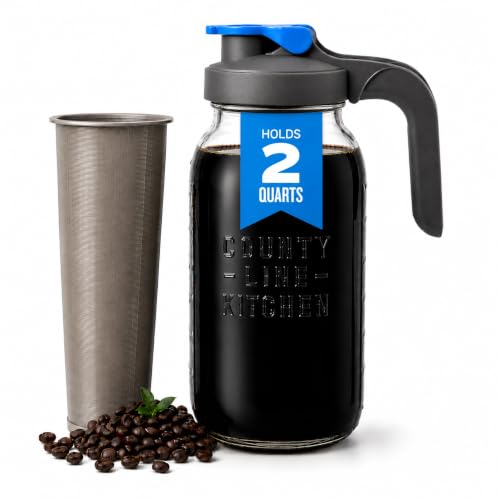
Pitchers such as the Takeya Deluxe or a mason jar kit include a built-in mesh filter and an airtight lid. You brew and store in the same container, and pouring is easy. This is the most convenient option for weekly batches.
French Press
A French press already has a plunger filter, so it doubles as a small batch cold brew maker. Steep in the refrigerator with the plunger up, then press and decant. It works well for one or two people but ties up your press for the day.
Mason Jar and Strainer
A large jar plus a fine strainer and paper filter costs almost nothing. It takes a little more effort to strain, but it can produce a very clean concentrate, especially if you filter twice.
Cold Brew Filter Bags
Disposable or reusable filter bags work like giant tea bags. Fill the bag with grounds, drop it into a pitcher of water, and lift it out when the steep is done. Cleanup is fast, and the coffee comes out clean.
Cold Brew Ratios
The ratio controls how strong the finished drink is. These starting points cover the most common styles:
| Style | Coffee to water | Example | How to serve |
|---|---|---|---|
| Strong concentrate | 1:5 | 100 g coffee, 500 g water | Dilute about 1:2 with water or milk |
| Standard concentrate | 1:8 | 100 g coffee, 800 g water | Dilute about 1:1 |
| Ready to drink | 1:12 to 1:15 | 60 g coffee, 800 g water | Serve over ice without diluting |
Without a scale, about 1 cup of coarse grounds to 4 cups of water makes a concentrate close to 1:8. Our cold brew coffee ratio guide explains ratios in more detail.
How Long Should Cold Brew Steep?
Steep time shapes flavor. Twelve hours gives a lighter, brighter cold brew. Sixteen to eighteen hours is the sweet spot for most coffees, producing a rich, balanced concentrate. Going past 24 hours rarely improves flavor and can make it woody or bitter.
Steeping in the refrigerator is slower but keeps the brew fresh and safe. Room temperature steeping extracts faster; if you use it, limit it to about 12 hours and refrigerate the concentrate right after straining.
Choosing Coffee for Cold Brew
Cold brew highlights chocolate, caramel and nutty notes. Medium and dark roasts from Brazil, Colombia, Guatemala or Sumatra are popular because they taste rich and smooth. Light roasted Ethiopian or Kenyan coffees produce a fruity, tea-like cold brew that some people love.
Freshness still matters. Use beans roasted within the past few weeks and grind them right before brewing. Flavored coffees work too, though their flavors can taste stronger in cold brew.
Storing Cold Brew
Store concentrate in a sealed glass bottle or jar in the refrigerator. It tastes best within about a week, and flavor slowly fades after that. Diluted cold brew is best within two to three days, since water speeds up flavor loss.
Keep the container sealed so the coffee does not absorb fridge odors from foods like onions or leftovers. Glass is ideal because it does not hold flavors. If you brew large batches often, consider labeling bottles with the brew date.
Making Cold Brew for a Crowd
For parties or offices, brew a larger batch of concentrate a day ahead. A one gallon jar holds enough for a group, and you can set out ice, cold water, milk and a few syrups so guests mix their own drinks. Keep the concentrate chilled and serve within a couple of days for the best flavor.
Plan on about 4 ounces of concentrate per serving at a one to one dilution. For 16 servings, that is roughly 64 ounces of concentrate. Because the grounds soak up some of the water, plan on about 300 grams of coffee and 2.4 liters of water at a 1:8 ratio to end up with that much.
Strength and Caffeine
Cold brew concentrate is strong, so caffeine per ounce is higher than regular coffee until you dilute it. After dilution, a glass of cold brew is often similar to a cup of drip coffee, though it varies with the beans, ratio and how much concentrate you pour. If you are sensitive to caffeine, start with a weaker mix, such as one part concentrate to two parts water or milk, and adjust from there.
Troubleshooting Cold Brew
- Too bitter: grind coarser, shorten the steep, or dilute more.
- Too weak or watery: use more coffee, steep longer, or dilute less.
- Sour or thin: steep longer or use a slightly finer grind.
- Muddy or gritty: grind coarser and strain through a paper filter.
- Flat or stale: use fresher beans and store the concentrate sealed.
Cold Brew Drink Ideas
Classic Iced Cold Brew
Fill a glass with ice, add equal parts concentrate and water, and stir. Taste and add more concentrate or water as needed.
Cold Brew Latte
Mix concentrate with milk or oat milk instead of water. A splash of vanilla syrup turns it into a café style vanilla latte.
Cold Foam Cold Brew
Froth cold milk with a handheld frother until thick, then spoon it over a glass of iced cold brew for a creamy topping.
Hot Cold Brew
On a chilly morning, mix concentrate with hot water. The result is a smooth hot coffee with very little bitterness.
Cleaning Your Equipment
Rinse the filter immediately after straining so oils do not dry in the mesh. Wash the container and filter with warm soapy water, or in the dishwasher if the manual allows. Soak clogged mesh filters in warm water with a little baking soda, then brush and rinse. For routines that cover all your brewers, see our guide on how to clean a coffee maker.
Explore more brewing methods in our coffee guides.
FAQs
Can I make cold brew in a French press?
Yes. Add coarse grounds and cold water, steep in the refrigerator for 12 to 18 hours, then press slowly and pour off the concentrate.
Can I use regular ground coffee for cold brew?
You can, but standard pre-ground coffee is ground for drip machines and may make cold brew bitter and cloudy. Coarse grounds work best.
Is cold brew stronger than regular coffee?
Concentrate is stronger, but diluted cold brew is usually similar to regular coffee. Strength depends on your ratio and dilution.
Does cold brew need to be refrigerated?
Yes, after straining. Keep it in a sealed container in the refrigerator and drink it within about a week.
Why does my cold brew taste sour?
It is likely under extracted. Steep longer, use more coffee or a slightly finer grind.
Should I steep cold brew in the fridge or on the counter?
Either works. The refrigerator is slower and keeps the brew cold and fresh, so it is the safer choice for an overnight steep. Counter steeping extracts faster; keep it to about 12 hours and refrigerate the concentrate as soon as it is strained.
Can I reuse cold brew grounds?
Reused grounds make weak, flat coffee. Use fresh grounds for each batch and compost the old ones.
Final Thoughts
Now that you know how to make cold brew coffee at home, it can become an easy weekly routine. Use coarse grounds at about 1:8, steep in the refrigerator for 12 to 18 hours, strain well, store the concentrate sealed and dilute it to taste. Experiment with beans, steep times and drinks until you find your favorite smooth glass of cold brew.

