
AeroPress vs French Press: Which Coffee Maker Is Right for You?
Disclosure: We may earn a commission when you buy through links on this page, at no extra cost to you. As an Amazon Associate I earn from qualifying purchases. Learn more

AeroPress vs French press: clean single cups or rich full pots, and how to pick the right brewer.
The AeroPress vs French press choice comes down to cup style and batch size. The AeroPress makes a clean, smooth cup or a strong concentrate in about two minutes, one or two servings at a time, and cleans up in seconds. The French press brews a rich, full bodied pot for several people in about four minutes, with more texture and oils in the cup but a little more cleanup.
Below we compare how each works, taste, batch size, speed, cleanup, durability, portability and cost, then share a recipe for each and help you decide.



AeroPress vs French Press: Quick Comparison
| Factor | AeroPress | French press |
|---|---|---|
| Brewing | Short immersion plus gentle pressure through a paper or metal micro filter | Full immersion, metal mesh filter |
| Brew time | About 2 minutes | About 4 minutes |
| Cup | Clean, smooth, low sediment; can make concentrate | Rich, heavy body, some sediment |
| Batch size | 1 to 2 cups (XL makes more) | 3 to 4 mugs in a 34 oz press |
| Cleanup | Pop out the puck and rinse | Scoop grounds, wash the mesh filter |
| Durability | Shatterproof plastic or Tritan | Glass or stainless steel |
| Price | Around $40 to $50 | Around $25 to $45 |
How Each Works
AeroPress
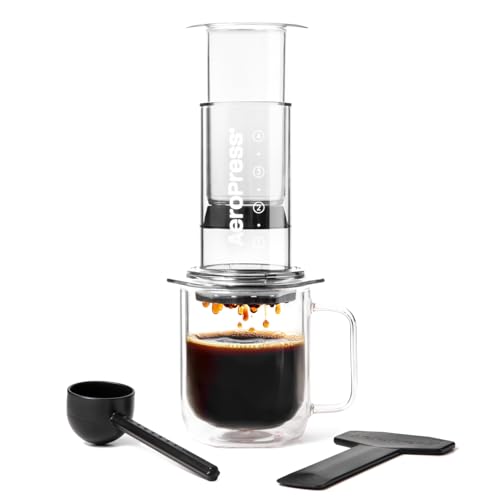
You add ground coffee and hot water to the chamber, stir, steep briefly, then press the plunger. Air pressure pushes the coffee through a paper micro filter into your mug. AeroPress describes the result as combining French press, pour over and espresso style brewing, and the Clear version uses shatterproof Tritan so you can watch the brew. Brewing and cleanup together take about two minutes.

French Press
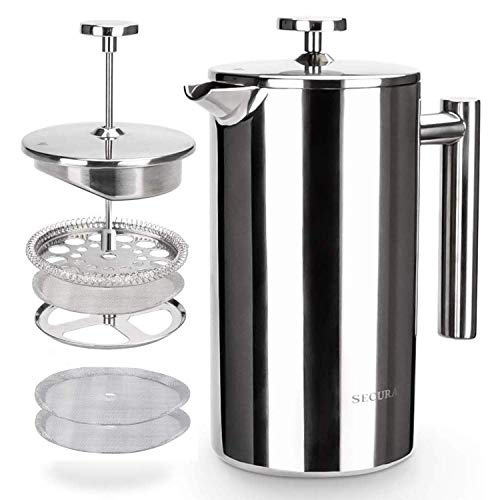
A French press steeps coarse grounds in hot water for about four minutes, then a metal mesh plunger pushes the grounds to the bottom so you can pour. The Secura stainless steel press, for example, uses an insulated 18/8 stainless body that keeps coffee hot, a three layer filter and two spare screens, with a 34 ounce capacity.
Taste and Texture
The biggest difference is the filter. The AeroPress paper filter traps most oils and fine particles, producing a clean, smooth cup with bright flavors and very little sediment. It also makes concentrated, espresso style coffee for lattes. The French press metal filter lets oils and some fine particles through, giving a heavier, richer body and a more rustic texture that many people love, especially with dark roasts.
If you dislike grit at the bottom of your mug, the AeroPress wins. If you love a bold, full cup, the French press is hard to beat.
Batch Size
The standard AeroPress makes one or two cups per press, so brewing for a group means several rounds. The AeroPress XL brews more at once. A 34 ounce French press makes three to four mugs in one go, which suits families and guests.
Speed and Convenience
The AeroPress is faster: about two minutes from pour to cup. The French press takes about four minutes to steep plus pouring. For one quick morning cup, the AeroPress is more convenient; for a weekend pot, the French press makes more coffee with similar effort.
Cleanup
AeroPress cleanup is famously easy: unscrew the cap, push the puck of grounds into the trash or compost, and rinse. A French press needs grounds scooped out, which can be messy, and the mesh filter should be taken apart and washed regularly so oils do not build up. Never pour grounds down the drain.
Durability and Portability
The AeroPress is light, compact and shatterproof, making it a favorite for travel, offices and camping. Glass French presses can break, though insulated stainless steel presses like the Secura are very durable and keep coffee hot, which also suits camping. Stainless presses are heavier than an AeroPress.
Cost
Both are affordable. The AeroPress costs around $40 to $50 and uses inexpensive paper filters, though reusable metal filters are available. French presses range from about $25 for basic models to $45 or more for insulated or premium versions, with no filters to buy.
Recipes
AeroPress Recipe
Use 15 to 18 grams of medium fine coffee and about 220 grams of water at 185 to 200°F. Rinse the paper filter in the cap, add coffee, pour water, stir for 10 seconds, insert the plunger slightly to create a seal and wait until about one minute has passed. Press slowly for 20 to 30 seconds. For a latte, use 18 grams of coffee and 100 grams of water and top with frothed milk. See our guide on how to use an AeroPress for more recipes.
French Press Recipe
Use about 60 grams of coarse coffee and 900 grams of water just off the boil for a 34 ounce press. Add coffee, pour half the water, stir and bloom for 30 seconds, then add the rest. Steep for four minutes total, press slowly and pour everything out right away. Our guide on how to use a French press covers the full method.
Which Should You Choose?
Choose the AeroPress If
- You mostly brew one or two cups.
- You want a clean, smooth cup or espresso style concentrate for milk drinks.
- You want the fastest cleanup and a travel friendly brewer.
Choose a French Press If
- You brew for several people at once.
- You love a rich, full bodied cup.
- You want a simple brewer with no paper filters.
Compare more options in our guides to the best French press and our AeroPress review, and browse manual brewers in the French press and pour over section.
Can You Own Both?
Many coffee lovers do. The AeroPress handles quick solo cups, travel and iced coffee concentrate, while the French press brews weekend pots for the family. Both are inexpensive, so owning both covers almost every situation. A burr grinder serves both well: medium fine for the AeroPress and coarse for the French press.
Grind and Coffee Tips
Use medium fine grounds for the AeroPress and coarse grounds for the French press. Light and medium roasts taste bright and sweet in the AeroPress; medium and dark roasts taste rich and chocolatey in a French press. Fresh beans ground just before brewing make the biggest difference in either brewer. Our coffee grind size chart shows textures for every method.
Iced Coffee and Cold Brew
Both brewers handle cold drinks. The AeroPress can press a strong concentrate directly onto a glass of ice in about two minutes, which makes it one of the fastest ways to make iced coffee. The French press is a convenient cold brew maker: steep coarse coffee in cold water in the refrigerator for 12 to 18 hours, press and pour off the concentrate. If you love iced lattes, the AeroPress is quicker; if you want a batch of cold brew for the week, the French press is easier.
Common Mistakes With Each
With the AeroPress, pressing too hard or too fast pushes fine particles through and can squirt coffee. Using boiling water with dark roasts often tastes bitter, so try around 185°F. With the French press, grinding too fine makes the plunger hard to press and leaves sludge in the cup, and leaving coffee in the press after plunging turns it bitter. Pour it all out or move it to a thermal carafe.
Other Brewers to Consider
If neither feels right, pour over drippers offer a middle path: a clean cup like the AeroPress with more control over flavor, and carafe brewers like the Chemex can serve a small group. Compare options in our guide to the best pour over coffee maker. For milk drinks with more intensity, a moka pot or espresso machine may suit you better.
Which Is Better for Beginners?
Both are beginner friendly. The French press is the simplest to understand: coffee, water, wait, press. The AeroPress has a few more parts but is very forgiving, and its quick cleanup encourages daily use. Beginners who drink one cup a day often stick with the AeroPress, while households who share a pot usually prefer the French press.
Durability and Long-Term Costs
An AeroPress uses inexpensive paper filters, and its rubber plunger seal may need replacing after years of daily use. Replacement seals and caps are easy to find. A stainless steel French press has no filters to buy, but its mesh screens can bend or wear over time; many presses, like the Secura, include spare screens. Glass French press carafes can break and need replacing. Over a few years, both brewers cost very little to run compared with pod machines or café visits.
Which Makes Better Milk Drinks?
For lattes and cappuccinos, the AeroPress has the edge because it can brew a concentrated, espresso style coffee that stands up to milk. Press 18 grams of finely ground coffee with about 100 grams of water and top with frothed milk. A French press makes a strong cup that works in café au lait, where coffee and hot milk are mixed half and half, but it lacks the intensity for a classic latte. You can also froth milk in a clean French press by pumping the plunger in warm milk.
How We Compared Them
This comparison is based on research rather than in-person trials. We studied the Amazon listings for the AeroPress Clear and popular French presses, compared brewing methods and cleanup, and considered how widely each is bought and how owners describe daily use.
FAQs
Which brewer is cheaper to run?
Both are inexpensive. The AeroPress needs low cost paper filters, while a French press needs no filters at all, so its running cost is only coffee.
Can I take a French press camping?
Yes. An insulated stainless steel press is durable and keeps coffee hot, though it is heavier than an AeroPress.
Which brewer works better with dark roasts?
Both do. Dark roasts taste rich and chocolatey in a French press, and smooth with low bitterness in an AeroPress brewed with slightly cooler water.
Is AeroPress coffee stronger than French press?
It can be. The AeroPress can make concentrated coffee, but a standard AeroPress mug and a French press mug can taste similar in strength depending on your ratio.
Which has less sediment?
The AeroPress, thanks to its paper micro filter. French press coffee has more fine particles and oils.
Which is better for camping?
The AeroPress is lighter and shatterproof. An insulated stainless French press is also durable and keeps coffee hot for a group.
Can a French press make espresso style coffee?
Not really. It makes full bodied coffee, but for concentrated, espresso style shots the AeroPress works better.
Which is easier to clean?
The AeroPress. You pop out the puck and rinse, while a French press needs grounds scooped out and the filter washed.
Bottom Line
In the AeroPress vs French press decision, the AeroPress wins for fast, clean single cups, concentrates and easy cleanup, while the French press wins for rich, full bodied pots for several people. Choose based on how many cups you brew and the texture you love, or keep both for every occasion.


