French Press Coffee Ratio: Chart and Measuring Guide
Disclosure: We may earn a commission when you buy through links on this page, at no extra cost to you. As an Amazon Associate I earn from qualifying purchases. Learn more

Get the French press coffee ratio right: a 1:15 starting point, a size chart and tips for stronger or lighter coffee.
The standard French press coffee ratio is 1:15, meaning 1 gram of coffee for every 15 grams (milliliters) of water. That works out to about 60 grams of coarse ground coffee for a full 34 ounce press, or roughly 2 rounded tablespoons of grounds for every 6 ounces of water. From there you can go stronger (1:12) or lighter (1:17) to suit your taste.
This guide explains why the ratio matters, gives a chart for common press sizes and strengths, shows how to measure without a scale, and covers how grind size, steep time and roast level change the result.

French Press Coffee Ratio Explained
A brew ratio describes how much coffee you use compared with water. Because a French press is an immersion brewer, all the water touches all the grounds for the entire steep. The ratio sets the strength (how concentrated the coffee is), while grind size, water temperature and steep time control extraction (how much flavor dissolves from the grounds).
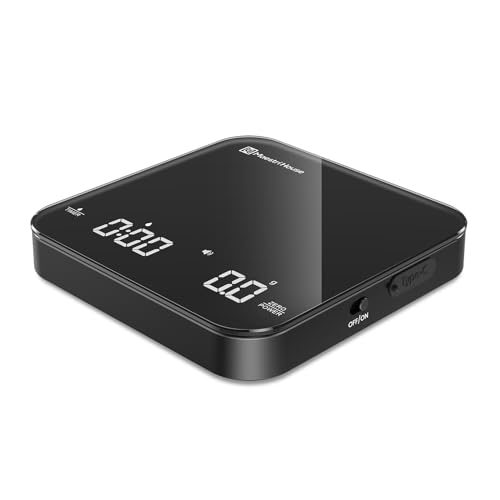
Measuring by weight is the most accurate approach because coffee beans vary in density and grind size changes how much fits in a spoon. One milliliter of water weighs about one gram, so a kitchen scale lets you measure both coffee and water in grams with no conversion.
- 1:12 is strong and heavy, good for milk drinks or bold coffee lovers.
- 1:15 is the balanced starting point most people enjoy.
- 1:17 is lighter and brighter, close to typical drip coffee strength.
French Press Ratio Chart
Use this chart to brew a full press, leaving about an inch of headroom so the plunger and bloom have room. Amounts are rounded for easy measuring.
| Press size | Water | Strong (1:12) | Balanced (1:15) | Light (1:17) |
|---|---|---|---|---|
| 12 oz press | 300 g (10 oz) | 25 g | 20 g | 18 g |
| 17 oz press | 450 g (15 oz) | 38 g | 30 g | 26 g |
| 34 oz press | 900 g (30 oz) | 75 g | 60 g | 53 g |
| 51 oz press | 1,350 g (45 oz) | 112 g | 90 g | 80 g |
If you only want one mug from a large press, scale the ratio down, but expect the brew to cool faster. Brewing near the press's capacity keeps the temperature steadier and gives more consistent results.
A Worked Example: Brewing a 34 oz Press
Here is how the 1:15 ratio looks in practice for a standard 34 ounce press. Place the empty press on a kitchen scale and tare it to zero. Grind 60 grams of whole beans to a coarse, sea salt texture and add them to the press, then tare the scale again so it reads zero with the coffee inside.
Start a timer and pour about 120 grams of water just off the boil, enough to soak all the grounds. Stir gently and let the coffee bloom for 30 seconds. Continue pouring until the scale reads 900 grams, place the lid with the plunger raised, and let it steep until the timer reaches four minutes.
Press the plunger down slowly over about 15 to 20 seconds and pour everything into mugs or a thermal carafe. Taste it. If it is too strong, next time use 55 grams of coffee; if it is too weak, try 65 grams. Keeping notes for a few mornings is the fastest way to find your perfect ratio.
Why Weighing Beats Scoops
Scoops and tablespoons measure volume, but coffee varies in density. A scoop of dark roast weighs less than a scoop of light roast because dark beans expand during roasting, and a scoop of finely ground coffee holds more than a scoop of coarse grounds. These differences can change your brew strength by 20 percent or more without you noticing.
A simple kitchen or coffee scale removes the guesswork and costs less than a bag or two of specialty beans. It also makes it easy to brew the same great cup every day and to share exact recipes with friends. If you buy one, a model that reads in 0.1 gram steps with a built-in timer works for French press, pour over and espresso.
Measuring Without a Scale
A level tablespoon of coarse ground coffee weighs roughly 5 to 6 grams, though it varies with the grind and the roast. A practical rule is 2 rounded tablespoons per 6 ounces of water, which lands close to 1:15. For a 34 ounce press filled to about 30 ounces of water, that is about 10 rounded tablespoons, or a little over half a cup of grounds.
Standard coffee scoops usually hold about 2 tablespoons, so one scoop per 6 ounces of water works well. Measure the water with a liquid measuring cup or use the markings on your kettle or press. Once you find a measurement you like, use the same spoon every time so your coffee stays consistent.
How Grind Size and Time Change the Ratio
The same ratio can taste different depending on grind and steep time. A coarse grind with a four minute steep is the classic French press method. If you grind finer, more flavor dissolves quickly, which can make a 1:15 brew taste stronger and more bitter. If you grind coarser, you may need a slightly stronger ratio or a longer steep to avoid a thin, sour cup.
Steep time works the same way. Three minutes produces a lighter cup; five minutes produces a heavier, more extracted one. Change only one variable at a time, ratio, grind or time, so you know what improved the taste. For a full brewing walkthrough, read our guide on how to use a French press.
Adjusting the Ratio by Roast Level
Light Roasts
Light roasts are denser and less soluble, so they can taste sour at 1:15 with a coarse grind. Try a slightly stronger ratio such as 1:14, hotter water near 205°F, or a five minute steep.
Medium Roasts
Medium roasts are the easiest match for a French press. Start at 1:15 with water around 200°F and a four minute steep, and adjust from there.
Dark Roasts
Dark roasts dissolve quickly and can turn bitter. Try a lighter ratio such as 1:16, slightly cooler water around 195°F and a three and a half minute steep.
Ratios for Different Ways of Drinking
How you drink your coffee should influence the ratio. If you drink it black, 1:15 to 1:16 usually gives a balanced, flavorful cup that does not need anything added. If you add a splash of milk or cream, move toward 1:14 so the coffee flavor still comes through.
For café au lait style drinks, where coffee is mixed half and half with steamed milk, brew stronger at about 1:12 to 1:13. For a sweetened coffee or one with flavored syrup, a slightly stronger brew also keeps the drink from tasting watery. Adjusting the ratio is easier than adding more sugar or creamer to make up for weak coffee.
Brewing for a Crowd
When guests arrive, a 51 ounce press brewed at 1:15 serves five to six people. If you need more, brew two presses back to back and pour the first batch into a thermal carafe so it does not sit on the grounds. Grinding all the coffee at once saves time, but keep each batch's coffee and water measured separately so both presses taste the same.
Ratios for Cold Brew and Iced Coffee
A French press is a convenient cold brew maker. For concentrate, use about 1:8 (for example, 100 grams of coarse coffee to 800 grams of cold water), steep in the refrigerator for 12 to 18 hours, then press and pour. Dilute the concentrate about one to one with water or milk before drinking. For ready to drink cold brew, use about 1:12 to 1:15 and skip dilution.
For iced coffee brewed hot, use a stronger ratio around 1:10 and pour it over a full glass of ice. The ice melts and brings the coffee to normal strength.
Water Quality and Temperature
Coffee is mostly water, so the water you use affects flavor as much as the ratio. Filtered water without strong chlorine or mineral tastes usually produces a cleaner cup. Very soft or distilled water can taste flat, while very hard water can mute flavor and leave scale in your kettle.
Aim for 195 to 205°F. If you do not have a thermometer, bring water to a boil and wait about 30 seconds before pouring. Preheating the press with a little hot water helps keep the brew temperature stable through the steep.
Common Ratio Mistakes
- Measuring by volume with a fine grind: fine grounds pack more coffee into a spoon, making the brew stronger than intended.
- Counting European cups: many presses use 4 ounce cups, so following the cup markings can lead to weak coffee.
- Changing several variables at once: adjust ratio, grind or time separately so you can learn what works.
- Ignoring bean freshness: stale coffee tastes flat at any ratio. Use beans roasted within a few weeks.
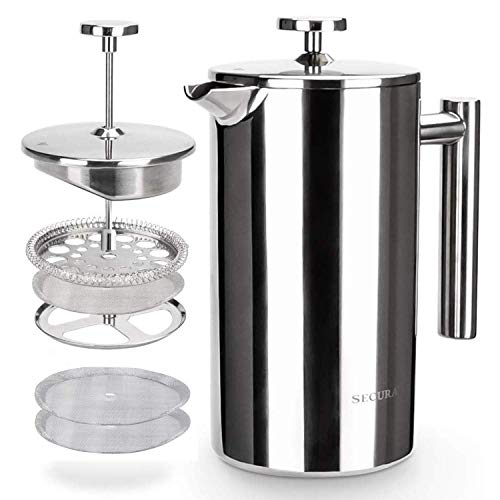
Looking for a press to put these ratios to work? Compare models in our best French press guide, and explore more brewing basics in our coffee guides.
Keeping Your Press Clean for Consistent Results
Old oils trapped in the mesh filter add bitterness that can make a perfect ratio taste off. Rinse the press after each use, disassemble the plunger every few brews, and wash the screens with warm soapy water. Our guide on how to clean a coffee maker covers cleaning routines for every brewer in your kitchen.
FAQs
How many scoops of coffee for a French press?
Use about one standard 2 tablespoon scoop for every 6 ounces of water. A 34 ounce press filled to 30 ounces needs about five scoops.
What is the best French press ratio for strong coffee?
Try 1:12, or about 75 grams of coffee for 900 grams of water in a 34 ounce press.
Is 1:15 or 1:16 better?
Both work well. 1:15 is slightly stronger and fuller; 1:16 is a bit lighter. Choose by taste.
How much coffee for 1 cup in a French press?
For an 8 ounce cup (about 240 grams of water), use around 16 grams of coffee at 1:15, or about 3 tablespoons.
Does the ratio change for a stainless steel press?
No. The ratio is the same for glass and stainless steel. Insulated presses simply keep the water hotter during the steep.
Bottom Line
Start with a French press coffee ratio of 1:15, about 60 grams of coarse coffee for 900 grams of water in a 34 ounce press, steep for four minutes at 195 to 205°F, and press slowly. Adjust toward 1:12 for a bolder cup or 1:17 for a lighter one, and tweak grind and time for your beans. With a scale and fresh coffee, the right French press coffee ratio makes every batch consistent.