
Best Breville Espresso Machine For Beginners: Buying Guide
Disclosure: We may earn a commission when you buy through links on this page, at no extra cost to you. As an Amazon Associate I earn from qualifying purchases. Learn more

The best Breville espresso machine for beginners, from the Bambino to the Barista Express Impress, compared by grinder, milk help and learning curve.
The best Breville espresso machine for beginners is the one that prevents the most common first-week mistakes, such as the wrong dose, an uneven tamp or scalded milk, while still teaching you real espresso. This guide covers current Breville semi-automatic machines sold new on Amazon US, from the compact Bambino to the Barista Express Impress with assisted tamping, and explains which extra equipment each one needs.
If you already know whether you want a built-in grinder, the quick picks below point you to a model. If you are new to espresso entirely, the buying section explains the learning curve and what each feature really does for a beginner.




Quick Picks for Breville Espresso Machine For Beginners
Each pick suits a different kind of beginner. All are semi-automatic machines with a portafilter, so you will grind, dose and brew yourself, with varying amounts of help.
- Breville Barista Express Impress BES876: the best fit for most beginners, with a built-in grinder, intelligent dosing and assisted tamping that correct the most common errors.
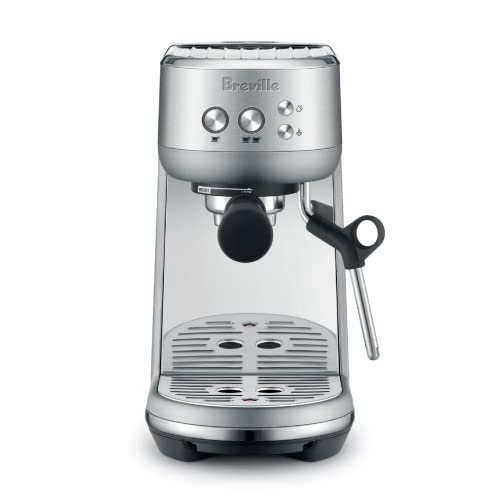
- Breville Bambino Plus BES500: the value pick for milk drinks, with adjustable automatic microfoam in a narrow body, as long as you add a grinder.
- Breville Barista Touch BES880: the simpler workflow, guiding you through grind, brew and milk on a touchscreen with automatic milk texturing.
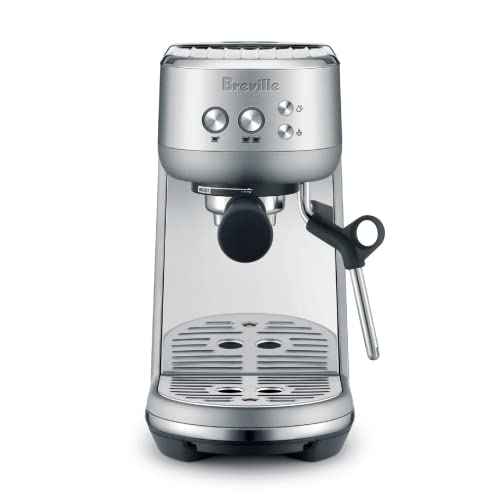
- Breville Bambino BES450: the alternative routine for espresso-first beginners who want the lowest entry price.
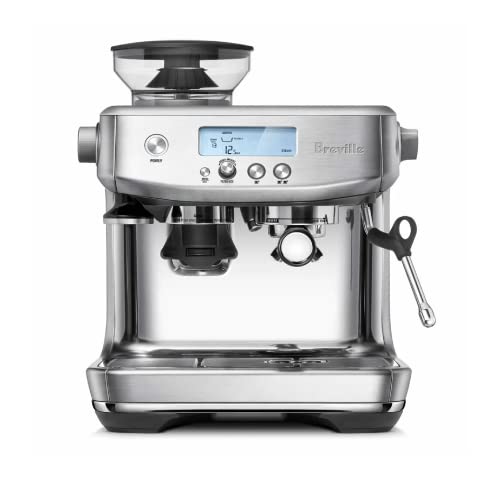
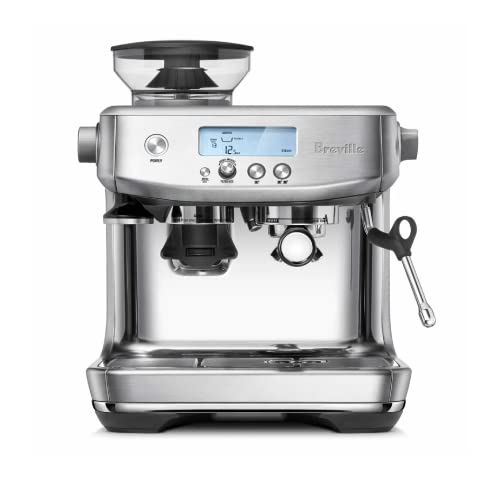
- Breville Barista Pro BES878: the added control pick, with an LCD display, fast ThermoJet heating and a built-in grinder for beginners who want room to grow.
The principal trade-off is assistance versus price. Machines with built-in grinders and dosing help cost more but cut the learning curve and the shopping list. The recommended options below explain each model.
Compare the Qualifying Options
Prices are rounded; confirm the live price in the product table above. "Grinder needed" means you must add a separate espresso grinder or buy pre-ground espresso.
| Model | Role | Grinder | Milk | Beginner aid | Main limitation | Price |
|---|---|---|---|---|---|---|
| Barista Express Impress BES876 | Main pick | Built in, 25 settings | Manual steam wand | Intelligent dosing, assisted tamping | Manual milk texturing | Around $650 |
| Bambino Plus BES500 | Value | Grinder needed | Automatic, adjustable | 7.7 inches wide, PID | No grinder included | Around $400 |
| Barista Touch BES880 | Simpler workflow | Built in | Automatic steam wand | Touchscreen guide, 8 saved drinks | Highest price here | Around $800 |
| Bambino BES450 | Alternative routine | Grinder needed | Automatic steam wand | 3 second heat-up, PID | No grinder included | Around $250 |
| Barista Pro BES878 | Added control | Built in | Manual steam wand | LCD with progress animations | More to learn | Around $630 |
The Bambino and Bambino Plus include a 54mm portafilter; a separate espresso-capable grinder such as the Breville Smart Grinder Pro listed in the table completes the setup.
How We Selected the Shortlist
We limited the list to Breville espresso machines sold new on Amazon US, then applied a beginner filter: each machine had to offer at least one feature that reduces common errors, such as automatic milk texturing, guided dosing, PID temperature control or a display that walks you through the steps. Super automatic machines were excluded, since they make espresso internally and skip the skills a beginner is buying these machines to learn. Remanufactured listings were left out as well.
We compared Breville's specifications, current listing details and what comes in the box, including whether a grinder is needed, and read buyer feedback in aggregate for patterns in ease of use and early frustrations. The judgments focus on espresso extraction and milk workflow, the learning curve, and coffee format and serving needs. This is research based guidance from published specs and owner feedback, not from brewing trials of our own.
Recommended Options
Breville Barista Express Impress BES876: Best fit for the main use case
The Barista Express Impress is the Breville we would suggest to most beginners because it corrects the two mistakes that ruin early shots: the wrong dose and an uneven tamp. Its intelligent dosing system calculates and adjusts the amount of fresh coffee, then auto corrects the next dose. Assisted tamping applies a consistent 10kg of pressure with a 7 degree finishing twist, giving a polished puck without guesswork.
It also bundles the grinder, which removes a big extra purchase. The integrated conical burr grinder has 25 grind settings, so you can adjust for different beans as your palate develops. The Thermocoil heating system with PID control manages temperature, flow rate and contact time.
The limitation is milk. The steam wand is manual, so you will need practice to make smooth microfoam for lattes. Skip it if milk drinks are your priority and you want them hands free; the Barista Touch or Bambino Plus handle milk automatically. At around $650 it is a complete starter setup minus a milk jug, fresh beans and a knock box if you want one.

Breville Bambino Plus BES500: Best value within the stated scope
The Bambino Plus is the best value for beginners who mostly make milk drinks. Its automatic steam wand lets you adjust milk temperature and texture and then textures the milk for you, so lattes and cappuccinos come out well from the first week without learning to steam by hand. At 7.7 inches wide it also fits a small kitchen.
The espresso side covers the beginner essentials: ThermoJet heating to extraction temperature in 3 seconds, digital PID temperature regulation and low pressure pre-infusion that starts each shot gently. The 54mm portafilter takes a 19 gram dose. Paired with a separate grinder, the total usually stays below the built-in grinder models.
The limitation is the missing grinder, so plan for an espresso-capable grinder or pre-ground espresso, which goes stale quickly. Skip it if you want everything in one box; the Express Impress includes its grinder. Expect around $400 for the machine, and note that Breville also sells it in a bundle with a Baratza Encore ESP grinder.

Breville Barista Touch BES880: Best for a simpler workflow
The Barista Touch is for beginners who want the machine to guide every step. Its touchscreen breaks a café drink into three steps, grind, brew and milk, and lets you adjust coffee strength, milk texture and temperature. You can create and save up to eight personalized coffees, so once a drink is right, repeating it is one tap.
It combines a built-in precision conical burr grinder that doses on demand with an automatic steam wand for microfoam. The ThermoJet system reaches extraction temperature in 3 seconds, and PID control plus low pressure pre-infusion help keep shots balanced.
The limitation is cost. At around $800 it is the most expensive machine on this list, and the touchscreen convenience means you learn less about manual milk technique. Skip it if you want to master steaming by hand or if budget is tight. For a household that wants consistent lattes with minimal learning, it is the easiest Breville workflow.

Breville Bambino BES450: Best for an alternative serving routine
The Bambino suits a different beginner: someone who drinks mostly espresso or the occasional cappuccino and wants the lowest entry price into Breville espresso. It is the most affordable model here, yet it keeps the ThermoJet heating system that reaches extraction temperature in 3 seconds, digital PID temperature control and low pressure pre-infusion.
It still includes an automatic steam wand that lets you adjust milk temperature and texture for hands-free microfoam. The 54mm portafilter takes a 19 gram dose, and the compact body fits small kitchens. The listings for the Bambino and Bambino Plus describe milk features in overlapping terms, so compare the two listings directly if milk control is your deciding factor.
The limitation is again the missing grinder: you must add an espresso-capable grinder or use pre-ground espresso. Skip it if you do not want to research grinders. At around $250 it is the cheapest way in, and a sensible choice for a one-person, espresso-first routine.
Breville Barista Pro BES878: Best for added control or convenience
The Barista Pro is for beginners who want a machine they will not outgrow. The LCD display shows grinding and extraction progress animations with the descriptive information you need to adjust each coffee, which helps you understand what changed when a shot runs fast or slow.
It pairs a built-in precision conical burr grinder with the ThermoJet system, which reaches extraction temperature in 3 seconds and switches quickly from espresso to steam. PID temperature control holds water within about 2°C, according to Breville, and low pressure pre-infusion helps balance the shot.
The limitation is the learning curve. The steam wand is manual, and the extra controls mean more to learn in the first weeks than on the Express Impress, which has assisted dosing and tamping. Skip it if you want the most guidance possible. At around $630, it rewards beginners who plan to experiment.
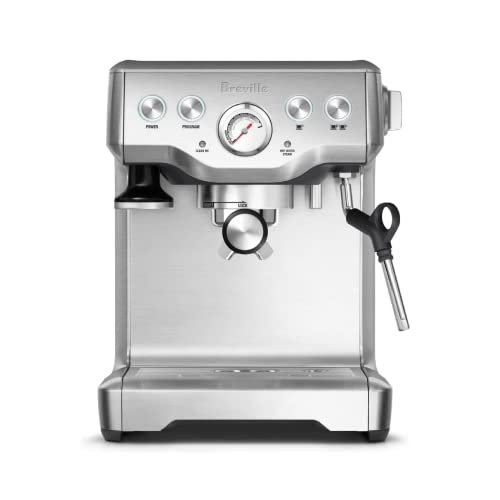
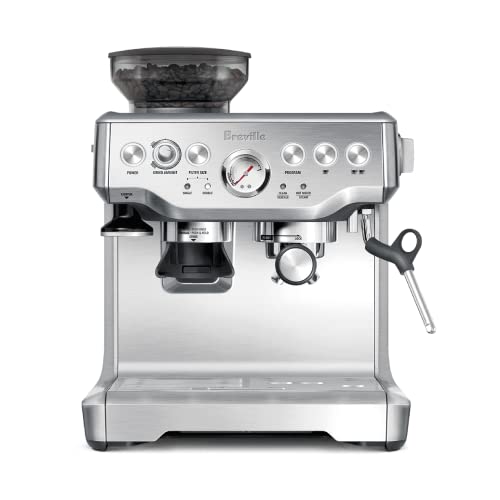
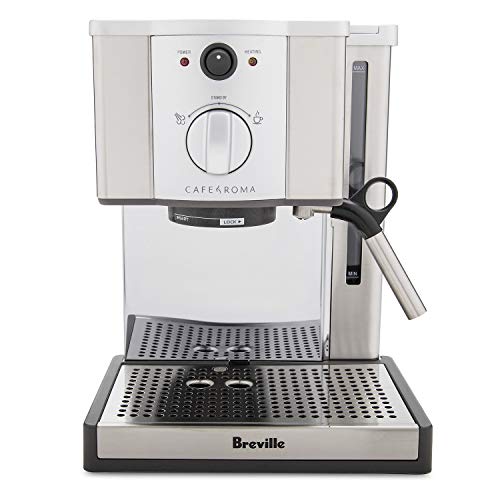
The product table also lists the BES920 Dual Boiler for later upgrades, the Infuser BES840 with a pressure gauge, the classic Barista Express BES870, the older Café Roma ESP8XL with dual-wall filters, and the Breville Smart Grinder Pro for Bambino owners. For the full Breville range, see our guide to the best Breville espresso machine.
What to Look for Before Buying
Espresso Extraction and Milk Workflow
Look at how each machine controls extraction rather than at pump pressure numbers. PID temperature control, low pressure pre-infusion and a consistent dose matter more to a beginner than a high bar rating. All the picks here use PID, and the Express Impress adds automatic dose correction.
Milk is the second half of most beginner drinks. Automatic steam wands on the Bambino, Bambino Plus and Barista Touch texture milk for you, while manual wands on the Express Impress and Barista Pro require practice. Decide whether you want to learn steaming or simply want lattes.
Know what you are making. Espresso is a short, concentrated shot brewed under pressure through finely ground coffee.
A strong brewed coffee or concentrate from a drip machine is not espresso, even if a recipe calls it that. If you need an external grinder, make sure it can grind fine enough for espresso. For a wider view of espresso machine types, read our guide to the best espresso machine.
Learning Curve and Error Prevention
Choosing the best Breville espresso machine for beginners starts with the steps a new owner must learn: grind size, dose, distribution, tamp, shot timing and milk texturing. Each feature that automates one of those steps shortens the learning curve. Assisted tamping and intelligent dosing on the Express Impress remove two of the hardest variables, while a touchscreen guide on the Barista Touch removes many decisions.
Clear instructions and accessible controls matter. Displays that show progress or shot time help you diagnose problems, and simple buttons reduce mistakes on busy mornings.
Whatever the model, plan your first week. Expect to adjust grind size several times with a new bag of beans, and to pour a few sink shots while dialing in. Keep simple maintenance in mind from day one: purge and wipe the steam wand after each use, rinse the portafilter, and follow the manual for backflushing and descaling schedules.
Coffee Format and Serving Needs
These machines need freshly ground coffee, either from the built-in grinder or a separate espresso grinder. Pre-ground espresso works in a pinch but limits adjustment and goes stale fast. Pods and capsules are not compatible with portafilter machines.
Match the machine to your daily volume. A single or double shot is 1 to 2 fl oz, a cappuccino about 6 fl oz and a latte 8 to 12 fl oz. Making two or three milk drinks back to back is easier on machines with fast heat-up like the ThermoJet models.
If you mostly want one-touch drinks with no learning at all, a super automatic is a better match; see our guide to the best super automatic espresso machine.
Which Option Fits Your Routine?
Your Must-Have Function
Want the most error prevention? Choose the Express Impress. If you want automatic milk at a mid price, the Bambino Plus fits, while touchscreen guidance points to the Barista Touch.
Your Preparation and Cleanup Tolerance
Every portafilter machine needs knocking out pucks, rinsing and wand cleaning. Automatic milk saves effort, but the wand still needs wiping and purging.
Your Complete Budget
Add a grinder for the Bambino models, plus beans, a milk jug, cleaning tablets and descaler. Built-in grinder models cost more upfront but simplify the shopping list.
Frequently Asked Questions
Which features matter most for this use case?
For beginners, dosing help, PID temperature control and automatic milk texturing matter most, because they prevent the errors that make early shots and lattes disappointing. A built-in grinder is next, since it removes a separate purchase. Features like a shot clock or display help you understand what to adjust as your skills grow.
How do I choose the correct serving capacity?
Count the drinks you make each morning and how many contain milk. One or two drinks suit any machine here, while several milk drinks back to back favor fast heat-up and automatic steaming. Water tank size matters too, since a small tank needs more frequent refills when you make several drinks.
What extra equipment will I need?
Models without a built-in grinder need an espresso-capable grinder. Beyond that, plan on a milk jug if one is not included, a knock box for spent pucks, cleaning tablets and a descaler your manual approves. A small scale helps beginners weigh doses and shots for consistent results.
How much daily cleaning should I expect?
Expect a few minutes a day: knock out the puck, rinse the portafilter and basket, purge and wipe the steam wand, and empty the drip tray. Backflushing and descaling are periodic tasks, and their frequency depends on your water and Breville's instructions for that model.
Final Verdict
For most new home baristas, the Barista Express Impress is the best Breville espresso machine for beginners because intelligent dosing and assisted tamping fix the most common errors, and the grinder is built in. If budget comes first, the Bambino with a separate grinder is the better value. The deciding trade-off is guidance versus cost, so settle that, then check the current price in the table and buy the model that fits your routine.

