
How To Clean A Coffee Maker With Vinegar: A Model-Specific Guide
Disclosure: We may earn a commission when you buy through links on this page, at no extra cost to you. As an Amazon Associate I earn from qualifying purchases. Learn more

How to clean a coffee maker with vinegar only when your manual allows it, with the right program, rinse and alternatives.
Learning how to clean a coffee maker with vinegar begins with one check: does your manufacturer allow vinegar for your exact model? Many basic drip coffee makers list white vinegar as a descaling option, while plenty of single serve, espresso and fully automatic machines specify their own descaler and warn against vinegar. This guide shows you how to confirm what your manual permits, how to run a vinegar descale on a machine that allows it, and what to use instead when it does not.
If you already know your manual approves vinegar, go to the step-by-step procedure. If you are not sure whether your problem is mineral scale or coffee residue, start with the section on cleaning versus descaling.

Quick Answer and Task Boundary
Use vinegar only if your coffee maker's manual approves it, and only in the way the manual describes, including its mix and the number of rinse cycles. Vinegar is used to dissolve mineral scale, which is descaling, not to remove coffee oils from baskets and carafes.
If your manual specifies a descaling solution instead, or warns against vinegar, use the descaler it names or one compatible with your machine type. Wash removable parts separately with warm soapy water as the manual allows.
Identify the Model and the Right Maintenance Task
Find the Exact Model and Manual
Look for the model number on the label underneath the machine, on the back panel or inside the reservoir area. Write it down with any series or generation name, then download the manual from the manufacturer's US support site. The care or cleaning section tells you whether vinegar is allowed, what mix to use, which program or button to start and how many plain water rinses are required afterward.
Models that look alike can have different instructions. One drip brewer in a family may have a dedicated clean button, while a sibling uses a regular brew cycle, so use the manual for your exact model number.
If you cannot find a paper manual, search the manufacturer's support page with the full model number, or contact customer service. Retailer listings sometimes include a manual PDF too. Avoid relying on forum posts for vinegar ratios, because the person posting may own a different model.
Check Whether This Is Cleaning or Descaling
Descaling removes mineral deposits from hard water inside the heating system. Signs include slower brewing, coffee that is not as hot as it used to be, louder gurgling, white crust in the reservoir or a clean or descale light. This is the job vinegar may be approved for.
Cleaning removes coffee oils and stains from the carafe, basket and filter. A stale taste or brown film usually means the removable parts need washing, not a vinegar cycle. Our guide on how to descale a coffee maker covers the broader descaling routine for different machine types.
Water hardness also matters. In hard water areas, scale builds faster, so descale prompts come sooner and visible white crust appears in the reservoir. Some machines let you set water hardness so reminders match your area; if yours does, set it during setup and again if you move.
What You Need Before Starting
For a vinegar descale on a machine that permits it, you need plain distilled white vinegar, fresh water, the carafe or a container large enough to catch a full reservoir, and paper filters if your manual asks you to run the cycle with one. Measure using your manual's instructions; there is no universal ratio that applies to every coffee maker, and drip instructions do not carry over to capsule, espresso or fully automatic machines.
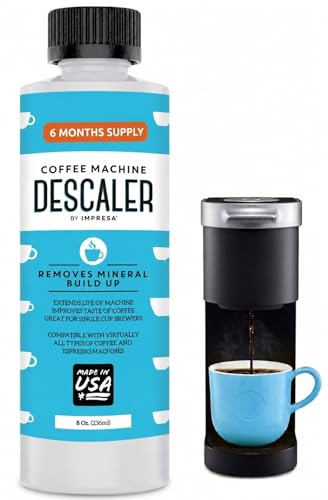
If your manual does not approve vinegar, use the descaling product it names, or a descaler that lists your machine type. The product table above shows two widely sold universal descaling solutions as examples; check their instructions and your manual before using either.
Before handling removable parts, unplug the machine and let it cool. The descaling cycle itself runs with the machine plugged in, exactly as the manual describes. Open a window or run the kitchen fan if the vinegar smell bothers you.
How To Clean A Coffee Maker With Vinegar: Step-by-Step Procedure
Prepare the Correct Components
If your manual prohibits vinegar, stop here and follow its approved descaling method with the recommended product instead. Using a prohibited cleaner can damage seals or leave residues, and it may affect warranty coverage.
If vinegar is approved, start with an empty machine. Remove the carafe, discard any old grounds and paper filter, and wash the carafe, basket and lid in warm soapy water so you are not descaling around old coffee residue. Remove any charcoal water filter from the reservoir if the manual says to take it out before descaling, since vinegar can affect it.
Fill the reservoir with the vinegar and water mix your manual specifies, up to the level it states. Put the clean carafe back on the warming plate and insert the basket, with or without a paper filter as instructed.
Check the reservoir and any water filter holder before you begin. If your machine uses a charcoal filter, note its position so you can reinstall it correctly after the rinse cycles. If the manual says to replace the filter after descaling, have a new one ready.
Start the Approved Task or Program
Some coffee makers have a dedicated clean button or descale program; others use a regular brew cycle. Use whichever your manual names, and only the button sequence documented for your model. Do not borrow a sequence from another brand or generation.
A powered descaling cycle is different from washing parts by hand. Once the cycle starts, the machine heats the solution and pushes it through the internal water path, where mineral scale forms. Stay nearby so you can deal with a full carafe or any overflow.
Some manuals ask you to pause partway through so the solution can sit in the heating system for a set time. Follow that pause only if your manual includes it, and for the time it states.
Complete the Cleaning or Descaling Stage
Let the cycle run to the end without interrupting it unless the manual says otherwise. Discard the solution from the carafe. If your manual calls for a second descaling pass for heavy scale, do it exactly as written; do not repeat vinegar cycles beyond what the manual permits.
Use only the products and quantities your manual documents. If it allows either vinegar or a commercial descaler, do not combine them in the same cycle. Mixing cleaners will not speed up the job and can cause foaming or residue.
If a clean or descale light was on, many machines turn it off automatically when the program completes; others need a reset step described in the manual.
Watch the first carafe of solution as it comes through. Flakes or cloudy liquid are a sign that scale is being loosened, which is expected. If the machine stops mid-cycle, shows an error or leaks, unplug it, let it cool and check the manual before continuing.
Finish the Required Rinse and Reassembly
Rinsing is essential after vinegar, both for taste and to clear the solution from the water path. Fill the reservoir with fresh water and run the number of plain water cycles your manual specifies, emptying the carafe and letting the machine cool between cycles if instructed.
Wash the carafe and basket again with warm soapy water and rinse them well. Reinstall a new or the existing charcoal water filter as the manual directs, along with the basket and carafe.
Before your first real pot, smell the rinse water from the final cycle. If you still notice vinegar, run one more plain water cycle if the manual allows it. Then brew normally.
Check the Result Before Normal Use
Confirm Completion
The cycle is complete when the descaling and rinse cycles have finished, any descale indicator has turned off or been reset, and all removable parts are back in place. Brewing should sound normal, and the carafe should fill at a steady pace with no vinegar smell.
If a Prompt or Symptom Remains
If brewing is still slow or the light stays on, check the manual's troubleshooting section for the next step, such as a reset or a second descale it permits. Do not keep repeating vinegar cycles blindly. If the symptom continues, see our coffee maker troubleshooting guide or contact the manufacturer.
Common Mistakes to Avoid
- Using vinegar for the wrong job: vinegar is for mineral scale when approved; coffee oils need washing or an approved cleaner, and milk systems need milk cleaner.
- Treating vinegar, cleaning tablets and descaler as interchangeable: each targets different residue, and many machines approve only one of them.
- Using vinegar where it is prohibited: many single serve, espresso and fully automatic machines specify their own descaler; follow the manual.
- Skipping rinse cycles: leftover vinegar affects taste and may leave residue in the water path.
- Dishwashing or soaking parts without approval: wash only the parts the manual lists as dishwasher safe, and never immerse the machine body.
- Copying controls from another generation: clean buttons and programs differ between models.
A note on smell: vinegar odor in the kitchen fades quickly, but a lingering vinegar taste in coffee means the rinse was incomplete. Plain water rinses fix that, within the number your manual allows. Storing the machine with the lid open for a while after rinsing helps the reservoir dry and air out.
Finally, keep a simple log of when you descale. Writing the date on a sticky note inside a cabinet door, or in your phone, helps you notice whether scale is building faster than expected, which can point to very hard water or a water filter that needs replacing more often.
Frequently Asked Questions
Which cleaner is approved for this model?
Your manual names it in the care or cleaning section. Many basic drip coffee makers approve white vinegar or a commercial descaler; many single serve and espresso machines specify their own descaling solution and advise against vinegar. If the manual is unclear, contact the manufacturer before using vinegar.
How often should I perform this task?
Descale on the schedule your manual gives or when the machine's descale indicator comes on. Hard water usually means more frequent descaling. Washing the carafe, basket and filter is a separate, more frequent task, ideally after each use.
What if the cleaning or descaling alert remains?
Check that you ran the full program and rinse cycles the manual requires, then look for a reset step. If the alert stays on, the manual's troubleshooting section or manufacturer support can tell you whether another cycle is permitted or the machine needs service.
Can I use a generic method from another coffee maker?
Not safely. Ratios, buttons and rinse counts vary by model, and a method meant for a drip brewer can harm a capsule or espresso machine. Use the instructions for your exact model, or the approved descaler if vinegar is not allowed.
Keep the Routine Simple
To recap how to clean a coffee maker with vinegar: confirm your manual approves it, use its stated mix and program, let the cycle finish, then run the required plain water rinses and wash removable parts. If vinegar is not approved, use the named descaler instead. For a full care schedule, see our coffee maker maintenance guide.


