
Drip vs Single Serve Coffee Maker: Which Should You Choose?
Disclosure: We may earn a commission when you buy through links on this page, at no extra cost to you. As an Amazon Associate I earn from qualifying purchases. Learn more

Drip vs single serve coffee maker compared on a matched pair: batch brewing versus pods for cost, control and cleanup.
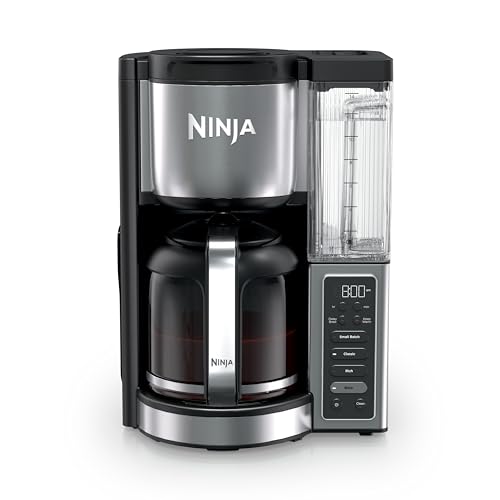
The drip vs single serve coffee maker decision is about how your household drinks coffee: a drip brewer makes a pot from ground coffee in one go, while a single serve pod machine brews one cup at a time from a capsule. Both are simple machines that cost around $100 for a good model, but they differ in cost per cup, flexibility, waste and cleanup. This guide compares a matched pair at the same price, the Ninja Fresh Brew 14-Cup drip coffee maker and the Keurig K-Classic pod brewer, and explains what each format really asks of you.
If you already know whether you drink a pot or a cup, the quick verdict will confirm your choice. If you are torn, the sections on brewing method, coffee output, maintenance and cost lay out the trade-offs in practical terms.


Quick Verdict
Choose Pod Coffee Maker If…
Choose a pod coffee maker if people in your home drink one cup at a time on different schedules, you want no measuring or filters, and speed matters more than cost per cup. The Keurig K-Classic brews 6, 8 or 10 oz cups from K-Cup pods with a 48 oz reservoir. The main compromise is a higher cost per cup and more packaging waste.
Choose Drip Coffee Maker If…
Choose a drip coffee maker if you brew several cups at once, want the lowest cost per cup, and like choosing your own coffee and strength. The Ninja Fresh Brew 14-Cup adds a small-batch setting, a 24-hour delay brew and two brew styles. The compromise is measuring grounds and washing a carafe and basket each day.
Scope and Side-by-Side Table
This comparison uses the US Ninja Fresh Brew 14-Cup (CE451) and the US Keurig K-Classic. Both cost around $100 to $110, both use simple controls, and both are designed for everyday home coffee, so the pairing is fair on price and audience. The difference is the format: ground coffee in a carafe versus pods into a mug.
| Feature | Ninja Fresh Brew CE451 (drip) | Keurig K-Classic (single serve) |
|---|---|---|
| Coffee format | Ground coffee, paper or reusable filter | K-Cup pods (reusable pod filter optional) |
| Output | Up to 14 cups (about 5 oz each), 1 to 4 cup small batch | One cup at a time: 6, 8 or 10 oz |
| Strength control | Classic and Rich brew styles | Smaller cup size for a stronger brew |
| Reservoir | 70 oz, removable | 48 oz, removable |
| Programming | 24-hour delay brew | Auto-off after 2 hours idle |
| Keeping coffee hot | Adjustable warming plate, up to 4 hours | Brew fresh per cup |
| Milk | None | None |
| In the box | See listing | 4 K-Cup pods, water filter handle and 2 filters |
| Machine price | Around $100 | Around $110 |
The product table above also includes the Hamilton Beach FlexBrew Trio, a combination machine that brews either a carafe or a single cup, for households that want both formats.
How We Compared These Options
We compared the current Amazon US listings for each exact model, their stated features and package contents, and the complete setup each one needs, including filters, pods and descaler. Buyer feedback was read in aggregate for recurring comments about ease of use, reliability and cleanup.
No brewing trials were run for this comparison, so it makes no taste or temperature claims of its own. Feature statements cite each machine's listing, and judgments about which suits whom are our assessment. Brand terms such as Thermal Flavor Extraction are reported as Ninja describes them, not as proof of better coffee.
Drip vs Single Serve Coffee Maker: Terminology and Brewing Method
What Each Option Supports
A drip coffee maker heats water and showers it over ground coffee in a filter basket; brewed coffee drips into a carafe. The Ninja CE451 is a drip brewer with a 14-cup glass carafe and a small-batch setting for 1 to 4 cups. A single serve coffee maker brews one cup at a time, usually by pushing hot water through a sealed pod. The Keurig K-Classic is a single serve pod brewer for K-Cup pods.
What Changes in Everyday Use
The labels overlap in places. Some single serve machines brew from grounds in a scoop, and some drip machines have a single-cup setting or a pod side, like the Hamilton Beach FlexBrew Trio. What really changes is the routine: drip means measuring grounds, inserting a filter and brewing a batch; pod brewing means inserting a pod, choosing a size and pressing brew.
Brewing time feels different too. A drip brewer takes several minutes to make a full pot, but then several people can pour at once. A pod brewer makes each cup in a minute or two, but a household of four waits for four cycles.
Who Benefits from the Difference
Do not let the words "single serve" or "drip" decide for you, since combination machines blur the line; think in terms of batch versus cup. If your household drinks coffee together in the morning, batch brewing fits. If everyone drinks at different times, one cup at a time avoids pouring out stale coffee.
Coffee Output and Control
What Each Option Supports
The Ninja brews up to 14 cups, where a cup is about 5 oz, so a full carafe fills roughly five or six 12 oz mugs. Its small-batch setting brews 1 to 4 cups, and Classic and Rich styles change strength. The Keurig brews 6, 8 or 10 oz per pod; Keurig says the 6 oz size gives the strongest brew. Neither machine makes espresso or milk drinks.
What Changes in Everyday Use
With drip, you control strength through the amount of coffee you add, your choice of beans and grind, and the Rich setting. With pods, strength depends on the pod and the cup size you select, so the main lever is buying a bolder pod or choosing 6 oz. Drip gives more manual control; pods give more consistency with less effort.
Coffee choice follows the same pattern. Drip works with any ground coffee or whole beans you grind yourself. Pods limit you to what is available in K-Cup format, though a reusable pod filter lets you use your own grounds at the cost of convenience.
Serving temperature over time also differs. A drip pot sits on a warming plate or in a thermal carafe after brewing, so later cups depend on how long the coffee has been held. Each pod cup is brewed on demand, so the tenth cup of the day is as fresh as the first, which matters for people who drink coffee spread across the day.
Who Benefits from the Difference
People who enjoy choosing beans and adjusting strength benefit from drip. People who want the same reliable cup with no measuring benefit from pods. This guide does not claim one tastes better; that depends on the coffee you buy and how you brew it.
Preparation and Maintenance
What Each Option Supports
The Ninja has a removable 70 oz reservoir, a filter basket and a glass carafe on an adjustable warming plate. The Keurig has a removable 48 oz reservoir that holds six or more cups' worth of water, a pod holder and a drip tray, plus a water filter handle and filters in the box. Both need regular descaling according to their manuals.
What Changes in Everyday Use
Count the daily steps. Drip means filling water, adding a filter and grounds, brewing, then discarding grounds and washing the carafe and basket; pod brewing means filling water occasionally, inserting a pod, brewing and discarding the pod. The pod routine is shorter per cup; the drip routine is done once for the whole household.
Waste differs as well. Drip produces used grounds and a paper filter, both of which can often be composted; pods produce a used capsule per drink. Keurig pods vary in recyclability, so check local rules.
Hygiene is simple on both if you keep up with it. Rinse the drip carafe and basket the same day so oils do not build up, and empty the Keurig's drip tray and wipe the pod holder regularly. Change the Keurig's water filter on the schedule given in its manual, and descale either machine when brewing slows or the manual says it is time.
Who Benefits from the Difference
Automatic preparation is not zero maintenance on either machine. Pod brewers still need descaling, water filter changes and an occasional clean of the pod needle area, as the manual describes. Drip brewers need daily carafe washing. If you dislike washing up, pods win on daily effort; if you dislike buying and disposing of pods, drip wins.
Setup and Recurring Cost
What Each Option Supports
The machines cost about the same: around $100 for the Ninja and around $110 for the Keurig. Neither needs a grinder unless you choose whole beans for the drip brewer. Accessories are cheap on both: paper filters or a permanent filter for drip, and an optional reusable pod filter for the Keurig.
What Changes in Everyday Use
Recurring cost is where they split. As an explicit assumption, imagine two people drinking two 10 oz cups each per day. The drip brewer uses ground coffee plus filters; the Keurig uses four pods a day.
Pods usually cost more per cup than an equivalent amount of ground coffee, so over a year the pod household typically spends more. Check current prices for the coffee you actually buy and run the numbers for your own habits.
Descaler, replacement water filters for the Keurig and paper filters for the Ninja are small extras on top.
Who Benefits from the Difference
Budget-conscious households drinking several cups a day benefit from drip. Single drinkers having one cup a day may find pod convenience worth the higher cost per cup, since the total yearly difference is smaller. Match the format to your consumption, not just the machine price.
Representative Products and Pairing Limits
A Verified Pair at a Relevant Price Level
The Ninja Fresh Brew 14-Cup (CE451) brings a 1 to 4 cup small-batch setting and a 24-hour delay brew, with Classic and Rich styles and a 70 oz reservoir. Its limitation is the glass carafe on a warming plate, which can flatten coffee left for hours. Check Price on Amazon
The Keurig K-Classic brings three simple cup sizes and a 48 oz removable reservoir, plus auto-off after two idle hours. Its limitation is cost per cup and pod waste, and it brews only one cup at a time. Check Price on Amazon
What the Pair Does Not Prove
This pair compares two mainstream machines at the same price, but it does not cover every option. Premium drip brewers add temperature control and thermal carafes, and premium pod machines add more cup sizes, iced settings or milk frothers. A single pair cannot speak for every model in either format.
It also does not settle taste, which depends on your coffee. If you want both formats, a combination machine like the Hamilton Beach FlexBrew Trio in the product table brews a carafe or a single cup, at the cost of a larger footprint.
Which Should You Choose?
For Convenience-First Buyers
If convenience means the fewest steps per cup and no washing up, choose a pod brewer like the Keurig K-Classic. If convenience means waking up to a full pot ready for everyone, choose a drip brewer with a delay timer like the Ninja CE451. Each is convenient for a different routine.
For Buyers Seeking Control or Different Drinks
For control over strength, bean choice and batch size, drip is the better format. For a menu of flavors from a single box of assorted pods, single serve is easier. If you want espresso or milk drinks, neither of these is the answer; look at espresso machines instead.
Mixed households have a third route. If one person drinks a pot each morning and another wants an afternoon cup, a combination machine or a small drip brewer plus a compact pod brewer can serve both without waste. Just remember that two machines mean two sets of descaling and cleaning.
For Budget and Space Constraints
Machine prices are similar, so the long-term budget favors drip for heavy drinkers. On space, a slim pod brewer often takes less counter width than a carafe brewer, but both need clearance under cabinets to open the lid. Measure your spot and estimate your yearly coffee spend before you decide.
One last practical check: look at where your coffee habit is heading. If you are moving toward specialty beans and want more control, a drip brewer grows with you. If your priority is getting out of the door quickly with a travel mug, a pod brewer with a tall cup clearance is the more realistic daily partner.
Frequently Asked Questions
Are these options the same type of machine?
No. A drip coffee maker brews a batch of coffee from grounds into a carafe, while a single serve pod machine brews one cup at a time from a capsule. Both make regular brewed coffee rather than espresso, and some combination machines do both.
Which is easier to use and maintain?
Pod brewers are easier per cup: insert a pod, brew and toss it. Drip brewers need measuring and daily carafe washing but brew for the whole household at once. Both need periodic descaling as their manuals direct.
What accessories or coffee formats do they require?
Drip brewers need ground coffee and paper or permanent filters. The Keurig K-Classic needs K-Cup pods or a reusable pod filter, and replacement water filters for its handle. Both need a descaling product approved by the maker.
Which offers better value for my routine?
For households drinking several cups a day, drip usually offers better value because ground coffee costs less per cup than pods. For one person drinking one cup a day, a pod brewer's convenience may be worth the modest extra cost.
Final Verdict
In the drip vs single serve coffee maker choice, a drip brewer like the Ninja Fresh Brew 14-Cup suits households that drink coffee together and want the lowest cost per cup, while a single serve pod machine like the Keurig K-Classic suits people who drink one cup at a time and value speed over cost. For more drip options, see our guide to the best drip coffee makers and, for more control, the best specialty drip coffee maker.


