
How to Store Coffee Beans So They Stay Fresh
Disclosure: We may earn a commission when you buy through links on this page, at no extra cost to you. As an Amazon Associate I earn from qualifying purchases. Learn more

How to store coffee beans at home, with container advice, freezing tips and a shelf life chart.
Knowing how to store coffee beans properly is simple: keep whole beans in an opaque, airtight container at room temperature, away from light, heat and moisture, and use them within 2 to 4 weeks of opening. Skip the refrigerator, and freeze only beans you will not use for a month or more, in small sealed portions. Oxygen, light, heat and moisture are what make coffee stale, so good storage limits all four.
Below we explain exactly how to store coffee beans at home, which containers work best, whether to use the fridge or freezer, how long beans and ground coffee last, how to tell when coffee has gone stale and the most common storage mistakes, with answers to frequent questions at the end.


How to Store Coffee Beans: The Quick Rules
These rules cover almost every situation. Follow them and your coffee will taste fresher for longer.
- Buy whole beans and grind just before brewing.
- Use an opaque, airtight container, ideally with a one way valve.
- Keep it at room temperature in a cool, dark cupboard.
- Stay away from heat and light, such as the stove, oven, dishwasher or a sunny window.
- Avoid the refrigerator, where moisture and odors ruin beans.
- Buy only what you will use in 2 to 4 weeks.
- Freeze long term extras in small, airtight portions and do not refreeze.
Why Does Coffee Go Stale?
Coffee goes stale mainly because oxygen reacts with its aromatic oils and flavor compounds, a process called oxidation. Roasted beans contain hundreds of volatile compounds that give coffee its aroma, and they escape or break down when exposed to air.
Light speeds up this breakdown, heat accelerates the chemical reactions and moisture can cause beans to lose flavor, absorb odors or even grow mold. Fresh beans also release carbon dioxide for days after roasting; as that gas escapes, it carries some aroma with it. Good storage slows all of this down.
What Is the Best Container for Coffee Beans?
The best container for coffee beans is opaque, airtight and sized to your supply, with a one way valve if you buy freshly roasted coffee. Stainless steel and ceramic canisters block light completely. Clear glass looks nice but lets light in, so keep glass jars inside a dark cupboard.
Valve Canisters
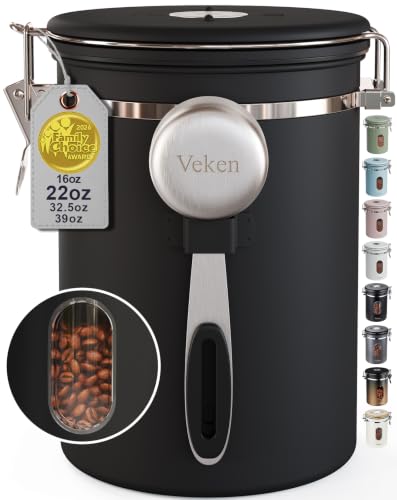
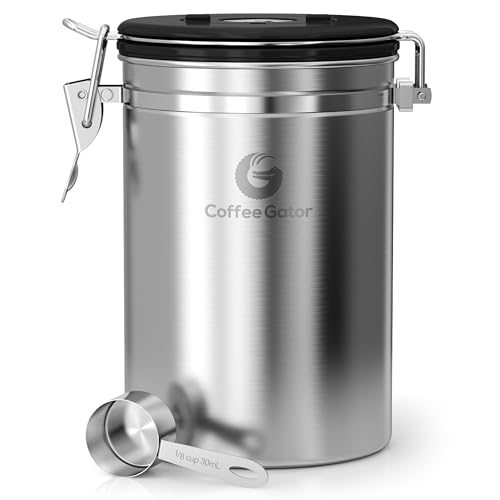
Canisters with a one way CO2 valve, like the Veken and Coffee Gator, let fresh beans release gas without letting air in. Many add a date tracker so you can note the roast or opening date.
Vacuum and Plunger Canisters
Plunger designs like the Planetary Design Airscape push air out by lowering an inner lid onto the beans. Pump vacuum canisters remove air with a small pump. Both reduce the oxygen around the coffee.
The Original Bag
Many specialty bags have a one way valve and a zip seal. Squeezing out the air and resealing the bag, then placing it in a cupboard, works well for a week or two.
Our guide to the best coffee canister compares these options in detail.
Where Should You Keep Coffee Beans?
Keep coffee beans in a cool, dark, dry cupboard or pantry, ideally at about 60 to 70 degrees Fahrenheit. Avoid shelves above the stove, next to the oven or dishwasher, or near a window, since heat and sunlight speed up staling. A countertop canister is fine if it is opaque and away from heat sources.
Should You Store Coffee Beans in the Refrigerator?
No. The refrigerator is a poor place for coffee. It is humid, and every time you take the container out, condensation forms on the cold beans. Coffee also absorbs odors from other foods easily, so beans can pick up flavors of onions, cheese or leftovers. Room temperature storage is better for coffee you will use within a month.
Can You Freeze Coffee Beans?
Yes, freezing works well for long term storage if you do it correctly. Freezing slows oxidation dramatically, which helps if you buy in bulk or receive more coffee than you can drink in a month.
How to Freeze Coffee Beans Properly
- Freeze fresh beans, within a week or so of roasting.
- Divide them into small portions, about one week's supply each.
- Use airtight bags or containers, pressing out as much air as possible.
- Freeze once and do not refreeze.
- Thaw a portion fully before opening, so condensation does not form on the beans.
Some coffee enthusiasts grind beans straight from the freezer for a more even grind. Either way, avoid moving the same container in and out of the freezer.
How Long Do Coffee Beans Last?
Whole coffee beans taste best within about 2 to 4 weeks of opening and stay usable for several months, while ground coffee is best within 1 to 2 weeks. Coffee does not spoil like fresh food, but its flavor fades steadily.
| Coffee type | Best flavor | Still usable |
|---|---|---|
| Whole beans, unopened valve bag | Up to about 2 to 3 months after roasting | 6 to 9 months |
| Whole beans, opened | 2 to 4 weeks | 2 to 3 months |
| Ground coffee, opened | 1 to 2 weeks | 1 to 2 months |
| Frozen whole beans, sealed | Up to about 6 months | Up to about 1 year |
| Instant coffee, kept dry | Several months after opening | Up to 2 years or more |
| Brewed coffee | Within 20 to 30 minutes hot | 3 to 4 days refrigerated |
Look for a roast date on the bag, not just a best by date, to judge freshness. Most coffees taste best from a few days to a few weeks after roasting, once some gas has escaped.
How to Tell If Coffee Beans Are Stale
Stale coffee beans smell flat or papery instead of rich and sweet, and they brew a dull, hollow or bitter cup with little aroma. Other signs include very little bloom when hot water hits fresh grounds, a cardboard like taste and, for espresso, thin crema that disappears quickly. Oily dark roasts that smell rancid have gone past their best. Mold, a musty smell or visible fuzz means the beans should be thrown away.
How to Store Ground Coffee
Store ground coffee the same way as beans, in an opaque, airtight container at room temperature, but use it faster, ideally within one to two weeks. Ground coffee has much more surface area, so it loses aroma quickly. Buy small bags, press air out after each use and avoid the refrigerator. If you can, buy whole beans and a grinder instead; see our guide to the best whole bean coffee.
How to Store Coffee When You Buy in Bulk
If you buy 2 to 5 pound bags, keep a small canister on the counter with one to two weeks of beans and store the rest sealed. Leave the remaining beans in their original valve bag, squeezed and sealed, in a cool cupboard, or divide them into weekly portions and freeze them. Refill the small canister each week rather than opening the large bag repeatedly.
Storing Coffee Beans in Hot or Humid Climates
In hot or humid homes, choose a canister with a tight silicone seal, keep it in the coolest dark cupboard and buy smaller amounts more often. Humidity can make beans absorb moisture and lose flavor faster, and summer heat speeds oxidation. If your kitchen regularly tops 80 degrees Fahrenheit, freezing weekly portions is a sensible way to keep beans fresh, as long as you thaw each portion fully before opening it.
Should Fresh Beans Rest Before Brewing?
Yes, very freshly roasted beans benefit from a short rest, called degassing. Beans release carbon dioxide for several days after roasting, which can cause uneven extraction and too much bubbling. Most coffees taste best from about 3 to 14 days after roasting for filter coffee and 7 to 21 days for espresso. A valve canister lets beans degas while keeping air out.
Common Coffee Storage Mistakes
The most common mistake is keeping coffee in a clear jar on a sunny counter. Others include storing beans in the fridge, leaving bags open, buying more than you can use in a month, grinding a week's worth at once and mixing new beans on top of old ones in a canister. Storing coffee near the stove or above the dishwasher, where heat and steam rise, is another easy mistake to fix.
Coffee Storage Myths
A popular myth is that the freezer is always best; it only helps for long term storage and causes problems if you open the container often. Another is that vacuum sealing makes coffee last forever; it slows staling but does not stop it. Some people believe dark roast lasts longer; in fact, its porous, oily surface makes it go stale a little faster. Finally, a "best by" date does not tell you freshness; the roast date does.
Storing Coffee While Traveling
For trips, pack pre-measured portions of beans or grounds in small airtight bags or a compact vacuum container like the Tightvac, which holds 1 to 6 ounces. Keep coffee out of direct sun in the car and away from strong smelling items in your luggage. Single serve instant sticks are another easy option for travel.
Keep Your Coffee Gear Clean Too
Clean storage containers every few refills, since coffee oils build up on the walls and turn rancid. Wash with warm, soapy water and dry completely before refilling. Your coffee maker matters as much as storage; our guide on how to clean a coffee maker explains how to remove oils and scale. Browse more guides in our coffee guides section.
FAQs About Storing Coffee Beans
What is the best way to store coffee beans?
Keep whole beans in an opaque, airtight container with a one way valve, at room temperature in a dark cupboard. Use them within 2 to 4 weeks of opening.
Should I keep coffee beans in the fridge?
No. The fridge adds moisture and odors. Room temperature is better for coffee you will use within a month.
Is it OK to freeze coffee beans?
Yes, for long term storage. Freeze fresh beans in small airtight portions, thaw fully before opening and do not refreeze.
How long do coffee beans last after opening?
They taste best for about 2 to 4 weeks and remain usable for a few months, though flavor fades.
Do coffee beans go bad?
They rarely spoil unless they get wet or moldy, but they go stale and lose flavor over time.
Can I store coffee beans in the bag they came in?
Yes, if the bag has a valve and zip seal. Press out the air, seal it and keep it in a cool, dark cupboard.
Is a vacuum canister worth it?
It helps if you buy beans in larger amounts or finish a bag slowly. For a bag you finish within two weeks, a good airtight canister is enough.
Final Thoughts
Knowing how to store coffee beans is mostly about protecting them from oxygen, light, heat and moisture. Use an opaque, airtight container at room temperature, buy only what you will brew in a few weeks, grind just before brewing and freeze extras in small sealed portions. With those habits, every cup will taste closer to the day the beans were roasted.


