
Philips Coffee Machine With Grinder: Buying Guide
Disclosure: We may earn a commission when you buy through links on this page, at no extra cost to you. As an Amazon Associate I earn from qualifying purchases. Learn more

Which Philips coffee machine with grinder fits your routine? Compare LatteGo models, the compact Baristina and the Barista Brew.
Choosing a Philips coffee machine with grinder mostly comes down to how many drinks you want at one touch and how you feel about milk cleanup. Philips sells fully automatic bean-to-cup machines from the entry 2200 Series to the 4400 and 5500 Series, plus the compact Baristina and the semi-automatic Barista Brew for people who want to steam milk themselves. This guide compares the current Philips models sold new on Amazon US, with plain notes on grinders, drink menus, the LatteGo milk system and the care each one needs.
If you already know whether you want one-touch lattes or a manual espresso routine, jump to the quick picks. If you are new to bean-to-cup machines, the buying section explains what a built-in grinder does and does not do for you.



Quick Picks for Philips Coffee Machine With Grinder
Every pick here grinds whole beans inside the machine, which is the rule for this list. Read them as matches for different routines.
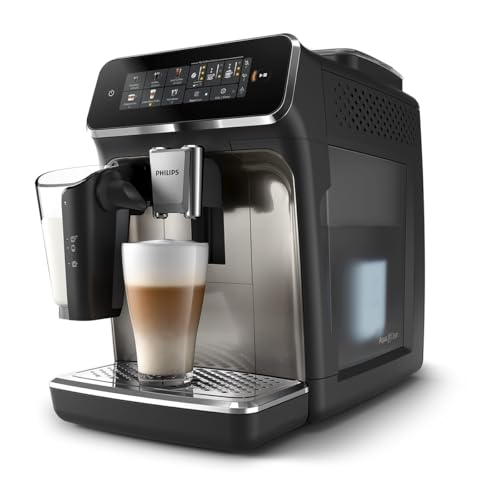
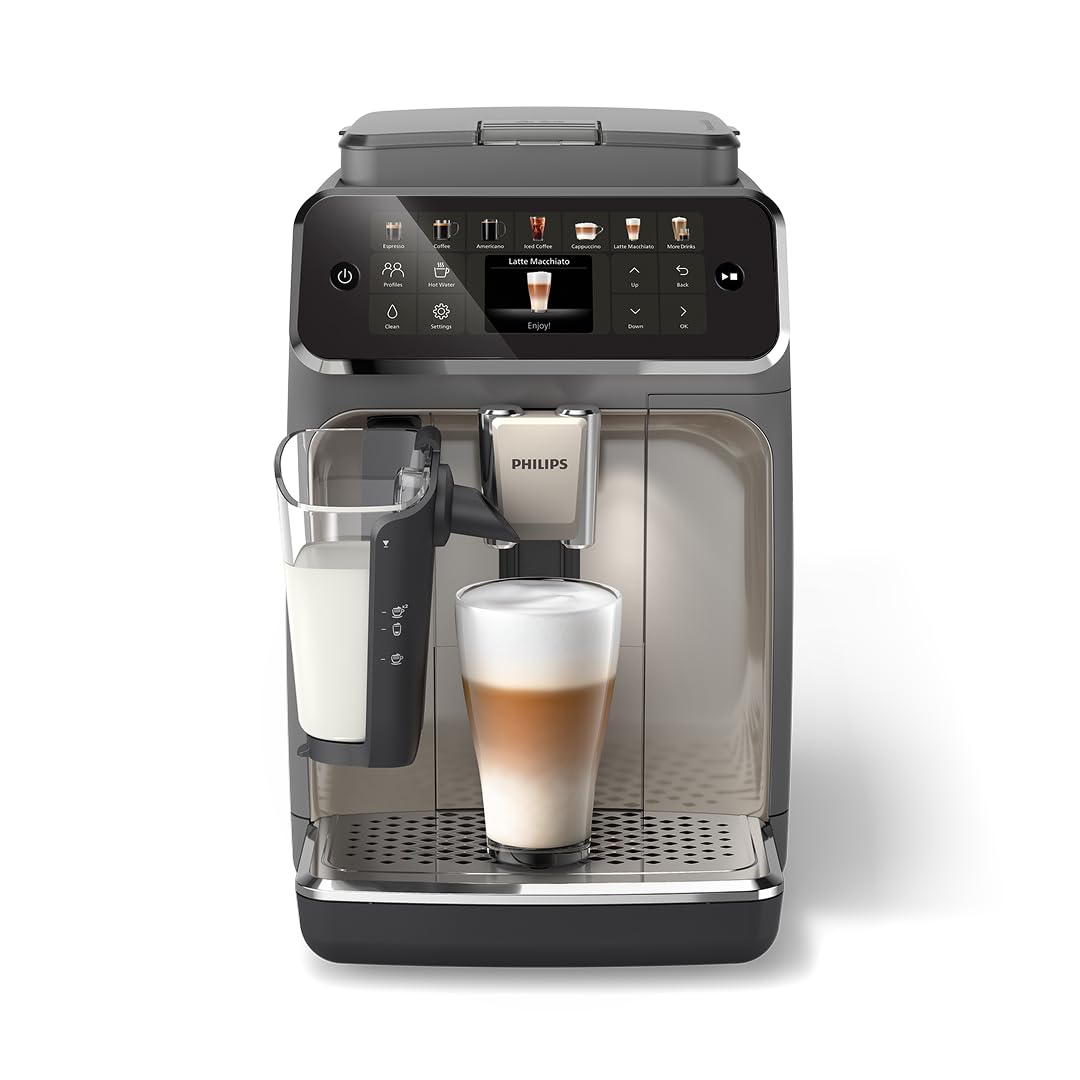
- Philips 3300 Series LatteGo (EP3347/90): the best matched bean-to-cup workflow for most homes, with six drinks, a ceramic grinder and a quick-rinse milk system.
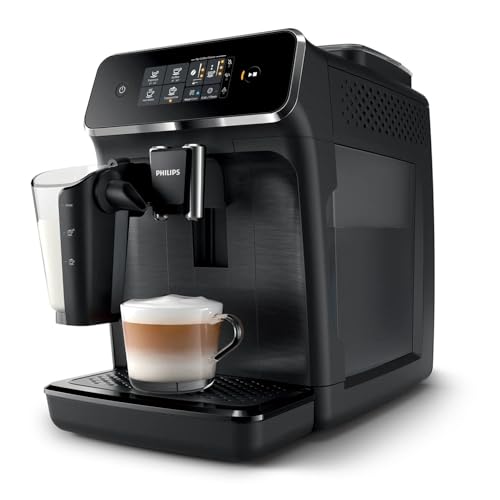
- Philips 2200 Series LatteGo: the value pick, covering espresso, coffee and cappuccino with one touch for less money.
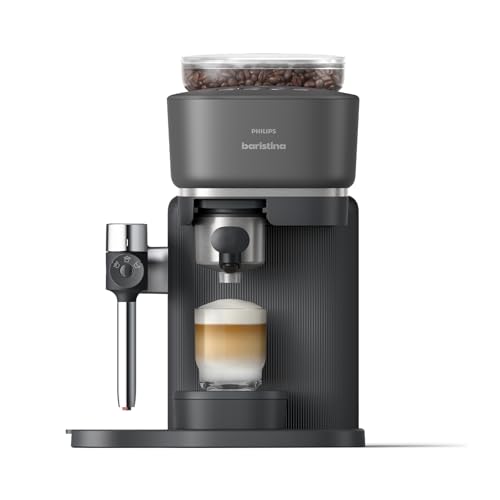
- Philips Baristina: the simplest dosing, grinding, tamping and brewing espresso with one swipe of the handle in a tiny footprint.
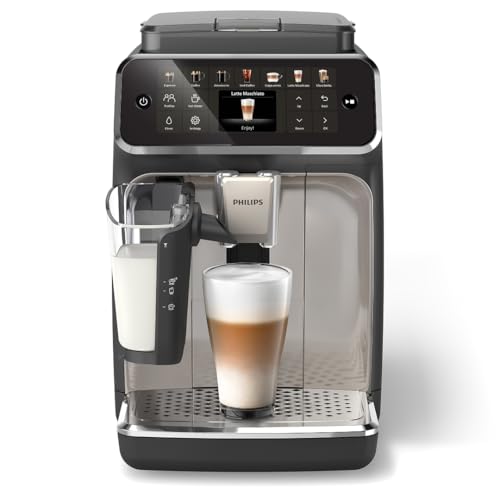
- Philips 4400 Series LatteGo (EP4447/90): the pick for useful adjustment, with 12 hot and iced recipes and two saved user profiles.
- Philips Barista Brew (PSA3228/41): the pick for traditional espresso service with a 58mm portafilter and a steam wand.
The principal trade-off runs between automation and control. Fully automatic models do everything at one touch, while the Barista Brew asks you to tamp and steam. Details are in the recommended options below.
Compare the Qualifying Options
Prices are rounded and change often, so confirm the live price in the product table above.
| Model | Role | Type | Drink menu | Milk system | Main limitation | Price |
|---|---|---|---|---|---|---|
| 3300 Series (EP3347/90) | Main pick | Fully automatic | 6 incl. iced coffee and hot water | LatteGo, 2 parts, no tubes | Fewer recipes than 4400 | Around $550 |
| 2200 Series LatteGo | Value | Fully automatic | 3 varieties: espresso, coffee, cappuccino | LatteGo, removable container | Small menu | Around $400 |
| Baristina | Simpler dosing | Compact grind, tamp, brew | Espresso, lungo, extra intense | None included | No milk system | Around $330 |
| 4400 Series (EP4447/90) | Useful adjustment | Fully automatic | 12 hot and iced recipes | LatteGo, rinse in about 10 seconds | Higher price | Around $700 |
| Barista Brew (PSA3228/41) | Traditional service | Semi-automatic | Single, double, Americano | Steam wand and 450 ml jug | Needs practice | Around $650 |
Check the dimensions on each listing before you order. Bean-to-cup machines are deep, and the bean hopper lid needs clearance under wall cabinets.
How We Selected the Shortlist
Every machine had to be a current Philips model with an integrated grinder, sold new on Amazon US. We left out renewed listings, European model codes that are not meant for US outlets, and bundles; the 2200 Series LatteGo stays in as the lower cost entry point because it is still sold new.
We then compared the current listings, Philips feature descriptions and package contents, and read buyer feedback in aggregate for recurring praise and complaints about grinders, milk systems and reliability. Three questions shaped each role: how the grinder and brewing are automated, which drinks and serving sizes the machine covers, and how much daily care the milk and coffee paths need. To find the right Philips coffee machine with grinder for each routine, we relied on specifications, listings and owner feedback rather than brewing trials of our own.
Recommended Options
Philips 3300 Series LatteGo: Best matched brewing-and-grinding workflow
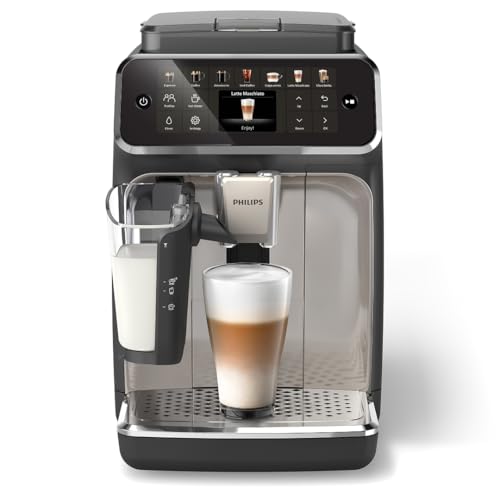
The 3300 Series is the Philips machine that best balances price, drink choice and cleanup for most households. It grinds beans with a 100% ceramic grinder, then brews six beverages from a touch screen with colored icons: espresso, coffee, iced coffee, cappuccino, latte macchiato and hot water. SilentBrew technology is designed to keep the grinding and brewing quieter.
Two capabilities shape the daily routine. The My Coffee Choice function lets you set strength, length and milk froth level so each drink suits you. The LatteGo milk system has just two parts and no tubes, which makes it quick to rinse after a cappuccino. With the AquaClean filter changed when the machine prompts you, Philips says you will not need to descale for up to 5,000 cups.
The limitation is menu depth: six drinks is plenty for most homes, but the 4400 offers twice as many recipes and saved profiles. Skip it if two people in your household want very different drinks every morning. Buyer feedback is generally positive, with some complaints about long-term reliability that are common across bean-to-cup machines.

Philips 2200 Series LatteGo: Best qualifying grinder value
The 2200 Series LatteGo (EP2230/14) is the lowest cost Philips fully automatic here with the LatteGo milk system. It grinds with a 100% ceramic grinder and brews three coffee varieties at one touch: espresso, coffee and cappuccino. The My Coffee Choice menu lets you adjust strength and quantity across three settings.
Daily workflow and cleanup are where this model earns its place. LatteGo tops your coffee with milk froth from a removable container, and the AquaClean filter, changed when prompted, means no descaling for up to 5,000 cups according to Philips. The Aroma Extract system keeps the brewing water between 90 and 98°C.
The limitation is the small menu. There is no latte macchiato, americano or iced coffee button, so you will build other drinks by hand from the espresso and coffee settings. Skip it if you want café variety at one touch. At around $400 it is a sensible first bean-to-cup machine, and it is an older series than the 3300 and 4400.

Philips Baristina: Best for simpler dosing
The Baristina takes the measuring out of espresso without the size or price of a fully automatic machine. You swipe the handle, and it grinds, tamps and brews with a 16 bar pump, going from bean to cup in less than 60 seconds, according to Philips. There is no dose to weigh and no tamper to use.
The daily workflow is short and the cleanup is light. Choose espresso, lungo or extra intense, and the machine handles the rest. The compact body suits small kitchens and apartments where a full bean-to-cup machine would take over the counter, and freshly ground beans give you more aroma than pods.
The limitation is that this version has no milk system. Lattes need a separate frother, or you can step up to the Baristina Latte, which adds an integrated frother at a higher price. Buyer feedback is mixed, so read recent reviews before ordering.
Skip it if you drink large mugs of coffee, since it focuses on espresso-style shots. For around $330 it is the most compact route to fresh-ground Philips espresso.

Philips 4400 Series LatteGo: Best for useful adjustment
The 4400 Series is for households where everyone wants something different. It offers 12 hot and iced recipes, including espresso, coffee, cappuccino, latte macchiato, americano, caffè crema, latte, ristretto, coffee with milk, iced coffee, iced americano and iced espresso. A ceramic grinder feeds each drink, and SilentBrew is rated by Philips at 40% less noise than earlier models.
The fresh-bean workflow is easy to tune. Another 4400 listing describes adjusting strength, volume and milk level and saving up to 2 profiles, so each person gets their usual drink in one touch. QuickStart has it ready to brew in about 3 seconds. The LatteGo milk system works with plant-based milk alternatives, according to Philips, and pulls apart into two parts that rinse in under 10 seconds.
The limitation is price: at around $700 it costs noticeably more than the 3300, and the extra recipes only matter if you will use them. Skip it if you drink the same two drinks every day. Like every bean-to-cup machine, it needs regular cleaning of the brew group and drip tray according to the manual.
Philips Barista Brew: Best for the required serving format
The Barista Brew is the Philips pick for anyone who wants traditional espresso service: a portafilter, a tamper and a steam wand. It has a built-in grinder with a dual 280g bean container, a 58mm stainless steel portafilter with single and dual wall baskets, and a calibrated tamper with a countertop-safe tamping system.
The serving format is flexible for espresso drinkers. You can brew a single or double espresso, or press the Americano button, which uses the integrated hot water outlet. The powerful steam wand and 450 ml stainless steel milk jug let you texture milk by hand for cappuccinos and flat whites. The box also includes a powder ring, espresso stand and cleaning tools.
The limitation is the learning curve: dosing, tamping and steaming take practice, and buyer feedback is more mixed than for the LatteGo machines. Skip it if you want one-touch drinks or plan to share the machine with people who will not learn the steps. At around $650 it suits a hobbyist who enjoys the process.

What to Look for Before Buying
Integrated Grinder and Fresh-Bean Workflow
Philips fully automatic machines use ceramic grinders and handle the dose for you, so your adjustments are usually strength, volume and, on some models, grind setting through the machine's controls. Check the manual for how many grind steps your model offers and how to change them, since some grinders should only be adjusted while running.
Keep three types of machine apart. A fully automatic machine like the 3300 or 4400 grinds, tamps, brews and froths internally. An assisted machine like the Baristina grinds and tamps into its own portafilter with one swipe. A semi-automatic like the Barista Brew grinds into a portafilter, then you tamp and brew yourself.
Look at hopper access and the grind path. A sealed hopper keeps beans fresh, but oily dark roasts can stick in the chute over time, so many owners prefer medium roasts in bean-to-cup machines. If you want to switch beans often or grind for other brewers, a separate grinder is easier, because built-in hoppers hold leftover beans.
Coffee Format and Serving Needs
Every machine here uses whole beans. Count the drinks you make in a normal week and match them to the menu: if you only drink espresso and lattes, a three-variety 2200 is enough, while a household that wants iced coffee, americanos and cappuccinos benefits from the 3300 or 4400.
Think about cup size. Espresso machines make small, concentrated drinks, and the "coffee" setting on a fully automatic is a longer pull through espresso grounds, not the same as drip coffee from a filter machine. If you want a large mug of brewed coffee every morning, compare our guides to the best coffee makers as well.
For milk drinks, LatteGo models froth milk automatically in a removable container, while the Barista Brew uses a steam wand you control. Philips states that LatteGo works with various types of milk, including plant-based alternatives on the 4400.
Daily Workflow and Cleanup
On a fully automatic, the daily routine is: top up beans and water, choose a drink, then empty the drip tray and grounds container when prompted. Rinse the LatteGo parts after every milk drink, before milk dries. Philips designed the two or three part LatteGo for quick rinsing under the tap or in the dishwasher.
Separate that from maintenance. Remove and rinse the brew group as the manual instructs, change the AquaClean filter when prompted, and descale with an approved product if you do not use the filter. Some owners also lubricate the brew group periodically with the grease the manual specifies.
The Barista Brew needs more daily steps: knock out the puck, rinse the portafilter, purge and wipe the steam wand and wash the milk jug. Budget a few extra minutes, and keep a cloth next to the machine.
Which Option Fits Your Routine?
Your Must-Have Function
For one-touch lattes, choose a LatteGo model. For espresso only in a small space, the Baristina fits. For traditional milk steaming, only the Barista Brew qualifies.
Your Preparation and Cleanup Tolerance
Low tolerance points to the 2200 or 3300 with LatteGo. If you enjoy the craft, the Barista Brew rewards practice. The 4400 adds profiles so nobody has to reset settings.
Your Complete Budget
Add beans, AquaClean filters or descaler, and milk. A milk frother is an extra cost with the basic Baristina.
Frequently Asked Questions
Does a built-in grinder mean fully automatic coffee?
Not always. The 2200, 3300 and 4400 Series are fully automatic, grinding, tamping and brewing at one touch. The Baristina automates grinding and tamping with a swipe, while the Barista Brew grinds but leaves tamping and milk steaming to you. Every type still needs you to add beans and water and empty grounds.
Can I use preground coffee?
Some Philips models offer a pre-ground option, but the listings here do not document it, so check the manual before buying if that matters. Never pour ground coffee into the bean hopper, since it can clog the grinder. The Barista Brew's portafilter can take pre-ground coffee directly, like any semi-automatic machine.
Is a separate grinder a better option?
It is better only if you want finer control or switch beans often. A separate burr grinder paired with a manual espresso machine gives more adjustment, but takes more space and effort. A built-in grinder keeps the routine to one button and one appliance, which is why most buyers choose a Philips coffee machine with grinder in the first place.
How do I clean the grinder path?
Follow the manual and unplug the machine before reaching into any area it tells you to clean. Empty the hopper, vacuum or brush loose grounds from the hopper and chute, and rinse the brew group if your model has a removable one. Do not use water inside the grinder or take apart parts the manual does not mention.
Final Verdict
For most homes, the best Philips coffee machine with grinder is the 3300 Series LatteGo, because it covers six drinks, including iced coffee, with a quiet ceramic grinder and a milk system that rinses clean in seconds. If you want to spend less and keep the menu simple, the 2200 Series is the better alternative. The deciding trade-off is drink variety against price. For more bean-to-cup choices, compare our guide to the best super automatic espresso machine options and the best coffee maker for home use.


