
Breville vs De'Longhi: Which Should You Choose?
Disclosure: We may earn a commission when you buy through links on this page, at no extra cost to you. As an Amazon Associate I earn from qualifying purchases. Learn more

Breville vs De'Longhi: the Barista Express Impress against the La Specialista Touch on grind control, milk, presets and value.
The Breville vs De'Longhi question usually comes down to one choice: an espresso machine with a built-in grinder that helps you make café drinks yourself. Both brands sell that kind of machine at similar prices, but they guide you in different ways, and De'Longhi also sells fully automatic one-touch machines that Breville does not match in the same format. This comparison pairs the Breville Barista Express Impress with the De'Longhi La Specialista Touch, both around $650, and explains where each brand's wider range fits.
If you already know how much manual work you want each morning, the quick verdict gives you an answer. If not, the sections on preparation, milk, maintenance and full price explain the trade-offs in everyday terms.



Quick Verdict
Choose Breville If…
Choose Breville if you want to learn espresso with more manual control over milk and grind. The Barista Express Impress gives you 25 grind settings, intelligent dosing that corrects the next dose, assisted tamping and a manual steam wand for latte art. The compromise is that milk is entirely up to you, and there are no preset drink recipes.
Choose De'Longhi If…
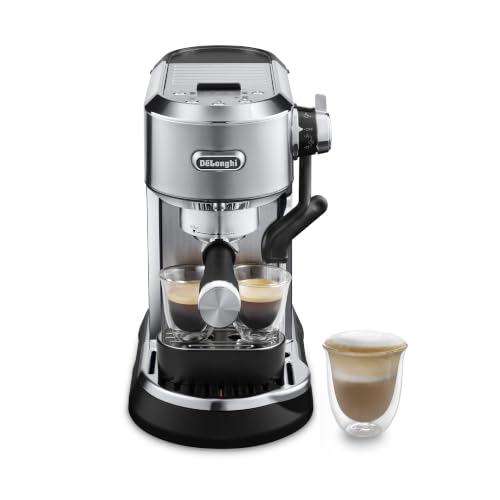
Choose De'Longhi if you want guided espresso with more help on milk and drink choices. The La Specialista Touch offers 10 preset recipes including cold brew, Bean Adapt guidance for grind, dose, pre-infusion and temperature, and an automatic steam wand with a manual option. The compromise is a narrower grind range of 15 settings.
Scope and Side-by-Side Table
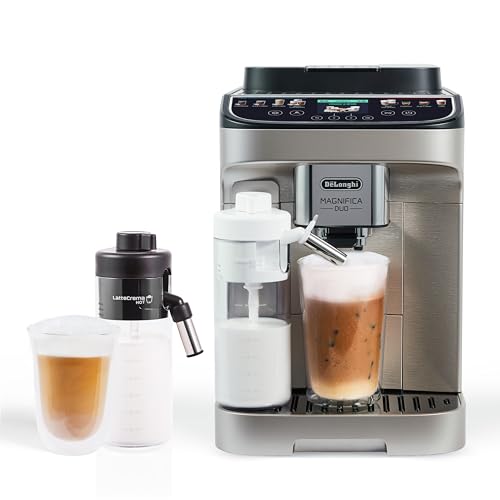
This comparison uses the US Breville BES876BSS Barista Express Impress and the US De'Longhi La Specialista Touch. Both are semi-automatic espresso machines with integrated conical burr grinders and assisted preparation, listed at about the same price, so the format and budget match. De'Longhi's fully automatic machines, such as the Magnifica Duo in our product table, are a different format and are covered separately below.
| Feature | Breville Barista Express Impress | De'Longhi La Specialista Touch |
|---|---|---|
| Machine type | Semi-automatic with grinder | Semi-automatic with grinder |
| Coffee format | Whole beans | Whole beans |
| Grinder | Integrated conical burr, 25 settings | Italian-made conical burr, 15 settings |
| Dosing and tamping | Intelligent dosing, assisted 10 kg tamp with 7 degree twist | Grinds and doses with Bean Adapt guidance |
| Guidance | Auto-corrects the next dose | Visual guide for grind, dose, pre-infusion, temperature |
| Preset drinks | None listed (espresso based drinks made manually) | 10 recipes incl. cold brew, flat white, americano |
| Milk | Manual steam wand | Automatic steam wand, 5 froth levels, 4 temperatures, plus manual setting |
| Heating | Thermocoil with PID | See manual |
| Price | Around $650 | Around $650 |
We chose this pair because it is the most direct like-for-like match the two brands offer right now: same price, same semi-automatic format, both with grinders and assisted preparation. Comparing a Breville semi-automatic machine against a De'Longhi one-touch machine would mostly measure the difference between two workflows rather than two brands.
Neither machine needs an external grinder, since both grind beans internally. Plan for a milk pitcher if one is not in the box, along with cleaning and descaling supplies for either brand.
How We Compared These Options
We matched the two machines by format and price, then compared manufacturer specifications, current US listings and package contents for each exact model. Where one listing gives a detail and the other does not, we say so rather than guessing.
We also read buyer feedback in aggregate for recurring themes about learning curve, milk results and cleaning. We separate three kinds of statements here: verified features from the listings, practical observations about routine, and our own judgments about who each machine suits. No brewing trials were run, so we do not name a flavor winner or a reliability winner.
Coffee Preparation and Adjustment
What Each Option Supports
The Breville Barista Express Impress grinds with an integrated conical burr grinder offering 25 grind settings. Its intelligent dosing system calculates the dose, a smart system auto-corrects the next dose, and assisted tamping applies a consistent 10 kg of pressure with a 7 degree barista twist. The De'Longhi La Specialista Touch grinds with a 15 setting conical burr grinder and uses Bean Adapt technology to guide you through grind, dose, pre-infusion and brewing temperature.
What Changes in Everyday Use
With the Breville, you grind into the portafilter, let intelligent dosing and assisted tamping prepare the puck, lock in the portafilter and start the shot; the machine helps with dose and tamp, while you judge the result. With the De'Longhi, the touch interface walks you through settings with tips and recommended adjustments, which shortens the dialing-in stage when you open a new bag of beans. Both still involve handling a portafilter every day.
A typical weekday shows the difference. On the Breville, you might adjust the grind a step or two when a shot runs fast or slow, then rely on the dose correction to keep the next shot consistent. On the De'Longhi, the guide suggests the change and confirms when you are on track, which suits people who do not want to learn extraction theory before breakfast.
Who Benefits from the Difference
Brand names like Bean Adapt or intelligent dosing are not proof that one shot will taste better. The real difference is style: Breville gives finer grind steps and leaves more judgment to you, while De'Longhi gives clearer on-screen guidance. If you enjoy learning by adjusting, the Breville suits you; if you want the machine to coach you, the De'Longhi does.
Grind range matters most when you switch beans often. With 25 steps, the Breville gives smaller increments between settings, which helps with light roasts that need precise adjustment. With 15 steps plus guided dose and temperature changes, the De'Longhi spreads the adjustment across several variables instead of grind alone.
Milk and Drink Options
What Each Option Supports
The Barista Express Impress uses a manual steam wand designed to texture milk into microfoam for latte art. The La Specialista Touch has an automatic steam wand that adjusts across 5 froth levels and 4 temperature settings based on the drink and milk type, dairy or plant-based, plus a manual setting. Its 10 preset recipes cover espresso, americano, long black, cold brew, cappuccino, latte, latte macchiato, flat white, hot milk and hot water.
Plant-based milk is covered on the De'Longhi by a dedicated milk preference in the automatic wand settings. On the Breville, you texture any milk by hand, so oat or almond milk simply means adjusting your technique, which some home baristas enjoy and others find frustrating.
What Changes in Everyday Use
Menu counts matter less than the drinks you make. If you make one latte each morning, the De'Longhi's automatic wand lets you start the milk and prepare the cup at the same time. On the Breville, you hold the pitcher, listen to the milk and stop at the right moment, which takes practice but gives you full control for latte art.
Households with two milk drinkers feel this most. With an automatic wand, the second drink is as consistent as the first without extra effort. With a manual wand, each pitcher depends on the person steaming it, which is part of the craft but also part of the morning workload.
Who Benefits from the Difference
The De'Longhi lists a cold brew recipe, which the Breville listing does not mention; that is a cold drink made by the machine, not just espresso poured over ice. Iced lattes are possible on both by pouring espresso over ice and cold milk. Choose De'Longhi for automatic milk and cold brew, and Breville if you want to master steaming by hand.
Daily Use and Maintenance
What Each Option Supports
Both machines have a bean hopper, water tank, drip tray, portafilter and steam wand to look after. The De'Longhi uses a touch interface with guided steps, while the Breville relies on its dosing and tamping assists rather than an on-screen guide. Each needs the grinder kept clean, the steam wand purged and wiped after milk, and the machine descaled on the schedule in its manual.
What Changes in Everyday Use
Daily care looks similar: knock out the puck, rinse the portafilter, wipe and purge the wand, empty the drip tray. Plan on cleaning tablets, descaler and, if the manual recommends one, a water filter for either machine. A knock box and a microfiber cloth make the routine faster on both, and neither is required to start.
Who Benefits from the Difference
We do not have evidence that one brand lasts longer, so we avoid lifespan claims. The practical difference is the interface: a simpler control layout can be quicker once learned, while a touch screen shows prompts that help new owners remember steps. Pick the control style you will be comfortable using every morning.
Water quality affects both machines equally. Hard water speeds up scale buildup in any espresso machine, so check your manual for a recommended water filter or descaling interval, and use the brand's descaler or one the manual approves. Follow the descaling schedule in your manual, whichever logo is on the front.
Complete Price and Value
What Each Option Supports
On the same day, both machines listed new at around $650 on Amazon US: the Breville BES876BSS Barista Express Impress and the De'Longhi La Specialista Touch. Both include a built-in grinder, so neither needs a separate grinder purchase to make espresso from whole beans.
What Changes in Everyday Use
The full setup adds a milk pitcher if needed, cleaning tablets, descaler and good beans. If you want automatic milk on the Breville side, you would have to step up to a different Breville model, while the De'Longhi includes it at this price. Recurring costs, mostly beans and milk, are similar for both.
A realistic first-year budget for either machine includes the machine itself, a bag or two of beans each month, milk for daily lattes, a pack of cleaning tablets and a descaler. Because both machines grind internally, you avoid the cost of a separate grinder, which is often a large hidden expense with semi-automatic espresso machines that lack one.
Who Benefits from the Difference
Both machines are sold new on Amazon US with manufacturer warranties, so choose on workflow, not prestige. At the same price, the De'Longhi gives more automation and drink presets, and the Breville gives finer grind control and a manual wand. Value depends on which of those you will actually use.
Representative Products and Pairing Limits
A Verified Pair at a Relevant Price Level
The Breville Barista Express Impress and the De'Longhi La Specialista Touch make a fair pair: same price, same semi-automatic format, both with assisted grinding and dosing. The two consequential differences are milk (manual wand against automatic wand with presets) and grind range (25 against 15 settings).
One limitation per side: the Breville makes milk drinks harder for beginners, and the De'Longhi offers fewer grind steps for fine-tuning. For a closer look at either range, see our guides to the best Breville espresso machine and the best De'Longhi espresso machine.
What the Pair Does Not Prove
One pair does not describe every machine from either brand. Breville also sells compact machines like the Bambino Plus, which has an automatic steam wand but no grinder, and De'Longhi sells the Dedica Maestro Plus in a similar compact role. Comparing those two would give a different result.
Price tiers also shift the balance. Higher up each range you will find machines with more automation, larger displays or dual boilers, and lower down you will find manual machines without grinders. Treat this pair as a guide to how each brand approaches assisted espresso at the same price, not as a ranking of the brands themselves.
De'Longhi also sells fully automatic one-touch machines such as the Magnifica Duo, which grinds, brews and froths milk internally with no portafilter. That is a different workflow from both machines above. If one-touch drinks are what you want, our guide to the best super automatic espresso machine covers that format across brands.
Breville vs De'Longhi: Which Should You Choose?
For Convenience-First Buyers
If convenience matters most, De'Longhi has the edge in this pairing. The La Specialista Touch's automatic steam wand and 10 presets cut daily effort, and stepping further to a De'Longhi fully automatic machine removes the portafilter entirely. Breville's semi-automatic machines always ask you to handle the portafilter and, on the Impress, the milk. The compromise is giving up some manual control.
For Buyers Seeking Control or Different Drinks
If you want to control grind and milk yourself, the Breville Barista Express Impress gives you 25 grind steps, dose correction and a manual wand for latte art. If you want different drinks, such as cold brew or flat whites at a tap, the De'Longhi menu is broader. Choose by whether you value adjustment or variety.
Coffee hobbyists who like to experiment with single-origin beans tend to appreciate finer grind steps, while households that rotate between several drinks benefit more from presets. Neither choice is wrong; it simply decides whether the machine adapts to you through settings or through recipes.
For Budget and Space Constraints
Both machines cost about the same, so budget does not separate this pair. For tighter budgets or smaller counters, look at compact options: the Breville Bambino Plus at around $400 or the De'Longhi Dedica Maestro Plus at around $380, both without grinders, which means adding a grinder or buying pre-ground coffee. Measure height under cabinets for the bean hopper on the larger machines.
Working footprint matters as much as the box size. Leave room in front for the portafilter and milk pitcher, space on top to fill the hopper, and access to the water tank. A compact machine plus a small grinder can take up as much space as one larger machine with a built-in grinder.
Frequently Asked Questions
Are these options the same type of machine?
Yes, in this pairing both are semi-automatic espresso machines with built-in conical burr grinders and assisted preparation. Across the brands, though, De'Longhi also sells fully automatic one-touch machines, while Breville's range here centers on semi-automatic machines, so not every Breville vs De'Longhi comparison matches formats.
Which is easier to use and maintain?
The De'Longhi La Specialista Touch is easier for milk drinks thanks to its automatic steam wand and guided interface. Maintenance is similar on both: rinse the portafilter, purge the wand, clean the grinder and descale as the manual directs.
What accessories or coffee formats do they require?
Both use whole beans and grind them internally, so no separate grinder is needed. Plan for a milk pitcher if not included, cleaning tablets, descaler and fresh beans. Neither machine uses pods.
Which offers better value for my routine?
At the same price, the De'Longhi offers more automation and presets, and the Breville offers more grind steps and manual milk control. The better value is the one whose strengths match how you make coffee each day.
Final Verdict
In the Breville vs De'Longhi matchup, choose the Breville Barista Express Impress if you want finer grind control and to learn milk steaming by hand. Choose the De'Longhi La Specialista Touch if you want guided setup, automatic milk and a broader drink menu at the same price. For more options from each brand, see our guide to the best espresso machine.
