
Cuisinart vs Breville: Which Should You Choose?
Disclosure: We may earn a commission when you buy through links on this page, at no extra cost to you. As an Amazon Associate I earn from qualifying purchases. Learn more

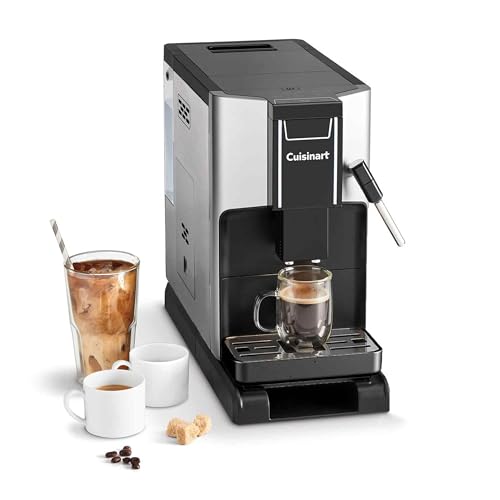
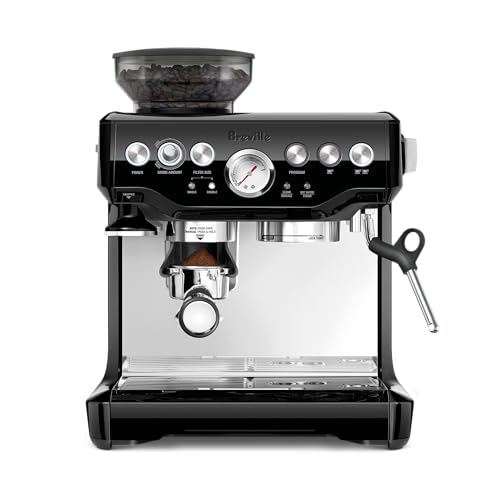
Cuisinart vs Breville compared through a matched pair: one-touch Cuisinart Espresso Bar or the Breville Barista Express with control.
Cuisinart vs Breville is less a brand battle than a choice between two ways of making coffee at home. At the same price, Cuisinart's Espresso Bar EM-550 makes espresso drinks at one touch, while Breville's Barista Express BES870BSXL grinds into a portafilter and leaves the tamping, timing and milk steaming to you. This comparison uses that matched pair, both around $500 and sold new on Amazon US, and also explains where each brand fits for drip coffee.
If you already know whether you want push-button drinks or a barista routine, the quick verdict gives you the answer. If not, the sections below compare preparation, milk, cleaning and the complete cost.


Quick Verdict
Choose Cuisinart If…
Choose Cuisinart if you want espresso drinks with the least effort and the widest range of everyday coffee makers at moderate prices. The Espresso Bar EM-550 grinds and doses automatically, offers one-touch single, double and Americano buttons, and can pull shots without heat for cold drinks. Cuisinart also sells many affordable drip machines, such as the 14-cup DCC-3200 PerfecTemp.
Choose Breville If…
Choose Breville if you want to learn espresso and control each step. The Barista Express BES870BSXL grinds directly into the portafilter with a grind size dial, uses digital temperature control (PID) and low pressure pre-infusion, and has a manual steam wand for microfoam and latte art. Expect a learning curve, more steps and more cleanup in exchange for that control.
Scope and Side-by-Side Table
We matched one machine from each brand at the same price and with a built-in grinder, but with different levels of automation. The Cuisinart EM-550 is listed as a fully automatic espresso machine; the Breville BES870BSXL is a semi-automatic espresso machine with an integrated grinder. Both are current US models.
| Feature | Cuisinart Espresso Bar EM-550 | Breville Barista Express BES870BSXL |
|---|---|---|
| Machine type | Fully automatic espresso | Semi-automatic espresso with grinder |
| Grinder | Stainless steel conical burr, automatic dose | Conical burr, grinds into portafilter, grind size dial |
| Preparation | One touch: single, double, Americano | Grind, tamp, lock in, brew, stop |
| Cold drinks | Cold extracted espresso (shots without heat) | Not listed |
| Milk | Frothing wand, dairy or non-dairy | Manual steam wand for microfoam |
| Cup clearance | Adjustable base and brew head, fits travel mugs | See manual |
| Temperature control | Not detailed in listing | Digital PID with low pressure pre-infusion |
| Price | Around $500 | Around $500 |
How We Compared These Options
We compared complete setups rather than isolated specs. For each machine, we read the current Amazon US listing and manufacturer descriptions, noted what is included and what you need to add, and read buyer feedback in aggregate for recurring praise and complaints. Because both machines have built-in grinders, neither needs a separate grinder to start, which makes the pair a fair price-level match.
We did not run side-by-side brewing trials with matched beans, so we make no claims about which espresso tastes better. Instead, we focus on what each machine documents: how much it automates, which drinks it supports, how milk is prepared and how much daily care it needs. Buyer feedback volume differs sharply, since the Barista Express has a very long track record and the EM-550 is a newer listing with far fewer reviews.
Coffee Preparation and Adjustment
What Each Option Supports
The Cuisinart EM-550 automatically grinds the right amount of beans for each drink with its conical burr grinder, then brews at one touch. Its controls offer single and double shots and an Americano button. The Breville BES870BSXL grinds on demand into the portafilter through a grinding cradle, with a grind size dial for different beans, PID temperature control and low pressure pre-infusion that ramps up pressure at the start of extraction.
What Changes in Everyday Use
With the Cuisinart, a morning espresso is press and wait. With the Breville, you grind into the portafilter, tamp, lock it into the group head, start the shot and stop it when the volume looks right. That takes a few minutes and some practice, and your results depend on technique. In exchange, you can change grind size and dose to dial in each new bag of beans.
Plan on a learning period with the Breville. The first week usually means adjusting the grind dial a step at a time, checking how fast the shot runs and how it tastes, and wasting a few doses along the way. Once dialed in, the routine becomes quicker, but every new coffee may need small changes. The Cuisinart skips most of that, which is the main reason to choose it.
Who Benefits from the Difference
Busy households and anyone who shares the machine with people who will not learn espresso technique benefit from the Cuisinart's automation. Coffee hobbyists, people who buy different specialty beans and anyone who wants to understand espresso benefit from the Breville's manual control. If you are unsure, consider whether you will enjoy the process daily or see it as a chore.
Milk and Drink Options
What Each Option Supports
The Cuisinart EM-550 makes hot or cold espresso-based drinks such as cappuccino, lattes, Americanos and cold extracted espresso, pulling shots without heat for iced drinks. Its frothing wand handles dairy or non-dairy milk. The Breville BES870BSXL has a powerful manual steam wand designed to turn milk into smooth microfoam for latte art, and its listing focuses on espresso, lattes and cappuccinos.
What Changes in Everyday Use
Both machines use a wand rather than an automatic milk carafe, so you will hold a pitcher and steam milk yourself on either one. The Cuisinart describes an easy-to-use frothing wand, while the Breville wand is aimed at microfoam texture that rewards practice. The Cuisinart adds cold extracted espresso, which makes iced lattes possible without brewing hot and chilling.
Who Benefits from the Difference
If iced espresso drinks are part of your routine, the Cuisinart's cold extraction is the clear advantage. If latte art and milk texture matter most, the Breville's steam wand is built for that. People who rarely drink milk can largely ignore this difference, and anyone who wants fully automatic milk should look at machines with a milk carafe instead.
Steaming milk well on either machine takes a little practice: start with cold milk in a cold pitcher, keep the wand tip just below the surface to add air, then lower it to spin the milk until it is warm. Purge and wipe the wand immediately afterward. Plant-based milks behave differently from dairy, so barista versions usually give the best results.
Daily Use and Maintenance
What Each Option Supports
The Cuisinart EM-550 has an adjustable base and brew head that fit different mug sizes, including travel mugs, which helps for take-away coffee. The Breville BES870BSXL includes the grind size dial and grinds straight into the portafilter, keeping the routine on one machine. Both have wands that need purging and wiping, and both need descaling with a product their manuals approve.
What Changes in Everyday Use
On the Cuisinart, daily cleanup centers on the grounds and drip tray, plus the frothing wand after milk drinks; follow the manual for any brew unit cleaning. On the Breville, you also knock out the puck after every shot, rinse the portafilter and basket, wipe the group head and clean ground coffee from the grinding cradle. Expect a few more minutes of care each day with the Breville.
Both machines need periodic care beyond the daily routine. Descale on the schedule each manual sets, more often with hard water, and replace any water filter the manual calls for. Grinders on both machines benefit from occasional brushing to clear old grounds, following the manual's instructions and with the machine unplugged.
Who Benefits from the Difference
People with little time in the morning benefit from the Cuisinart's shorter routine. People who do not mind a few minutes of cleaning, and who see it as part of making espresso, will be fine with the Breville. Households with several users may prefer the Cuisinart, since fewer steps mean fewer mistakes and less mess for others to clean up.
Complete Price and Value
What Each Option Supports
Both machines cost around $500 and include a built-in grinder, so you do not need a separate grinder to start. The Breville routine relies on a portafilter, filter baskets, a tamper and a milk jug, so check the listing's box contents to see which are included before you budget for extras. The Cuisinart's one-touch controls mean no extra tools beyond a milk pitcher if one is not included.
What Changes in Everyday Use
Running costs are similar: whole beans, milk, descaler and occasional water filters or cleaning supplies as each manual specifies. The bigger difference is the cost of learning. With the Breville, you may waste some beans while you dial in each new bag, while the Cuisinart's automatic dosing reduces that waste from the start.
Who Benefits from the Difference
For buyers who want predictable results without practice, the Cuisinart offers better value. For buyers who want a machine they can grow into and fine-tune, the Breville's adjustability is where the value lies. The Breville's long track record with a very large number of owners also gives more confidence in long-term ownership than a newer listing.
Think about resale and upgrades too. A semi-automatic like the Barista Express keeps its usefulness as your skills grow, while a fully automatic like the EM-550 stays the same machine but asks nothing more of you. Neither is wrong; the better value is the one you will use happily every day for years.
Representative Products and Pairing Limits
A Verified Pair at a Relevant Price Level
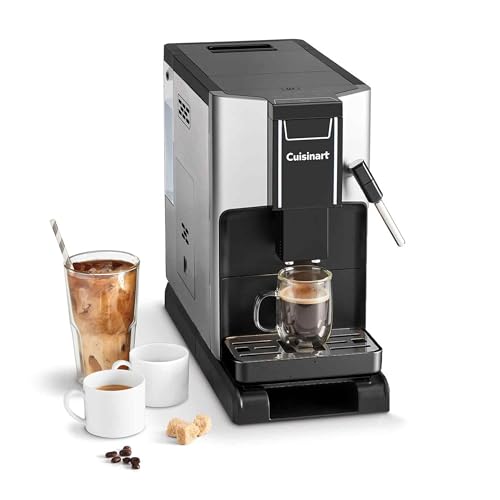
The Cuisinart Espresso Bar EM-550 and the Breville Barista Express BES870BSXL are both around $500 with built-in conical burr grinders. Two differences matter most. First, automation: the Cuisinart grinds, doses and brews at one touch, while the Breville needs you to tamp and time each shot. Second, drinks: the Cuisinart adds cold extracted espresso for iced drinks, while the Breville adds PID temperature control and pre-infusion for more control over hot shots.
Each has one clear limitation. The Cuisinart is a newer listing with limited owner feedback so far, so long-term reliability is less proven. The Breville has a real learning curve and more daily cleanup, which some owners never warm to.

What the Pair Does Not Prove
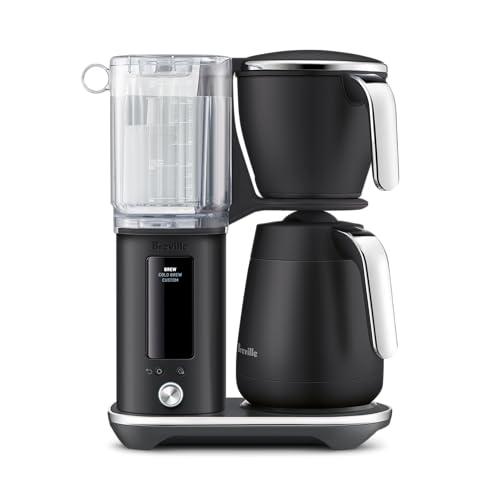
One pair cannot stand for every product from either brand. Cuisinart sells drip machines, grind and brew models, single-serve brewers and espresso machines, and Breville sells drip brewers, compact espresso machines and Nespresso machines built in partnership with Nespresso. For drip coffee, the comparison changes completely: a Cuisinart DCC-3200 PerfecTemp costs around $100, while the Breville Luxe Brewer, with custom bloom, temperature and flow settings and a thermal carafe, costs around $350.
Automation levels also vary inside each brand. The Breville Bambino Plus, for example, is a compact semi-automatic with an automatic steam wand but no grinder, so it needs a separate espresso grinder. Compare the exact models you are considering, not the brand names alone.
Owner feedback is also uneven between the two picks. The Barista Express has been on sale for years with a very large number of reviews, while the EM-550 is newer, so its long-term reliability is less established. That gap says more about the age of the listings than about either brand, so check recent owner feedback before ordering.
Cuisinart vs Breville: Which Should You Choose?
For Convenience-First Buyers
Choose the Cuisinart Espresso Bar EM-550 if you want espresso, Americanos and milk drinks with the fewest steps. Its automatic grinding and dosing, one-touch buttons and travel mug clearance suit busy mornings. If you mostly drink drip coffee, Cuisinart's DCC-3200 is a simpler and cheaper route still. Either way, Cuisinart is the better fit when you value convenience over control.
For Buyers Seeking Control or Different Drinks
Choose the Breville Barista Express BES870BSXL if you want to dial in shots, steam milk for latte art and learn espresso properly. Its grind size dial, PID temperature control and pre-infusion give you real control. If iced espresso drinks are your priority instead, the Cuisinart's cold extracted espresso is the more direct option, which shows that "control" and "different drinks" can point to different brands.
For Budget and Space Constraints
Both espresso machines cost about the same, so the budget question is really about what else you need: neither requires a separate grinder. If space is tight, check each machine's dimensions on its listing. For the smallest espresso setup, Breville's Bambino Plus is only 7.7 inches wide but needs a separate grinder, while a basic Cuisinart drip machine is the lowest cost coffee option overall.
Frequently Asked Questions
Are these options the same type of machine?
No. The Cuisinart EM-550 is listed as a fully automatic espresso machine that grinds, doses and brews at one touch. The Breville BES870BSXL is a semi-automatic espresso machine with a built-in grinder, so you tamp and control each shot. They share a price and a grinder type, but not a workflow.
Which is easier to use and maintain?
The Cuisinart is easier for most people, with one-touch drinks and fewer daily steps. The Breville needs grinding, tamping and timing, plus knocking out the puck and cleaning the portafilter after each shot. Both need wand cleaning after milk drinks and descaling as their manuals direct.
What accessories or coffee formats do they require?
Both use whole beans and have built-in grinders, so no separate grinder is needed. You will want a milk pitcher for the wands if one is not included, plus a descaler approved by each manual. The Breville routine benefits from a knock box and a cleaning brush, while the Cuisinart needs little extra.
Which offers better value for my routine?
The Cuisinart offers better value if you want convenient espresso drinks and iced options without practice. The Breville offers better value if you will use its control every day and want a proven machine. For drip coffee, Cuisinart's lower priced brewers are usually the better value.
Final Verdict
In the Cuisinart vs Breville choice at around $500, the Cuisinart Espresso Bar EM-550 wins for convenience and iced espresso drinks, while the Breville Barista Express BES870BSXL wins for control and a long ownership record. Decide by how much of the process you want to do yourself. For more models, see our guides to the best Cuisinart coffee maker, the best Breville espresso machine, the best espresso machine and the best super automatic espresso machine options.


