Coffee to Water Ratio: Charts for Every Brew Method
Disclosure: We may earn a commission when you buy through links on this page, at no extra cost to you. As an Amazon Associate I earn from qualifying purchases. Learn more

Coffee to water ratio charts for every brew method and cup size, plus how to brew stronger or weaker coffee.
The best coffee to water ratio for most brewing methods is about 1 to 16: 1 gram of coffee for every 16 grams (or milliliters) of water. That works out to roughly 2 level tablespoons of ground coffee per 6 ounces of water, or about 60 grams of coffee per liter. Use a stronger ratio, around 1 to 15, for French press, about 1 to 2 for espresso and about 1 to 4 to 1 to 5 for cold brew concentrate. Weighing coffee with a scale is the easiest way to brew consistently.
Below we explain the golden ratio, give ratio charts for every brew method and cup size, show how to measure without a scale, explain how to make coffee stronger or weaker, and answer common questions.

What Is the Golden Coffee to Water Ratio?
The "golden ratio" for brewed coffee is about 1 to 15 to 1 to 18, with 1 to 16 a popular middle point. The Specialty Coffee Association's brewing guidelines are built around a similar range, about 55 grams of coffee per liter of water. Within that range, 1 to 15 tastes stronger and fuller, while 1 to 18 tastes lighter and brighter.
Ratios are written as coffee to water by weight. A 1 to 16 ratio with 20 grams of coffee means 320 grams of water. Because 1 milliliter of water weighs about 1 gram, you can use milliliters and grams interchangeably for water.
Coffee to Water Ratio by Brew Method
Each brewing method has its own sweet spot. Use these as starting points and adjust to taste.
| Brew method | Ratio (coffee to water) | Example | Grind |
|---|---|---|---|
| Drip coffee maker | 1:15 to 1:17 | 60 g coffee for 1 liter | Medium |
| Pour over | 1:15 to 1:17 | 20 g coffee for 320 g water | Medium fine |
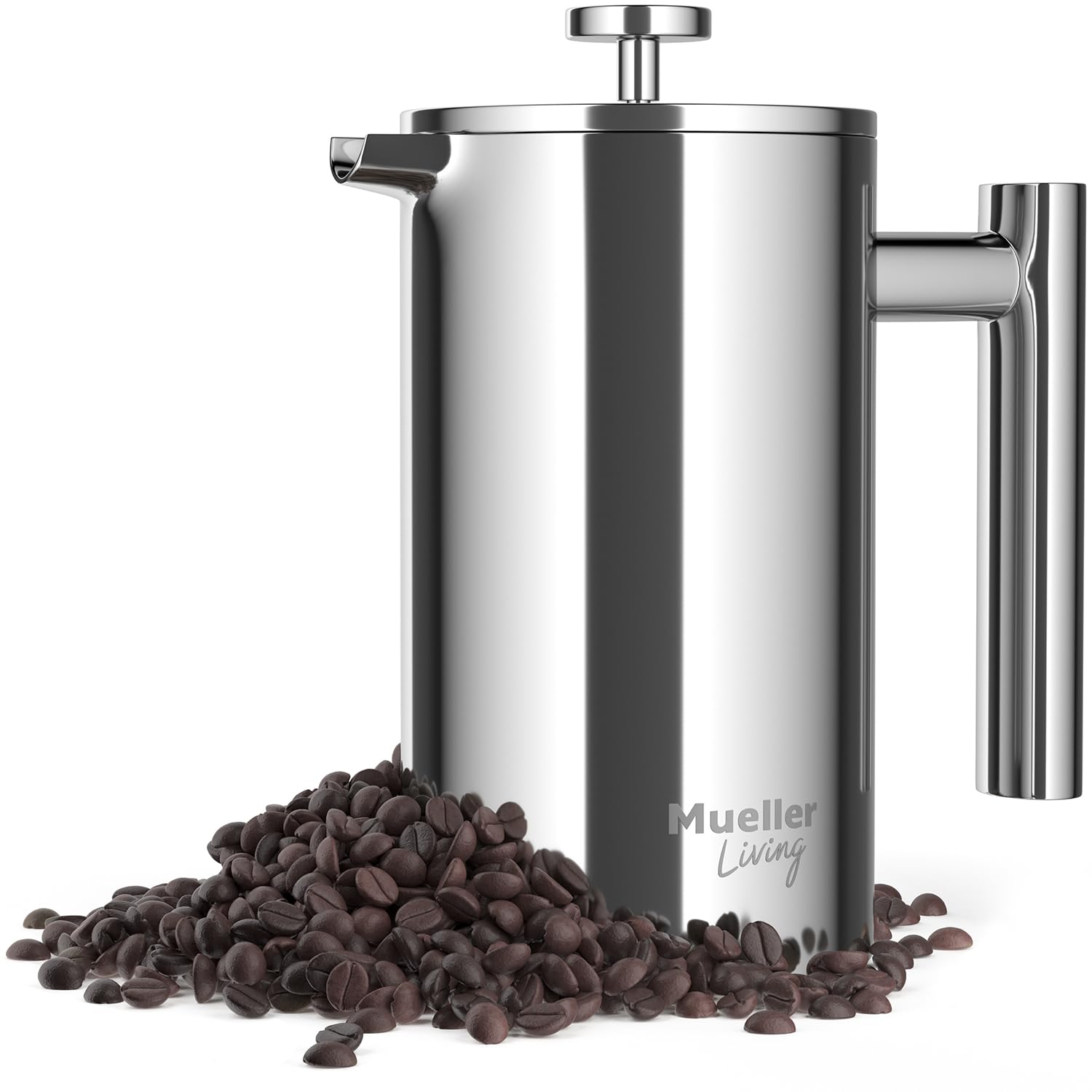
| French press | 1:12 to 1:15 | 30 g coffee for 450 g water | Coarse |
| AeroPress | 1:6 to 1:16 | 15 g coffee for 240 g water | Fine to medium |
| Moka pot | About 1:7 to 1:10 | Fill the basket level | Medium fine |
| Espresso | 1:1.5 to 1:2.5 | 18 g coffee for 36 g espresso | Fine |
| Cold brew concentrate | 1:4 to 1:5 | 200 g coffee for 1 liter | Extra coarse |
| Cold brew ready to drink | 1:8 to 1:10 | 100 g coffee for 1 liter | Extra coarse |
| Percolator | About 1:16 | 60 g coffee for 1 liter | Coarse |
How Much Coffee per Cup?
For a standard 8 ounce (240 milliliter) cup at 1 to 16, use about 15 grams of coffee, which is roughly 2 to 3 level tablespoons depending on the grind and roast. For a 6 ounce coffee maker "cup", use about 10 to 11 grams, or 2 level tablespoons. A 12 ounce mug needs about 22 grams.
| Water | Coffee at 1:16 | Approx. tablespoons |
|---|---|---|
| 6 oz (180 ml) | 11 g | 2 |
| 8 oz (240 ml) | 15 g | 2.5 to 3 |
| 12 oz (355 ml) | 22 g | 4 |
| 16 oz (475 ml) | 30 g | 5 to 6 |
| 34 oz (1 liter) | 62 g | 11 to 12 |
Coffee to Water Ratio for a Full Pot
For a 12 cup drip coffee maker, which usually holds about 60 ounces (1.8 liters) of water, use about 100 to 115 grams of coffee, or roughly 18 to 20 level tablespoons, at 1 to 16. For a 10 cup pot (about 50 ounces), use 85 to 95 grams. Remember that coffee maker "cups" are 5 to 6 ounces, not 8. Our guide to the best drip coffee maker lists carafe sizes for popular models.
Why Weigh Coffee Instead of Using Scoops?
Weighing coffee is more accurate than scoops because beans vary in size and density. A tablespoon of light roast weighs more than a tablespoon of dark roast, and a heaping scoop can hold 50 percent more coffee than a level one. A kitchen or coffee scale with 0.1 gram precision lets you repeat a great cup every time. Our guide to the best coffee scale compares options with built in timers.
How to Measure Coffee Without a Scale
Without a scale, use level tablespoons: 1 level tablespoon of ground coffee weighs about 5 to 7 grams. So 2 level tablespoons per 6 ounces of water is close to 1 to 16, and 2.5 to 3 tablespoons per 8 ounces works similarly. A standard coffee scoop usually holds about 2 tablespoons. Level each scoop for consistency, and adjust by half tablespoons until you like the strength.
How to Make Coffee Stronger or Weaker
To make coffee stronger, use more coffee for the same water, moving from 1 to 17 toward 1 to 15. To make it weaker, use less coffee or add hot water after brewing. Change the ratio before changing the grind, since grind affects extraction and flavor, not just strength.
- Too weak and watery: use more coffee (try 1 to 15).
- Too strong and heavy: use less coffee (try 1 to 17) or dilute.
- Strong but sour: grind finer or brew longer; the coffee is under extracted.
- Strong and bitter: grind coarser or brew shorter; the coffee is over extracted.
Strength vs Extraction
Strength and extraction are different. Strength is how concentrated the coffee is, controlled mostly by the ratio. Extraction is how much flavor the water pulled from the grounds, controlled by grind, time and temperature. A coffee can be strong but under extracted (sour) or weak but over extracted (bitter). Get the ratio right first, then adjust grind and brew time to fix sour or bitter flavors.
French Press Ratio
For French press, start at 1 to 15 and steep for four minutes, using about 30 grams of coarse coffee for 450 grams of water. Some people prefer a stronger 1 to 12. Our guide to the French press coffee ratio has a chart for every press size.
Pour Over Ratio
For pour over, use 1 to 15 to 1 to 17, such as 20 grams of medium fine coffee and 320 grams of water just off the boil. Bloom with about twice the coffee weight in water for 30 to 45 seconds, then pour in stages. Our guide on how to make pour over coffee walks through each step.
Cold Brew Ratio
For cold brew concentrate, use 1 to 4 or 1 to 5 and dilute about 1 to 1 with water or milk before drinking. For ready to drink cold brew, use 1 to 8. Steep 12 to 24 hours. Our guide to the cold brew coffee ratio explains concentrate and dilution in detail.
Espresso Ratio
Espresso uses a much stronger ratio, about 1 to 2: 18 grams of fine coffee produces about 36 grams of espresso in 25 to 30 seconds. A ristretto is 1 to 1 to 1 to 1.5, and a lungo is 1 to 3 or longer. Our guide on how to make espresso at home covers espresso recipes.
Iced Coffee Ratio
For hot brewed iced coffee, brew double strength, about 1 to 8, and pour it over a glass full of ice so the melting ice dilutes it to normal strength. The Japanese iced method replaces about 40 percent of the brewing water with ice in the carafe, keeping the overall ratio near 1 to 16 while chilling the coffee instantly.
Ratios for Single Serve and Pod Machines
Pod machines use a fixed amount of coffee, usually about 9 to 12 grams per K-Cup, so the cup size you choose sets the ratio. Brewing a pod on the 6 ounce setting gives roughly 1 to 16 to 1 to 18, close to the golden range, while the 12 ounce setting stretches it to about 1 to 30 and tastes weak. For a stronger cup, choose a smaller size or use a reusable pod filled with 12 to 15 grams of your own coffee. Nespresso capsules are already dosed for their programmed cup sizes.
How to Scale a Coffee Recipe
Ratios make scaling easy: multiply the water by the ratio fraction. For 1 to 16, divide your water weight by 16 to get the coffee weight. For 500 grams of water, that is about 31 grams of coffee; for 750 grams, about 47 grams. To brew for a crowd, keep the ratio the same and only adjust the grind slightly coarser for very large batches in pour over, since more coffee slows drainage. Writing down your favorite ratio means you can brew any amount without guessing.
Does Roast Level Change the Ratio?
Roast level changes how coffee extracts more than the ratio you need. Dark roasts are more soluble and can taste strong at 1 to 17, while light roasts may need 1 to 15 or 1 to 16 to taste full. If you measure by volume, remember that dark roast beans are lighter, so a scoop of dark roast holds less coffee by weight.
Water Quality Matters Too
Coffee is about 98 percent water, so water quality affects flavor as much as the ratio. Use fresh, filtered water without chlorine taste, heated to about 195 to 205 degrees Fahrenheit for hot brewing. Very soft or distilled water extracts poorly, and very hard water mutes flavor and builds scale.
Common Ratio Mistakes
The most common mistake is assuming a coffee maker "cup" is 8 ounces and using too little coffee. Another is using heaping scoops one day and level scoops the next. Some people also try to fix bitter coffee by adding more water rather than adjusting the grind. Finally, ignoring the size of your mug leads to inconsistent strength; measure your water.
Keep Your Equipment Clean
A clean brewer lets your ratio shine. Old oils and scale make coffee taste bitter or flat even at the perfect ratio. Our guide on how to clean a coffee maker explains the routine. Browse more guides in our coffee guides section.
FAQs About Coffee to Water Ratio
What is the best coffee to water ratio?
About 1 to 16 for most brewed coffee. Use 1 to 15 for stronger coffee and 1 to 17 or 1 to 18 for lighter coffee.
How many tablespoons of coffee per cup?
About 2 level tablespoons per 6 ounces of water, or 2.5 to 3 per 8 ounce cup.
How much coffee for 12 cups?
About 100 to 115 grams, or 18 to 20 level tablespoons, for a 12 cup drip pot of about 60 ounces.
What ratio is best for French press?
Start at 1 to 15 with a coarse grind and a four minute steep.
What is the cold brew ratio?
About 1 to 4 or 1 to 5 for concentrate, diluted 1 to 1, or 1 to 8 for ready to drink cold brew.
Should I measure coffee by weight or volume?
Weight is more accurate. A scale gives consistent results, while scoops vary by roast and grind.
Final Thoughts
The best coffee to water ratio to start with is 1 to 16, about 2 level tablespoons per 6 ounces of water, then adjust to taste. Use the charts above for each brew method, weigh your coffee when you can, and change the ratio before the grind to dial in strength.